Category: Uncategorized

  • Eco Friendly Cleaning Service Review

    Eco Friendly Cleaning Service Review

    When a cleaning service says it is green, eco-conscious, or non-toxic, the claim sounds reassuring. But in a real eco friendly cleaning service review, the question is simpler: does the service deliver a properly clean home or workplace without relying on harsh chemistry, vague promises, or cut corners?

    That matters more than ever for busy households, landlords preparing a property, and office managers responsible for a safe, presentable space. A polished finish still counts. So does indoor air quality, product safety, and the confidence that your cleaner’s methods match the standard they advertise. The best eco-friendly services do not ask you to choose between hygiene and responsibility. They offer both, with care and precision.

    What an eco friendly cleaning service review should actually assess

    A useful review goes beyond whether the bottles have green labels. It should look at how the service operates from start to finish. That includes the products used, the training behind them, the quality of the clean, and whether the company can adapt its approach to the property in front of it.

    For example, a family home with pets has different priorities from an office reception area or an end of tenancy clean. In one setting, low-odour and child-safe methods may matter most. In another, fast turnaround and consistent presentation will be the priority. A credible provider should be able to explain what they use, why they use it, and when a stronger specialist treatment may be needed.

    That last point is worth stressing. Eco-friendly cleaning is not about pretending every surface can be restored with the same mild spray. Some jobs involve heavy grease, limescale, post-build dust, or stained upholstery. A professional service should be honest about where eco-preferred methods work brilliantly and where specialist intervention may be required to achieve the right result.

    Products matter, but method matters more

    Many clients begin with product questions, and rightly so. You want to know whether chemicals are being used around children, pets, staff, tenants, or customers. But products alone do not determine the outcome.

    In practice, method often matters more. Correct dilution, contact time, cloth separation, equipment hygiene, and surface-specific treatment all make a significant difference. A poorly trained cleaner using eco products can still leave streaks, cross-contaminate surfaces, or miss key hygiene points. A trained professional using carefully selected low-impact products and disciplined technique will usually achieve better and safer results.

    That is why strong eco-friendly services invest in process, not just branding. They train teams to clean efficiently, protect delicate materials, reduce waste, and avoid overuse of product. The result is a space that feels genuinely fresh rather than artificially perfumed.

    Results still come first

    No customer books a service for good intentions alone. They book for standards. Floors should look cared for, kitchens should feel hygienic, bathrooms should be sanitised properly, and glass should be clear rather than smeared.

    A dependable eco-friendly service understands that appearance and hygiene are not separate. They are part of the same promise. If a provider talks at length about sustainability but cannot maintain consistent results, that is not premium service. On the other hand, if the team can deliver spotless surfaces, careful attention to detail, and a healthier cleaning routine, that is where eco-friendly practice becomes genuinely valuable.

    This is especially relevant in commercial settings. Offices, communal spaces, and managed properties need to look professional every day. Staff and visitors notice dusty skirting boards, marked doors, and neglected washrooms. A greener approach only works if it supports that polished, dependable presentation.

    A balanced eco friendly cleaning service review includes trade-offs

    There is no value in pretending eco-friendly cleaning is identical in every respect to conventional cleaning. Sometimes it is better. Sometimes it requires a more considered approach.

    Low-fragrance or fragrance-free products, for instance, are often preferred by clients who are sensitive to strong scents. That can leave a room smelling cleaner in a more natural way, but some people wrongly associate a heavy perfume with cleanliness. Likewise, eco-preferred products can be highly effective for routine maintenance, yet severe staining or specialist restoration may still call for targeted solutions.

    The key is transparency. A quality provider should explain what is realistic, what will take more time, and where expectations need to be aligned with the condition of the space. That honesty is often a better sign of professionalism than sweeping claims.

    Signs a service is genuinely eco-conscious

    In a strong eco friendly cleaning service review, a few markers tend to stand out. First, the company can clearly explain its product choices without hiding behind marketing terms. Second, it has trained, insured staff who follow consistent systems rather than improvising from one visit to the next. Third, the service is tailored. Eco-conscious cleaning should not mean a one-size-fits-all package.

    You can also look at the wider operation. Are appointments scheduled efficiently? Do they reduce waste where possible? Do they use reusable materials responsibly? Do they understand the difference between routine cleaning, deep cleaning, and specialist treatment? A thoughtful business usually shows its standards in these details.

    For clients across homes and workplaces in the South West, those operational details often matter just as much as the product list. Reliability, punctuality, and clear communication are part of the service experience. If you are handing over access to a property or relying on a team to keep a workplace presentable, trust is essential.

    Who benefits most from eco-friendly cleaning?

    The short answer is almost everyone, but the reasons differ.

    For homeowners and tenants, the appeal is often comfort. You want a home that feels clean, calm, and cared for without a lingering chemical smell. For landlords and letting agents, eco-friendly cleaning can support a better presentation while reducing concerns around product residue before new occupants arrive. For offices and commercial spaces, it helps create a cleaner environment for staff and visitors, particularly in shared areas where frequent cleaning is necessary.

    There is also a reputational benefit for businesses. Clients increasingly notice whether a company’s standards extend beyond surface appearance. A workplace that is well maintained, hygienic, and cleaned with care reflects well on the business operating within it.

    When eco-friendly cleaning may not be enough on its own

    A sensible review should acknowledge limits. Post-construction cleaning is one example. Fine dust, adhesive residue, paint splashes, and debris require specialist handling, tools, and a methodical finish. The same goes for ovens with built-up carbon, carpets with longstanding staining, or end of tenancy jobs where neglect has accumulated over time.

    In these cases, eco-conscious practice should remain part of the service, but the provider may need to combine it with stronger specialist methods. That does not undermine the eco-friendly approach. It shows the company understands the job properly and is prioritising results, safety, and material care over slogans.

    What makes a service worth booking

    A worthwhile service does three things well. It makes life easier, it raises the standard of the space, and it gives you confidence that the work will be done properly every time.

    That confidence comes from clarity. You should know what is included, how the team works, and what outcome to expect. Premium cleaning is not simply about turning up with products. It is about delivering precision, care, and consistency in a way that suits the property and the people using it.

    This is where providers such as Blueglade Cleaning stand apart when they combine eco-friendly practices with trained teams, tailored plans, and dependable service across domestic and commercial settings. The greener choice becomes far more compelling when it is backed by professional standards rather than positioned as a compromise.

    The best review question to ask

    If you are comparing providers, ask one question: can this company explain how it achieves a healthier clean without lowering the standard?

    A strong answer should cover products, process, training, and results. It should also reflect your actual needs, whether that is regular house cleaning, office upkeep, a one-off deep clean, or preparing a property for handover. The right service will not overwhelm you with buzzwords. It will give you a straightforward, confident explanation and then deliver a spotless finish to match.

    A cleaner space should never come at the cost of peace of mind. When eco-friendly cleaning is done properly, it gives you both.

  • Cleaning Services South West England Guide

    Cleaning Services South West England Guide

    A missed handover clean can delay a tenancy. An inconsistent office clean can shape how staff and clients feel about the space before a word is spoken. That is why choosing cleaning services South West England is rarely just about finding someone with availability. It is about trusting a team to protect standards, save time and keep homes and workplaces ready for real life.

    Across the South West, cleaning needs are varied. A family home in Exeter may need regular weekly support that keeps pace with school runs and work commitments. A letting agent in Plymouth may need end of tenancy cleaning that stands up to inspections. A business in Taunton may need reliable office cleaning outside trading hours, while a contractor in Devon may need a post-construction sparkle clean that prepares a site for handover. The right provider understands that these are different jobs with different expectations.

    What good cleaning services in South West England should deliver

    At a basic level, any cleaning company should leave a space looking better than it did before. That is the minimum. A professional service should also bring consistency, clear communication and a standard you do not have to chase.

    For domestic clients, that often means a tailored plan rather than a one-size-fits-all visit. Some households need regular upkeep in kitchens, bathrooms and living areas. Others need a deeper reset before guests arrive, after renovations or ahead of a move. For landlords, tenants and property managers, the priority is usually presentation and compliance with handover expectations. For commercial clients, it is about hygiene, appearance and keeping disruption to a minimum.

    A dependable cleaning partner should make life simpler, not create more admin. Quotes should be clear. Bookings should be straightforward. Arrival times should be respected. And if the brief changes, there should be enough flexibility to adapt without the whole process becoming difficult.

    Cleaning services South West England for homes, workplaces and property handovers

    The strongest cleaning companies do not treat every client the same. They recognise that a lived-in home, a shared office and an empty rental property all require different methods, timings and levels of detail.

    Domestic cleaning that fits around busy households

    Regular home cleaning is often the service people postpone for too long. Not because they do not value it, but because daily life gets in the way. Work, school pickups, weekends away and the usual running of a home can quickly turn cleaning into a task that never quite gets finished.

    That is where a structured domestic service adds real value. Rather than occasional rushed tidying, you get a reliable standard that keeps the home presentable, healthier and easier to maintain. Kitchens and bathrooms stay under control. Dust and build-up are managed before they become a bigger job. The result is not just a cleaner home, but less pressure on your week.

    Deep cleaning also has its place. It is often the right choice after illness, before hosting, after building work or when a property simply needs more than surface-level attention. The trade-off is cost and time, but for many clients the reset is worth it.

    Office and commercial cleaning that supports professionalism

    A clean workplace affects more than appearance. It shapes daily comfort for staff, gives visitors confidence and helps businesses maintain a professional environment without pulling employees away from their actual roles.

    Office cleaning should be discreet, dependable and planned around the way the business operates. Some premises need daily attention to washrooms, kitchens and high-touch areas. Others need scheduled cleans a few times a week. Retail, shared workspaces and client-facing premises usually require more visible presentation standards than back-office settings, so the frequency and scope often depend on footfall.

    The best commercial cleaning plans are practical rather than excessive. There is no value in paying for tasks that do not match the space, but there is also a false economy in under-cleaning busy premises and dealing with complaints, poor impressions or avoidable wear later.

    End of tenancy and managed property cleaning

    This is one of the clearest examples of where detail matters. An end of tenancy clean is not the same as a regular domestic clean. It needs to focus on inspection points, presentation and readiness for the next occupier.

    Landlords and letting agents usually need a property to look fresh, neutral and well cared for. Tenants often need help returning the property to an acceptable standard while managing the stress of moving. Timing is usually tight, and the clean needs to be thorough enough to support a smooth handover.

    In these cases, experience matters. Oven cleaning, internal windows, bathroom descaling, kitchen degreasing and attention to skirting boards, doors and fittings can make the difference between a property looking used and looking ready.

    Specialist cleaning when standard services are not enough

    Carpets, upholstery, ovens, windows and post-construction spaces all call for more specialised work. These are not always jobs for a standard checklist.

    Carpet and upholstery cleaning can refresh the look and feel of a property while removing the dirt that settles below the surface. Oven cleaning restores one of the most labour-intensive parts of the kitchen. Window cleaning improves light and presentation immediately. Post-build and sparkle cleaning is often the final stage that turns a completed project into a handover-ready space.

    These services are especially useful when image matters. A finished renovation, a property listing, a commercial opening or an upcoming tenancy all benefit from that extra level of polish.

    How to choose the right cleaning company

    Price will always be part of the conversation, but it should not be the only measure. The cheapest quote can become expensive if standards slip, visits are missed or the scope was never clearly agreed.

    Look for a provider that is insured, trained and able to explain how the service will work. That includes what is covered, how often visits take place, whether eco-friendly products are available and how quality is maintained. A premium service does not have to feel inaccessible, but it should feel dependable.

    It is also worth checking how tailored the service really is. Some clients need recurring support; others need one-off help at a key moment. Some want the same routine every visit; others need a more flexible arrangement that changes with the season, occupancy or type of property. A company that listens first usually delivers a better result than one that forces every client into the same package.

    Why local understanding matters in the South West

    The South West includes busy cities, coastal areas, family suburbs, office hubs and a wide mix of property types. That variety affects cleaning requirements more than many people realise.

    A city office may need regular early-morning or evening cleaning with minimal disruption. A rental property in a high-turnover area may need fast scheduling between occupancies. Homes near the coast can see different patterns of dirt, moisture and wear. Period properties may require a little more care around materials and finishes. A cleaning company that works across places such as Exeter, Devon, Taunton, Plymouth, Somerset and Dorset is more likely to understand those practical differences.

    That does not mean every client needs a highly bespoke plan. It means the service should feel considered. The right approach for a family home is not always the right approach for a managed block, a shop floor or a newly finished development.

    A cleaner space should feel easier to manage

    Good cleaning is visible, but the real value is often what it removes from your day. It removes the scramble before visitors arrive. It removes the burden of keeping on top of a workplace after everyone has gone home. It removes the uncertainty around whether a property will be ready in time.

    That is the standard professional cleaning should meet. Not just a tidy room, but a dependable service built around care, precision and convenience. For clients who want that level of support, Blueglade Cleaning represents the kind of partner that treats cleaning as a quality-led service, not a rushed task.

    If you are weighing up your options, the best choice is usually the one that gives you confidence before the first visit even begins – clear communication, tailored support and a standard of care that makes the space feel properly looked after.

  • Deep Clean Before Baby Arrives: What Matters

    Deep Clean Before Baby Arrives: What Matters

    The nesting phase often starts with one innocent thought: we should probably give the house a proper clean. A few cupboards later, you are on a step stool wondering whether the top of the wardrobe has always collected that much dust. A deep clean before baby arrives can be genuinely worthwhile, but it works best when it is focused, realistic and centred on hygiene rather than perfection.

    For most households, the goal is not a show-home finish. It is a calmer, healthier space that feels ready for long days, broken sleep and very little spare time. That means paying attention to the areas that affect air quality, day-to-day comfort and practical cleanliness, while letting go of jobs that look dramatic but make little difference.

    Why a deep clean before baby arrives helps

    A new baby does not need a flawless home. They do, however, benefit from a cleaner environment with less dust, fewer lingering odours and better hygiene in the spaces you will use constantly. Kitchens, bathrooms, bedrooms and soft furnishings tend to matter more than decorative details.

    There is also a practical benefit for parents. Once your baby arrives, routine tasks can feel heavier simply because you are tired. Starting from a properly cleaned base makes ongoing upkeep easier. Wiping down a fresh kitchen or keeping on top of a sanitised bathroom is much simpler than trying to catch up after weeks of putting off deeper jobs.

    For many expectant parents, there is a mental shift as well. A clean, organised home can make the run-up to birth feel less chaotic. It is one less thing pulling at your attention when you would rather be preparing the nursery, resting or simply having a quiet evening before life changes pace.

    What to prioritise in a deep clean before baby arrives

    The most useful approach is to clean according to impact. Start with the spaces you will rely on every day and the surfaces that gather the most dust, grease or bacteria.

    Bedrooms and sleeping areas

    Your bedroom matters just as much as the nursery, especially in the early weeks. Dust skirting boards, wipe bedside tables, clean behind furniture where possible and vacuum thoroughly under the bed. If curtains, rugs or upholstered headboards hold dust, give them proper attention too.

    If the baby will sleep in your room at first, focus on the area around the cot or Moses basket. You do not need to sterilise the room, but it is sensible to reduce dust build-up and make sure floors and nearby surfaces are fresh and easy to maintain.

    Soft furnishings and carpets

    Soft surfaces are often overlooked during pregnancy cleaning, yet they hold dust, hair, crumbs and allergens. Carpets, sofas, armchairs and mattresses can all benefit from a more thorough clean than the usual once-over with the vacuum.

    This is one area where a trade-off comes in. If your home has hard flooring and minimal upholstery, a detailed vacuum and wipe-down may be enough. If you have pets, older carpets or upholstery that has not been cleaned in some time, a professional carpet or upholstery clean can make a noticeable difference to freshness and air quality.

    Kitchen hygiene

    The kitchen should be high on the list because it is where bottles may be washed, snacks grabbed one-handed and meals assembled while you are short on time. Degrease cupboard fronts, clean worktops thoroughly, wipe down tiles and tackle the areas that are easy to ignore, such as the extractor, splashback and kickboards.

    The fridge deserves special attention. Clear out expired items, wipe shelves and drawers, and make sure there is space for the practical bits you may want close at hand once the baby arrives. Ovens and microwaves are worth cleaning too, not for appearances, but because old grease and food build-up quickly turn into unpleasant smells and extra work later.

    Bathrooms

    Bathrooms need to feel reliably clean, not just briefly tidy. Give proper attention to the toilet, sink, taps, shower screen, tiles and grout. Limescale around fittings can make a room feel less hygienic even when it is technically clean, so removing it is worthwhile.

    Think about touchpoints as well. Door handles, light switches and cabinet fronts are used constantly and often missed. A clean bathroom is one of the simplest ways to make the whole home feel more under control during the first weeks with a newborn.

    The places most people forget

    Some of the most useful cleaning jobs are not the most obvious. High shelves, curtain poles, lampshades, radiators and behind larger furniture all collect dust that can circulate when rooms warm up or windows are opened.

    Inside cupboards can also be worth checking, especially in the kitchen and nursery. If you are storing baby clothes, muslins or feeding equipment, a quick wipe of shelves and drawers helps everything feel ready without adding unnecessary fuss.

    Bins are another easy win. Washing out kitchen and bathroom bins, replacing worn liners and freshening the surrounding area can improve the overall feel of the room more than people expect.

    Choosing safer products

    A deep clean before baby arrives does not need harsh-smelling chemicals to be effective. In fact, many expectant parents prefer lower-odour, eco-conscious products that clean well without leaving behind strong residues or fragrances.

    That said, gentler products still need to do the job. Bathrooms may need descaling power, kitchens may need proper degreasing and some disinfecting may be appropriate on key surfaces. The balance is using suitable products in the right places, with good ventilation, rather than assuming stronger always means better.

    If you are heavily pregnant, practical safety matters as much as product choice. Avoid lifting furniture, climbing ladders or spending too long bent over baths and low cupboards. Fatigue and dizziness are not the time to push through one more room.

    When to do the cleaning

    Timing matters more than many people realise. Clean too early, and you may feel you need to do it all again. Leave it too late, and even simple jobs can feel exhausting.

    For most households, two to four weeks before the due date is a sensible window for the main deep clean. That leaves enough time to enjoy the results and maintain them with lighter touch-ups. Jobs such as washing bedding, wiping nursery surfaces and doing a final bathroom refresh can then be saved for closer to the birth.

    If your pregnancy is high-risk, you are managing other children, or you are simply short on energy, earlier is often better. A completed clean at 34 weeks is far more useful than an unfinished plan at 39 weeks.

    Should you do it yourself or book professional help?

    It depends on your time, energy and the condition of the property. If your home is already well kept, a DIY deep clean spread over several days may be completely manageable. Breaking the work into zones usually works better than trying to do the whole house in one push.

    If the home needs more intensive attention, professional help can be the smarter option. Kitchens, bathrooms, carpets and ovens are often the biggest drains on time and energy, and they are also the areas where trained cleaners can deliver the most obvious improvement. For busy households across the South West, bringing in a trusted service can turn a physically demanding task into one less thing to worry about.

    A good professional clean is not about extravagance. It is about precision, reliability and walking into a home that already feels ready. Blueglade Cleaning often supports clients at exactly these life stages, when convenience matters just as much as spotless results.

    A realistic standard is the right one

    One of the most common mistakes before a baby arrives is aiming for a standard that is impossible to maintain. The house does not need to be immaculate. It needs to be comfortable, hygienic and set up in a way that makes everyday cleaning easier.

    That may mean accepting a few compromises. Perhaps the loft can wait, while the sofa and carpets cannot. Perhaps the inside of every wardrobe is less urgent than the bathroom grout and the kitchen fridge. The right priorities are the ones that support daily life once the baby is home.

    If you are wondering where to start, begin with the rooms you will use when you are tired: the bathroom first thing in the morning, the kitchen late at night, the bedroom when you finally get a chance to rest. Clean for real life, not for inspection.

    A thoughtful deep clean before baby arrives is less about chasing perfection and more about giving yourself a gentler landing. When the house feels fresh, healthy and properly prepared, it creates space for what actually matters – meeting your baby and settling into the rhythm of home.

  • End of Tenancy Cleaning Plymouth Guide

    End of Tenancy Cleaning Plymouth Guide

    Moving day has a way of making every mark on a skirting board suddenly look urgent. If you are arranging end of tenancy cleaning Plymouth renters, landlords and letting agents can rely on, the real goal is simple – leave the property spotless, inspection-ready and one less thing to worry about.

    A proper end of tenancy clean is not the same as a quick tidy before handing back the keys. It is a detailed, room-by-room service designed to bring a home back to a high standard of cleanliness after everyday living. For tenants, that can help protect a deposit. For landlords and agents, it helps prepare the property for viewings, inventories and the next occupant without delay.

    What end of tenancy cleaning in Plymouth should cover

    The best results come from a methodical clean rather than a rushed once-over. Kitchens usually need the most attention, because grease, crumbs and limescale build up gradually and are easy to miss when you are busy packing. Cupboards should be cleaned inside and out, worktops degreased, sinks descaled and appliances brought back to a presentable finish.

    Bathrooms call for the same level of precision. Soap residue, water marks and hidden grime around taps, tiles and shower screens can quickly affect the overall impression of a property. A professional clean focuses on sanitising fixtures, removing limescale where possible and restoring a fresh, cared-for appearance.

    In living areas and bedrooms, expectations are straightforward but strict. Dust needs to be removed from surfaces, skirting boards, internal ledges and fittings. Floors should be vacuumed and washed where suitable. Marks on internal glass, built-up dust behind furniture lines and overlooked corners can all stand out during a final inspection.

    It also helps to remember the smaller details. Light switches, door handles, sockets, radiators and the tops of doors are the kind of areas that may not draw attention during daily life but can make a property feel unfinished if they are missed.

    Why professional end of tenancy cleaning Plymouth services make sense

    There is a reason so many people choose professional support at the end of a tenancy. By the time moving week arrives, most tenants are juggling removals, admin, meter readings and key arrangements. Cleaning a full property to a move-out standard on top of that is hard work, especially if the home has been occupied for several years.

    Professional cleaners bring structure to the job. They know where letting agents and landlords tend to look first, which surfaces need specialist care and how to clean thoroughly without wasting time. That matters when deadlines are tight and access to the property may be limited.

    For landlords and property managers, the benefit is consistency. A trained, insured team can prepare a property to a dependable standard, which helps reduce void periods and supports a smoother handover. That is particularly useful when you are coordinating maintenance, inventories and new tenant move-in dates in quick succession.

    There is also the question of equipment and products. Some issues, such as oven grease, bathroom limescale or ingrained carpet soiling, often need more than supermarket sprays and good intentions. Eco-conscious professional cleaning can still deliver strong results, but the process and product choice matter.

    The areas most likely to affect deposit disputes

    Not every cleaning issue carries the same weight. In practice, a few problem areas cause the most frustration at check-out.

    The oven is near the top of the list. Even when the rest of the kitchen looks tidy, baked-on grease inside the oven or residue on trays and racks can give the impression that the property has not been properly prepared. The same goes for extractor fans and hobs, where grease tends to gather slowly over time.

    Bathrooms are another common sticking point. Limescale around taps, discolouration in grout and residue in shower enclosures can make a room feel less hygienic than it really is. These are often the first signs of rushed cleaning.

    Carpets can be more nuanced. If the issue is light surface dust, vacuuming may be enough. If there are stains, odours or visible traffic marks, carpet cleaning may be the better option. It depends on the tenancy agreement, the condition at move-in and whether the carpet has genuinely deteriorated beyond fair wear and tear.

    Windows, inside surfaces and frames also matter more than people expect. Smears and dust are easy to spot in daylight, especially in empty rooms.

    When to book end of tenancy cleaning in Plymouth

    Timing makes a noticeable difference. Ideally, the clean should take place after the property has been fully emptied and before the final inspection. That allows every surface, corner and floor area to be accessed properly. Trying to clean around packed boxes or leftover furniture nearly always leads to missed sections.

    If repairs, painting or maintenance are also scheduled, cleaning should usually come last. There is little value in deep cleaning a property before trades have finished, as dust and marks can quickly return. The only exception is where a staged approach is needed, for example an initial clean before works and a final sparkle clean afterwards.

    For tenants, booking early is the safest option, particularly during busy moving periods. End-of-month dates and summer turnover can fill quickly, and leaving it late may limit your preferred appointment slots.

    What to do before the cleaners arrive

    A professional service will handle the cleaning itself, but a little preparation helps the visit run smoothly. The property should be empty where possible, with personal belongings removed and rubbish cleared. Defrosting the freezer in advance is also worthwhile if the appliance needs to be cleaned inside.

    It is helpful to check the tenancy agreement or inventory too. Some properties have particular requirements, such as carpet cleaning, appliance cleaning or attention to furnished areas. Knowing this in advance avoids last-minute surprises.

    Utilities should still be available on the day. Running water, electricity and reasonable access make a practical difference, especially when multiple rooms and appliances need attention.

    Choosing the right cleaning service

    Price matters, but it should not be the only deciding factor. End of tenancy cleaning is one of those services where a low quote can become expensive if the standard is not high enough and the property needs to be cleaned again.

    A reliable provider should be clear about what is included, how long the job is likely to take and whether extras such as carpet cleaning, upholstery cleaning or oven cleaning are separate. Transparency is part of good service. So is professional conduct – punctual arrival, clear communication and a team that treats the property with care.

    It is also worth looking for a company that understands the pressures on all sides. Tenants want a fair chance of meeting move-out expectations. Landlords and agents want a home that is clean, presentable and ready for the next step. The right service bridges that gap with precision rather than guesswork.

    That is where a quality-led company such as Blueglade Cleaning stands apart. A polished, dependable approach is not just about making rooms look better for an hour. It is about delivering a standard that supports handover, presentation and peace of mind.

    Is a standard clean ever enough?

    Sometimes, yes. If a tenancy has been short, the property has been very well maintained and the agreement does not require a deeper level of cleaning, a standard service may cover what is needed. But that is not always the case.

    Longer tenancies, family homes, shared houses and properties with pets usually need more detailed attention. Grease, dust and wear build up gradually, even in homes that have been cared for responsibly. A deeper clean is often the sensible choice because it tackles the hidden areas that make the difference during inspection.

    There is no one-size-fits-all answer. The right level of service depends on the condition of the property, the expectations set out in the tenancy and how close you need the home to be to move-in ready for the next occupant.

    A cleaner handover starts with less guesswork

    The best end of tenancy cleaning is not flashy. It is thorough, well organised and calm under pressure. When every room has been cleaned with care, the handover feels simpler, the property presents better and everyone involved can move on faster.

    If your move is approaching, the smartest step is to treat cleaning as part of the handover plan rather than an afterthought. A professionally cleaned property does more than look spotless – it gives the end of a tenancy the standard of finish it deserves.

  • Steam Cleaning vs Shampooing: Which Wins?

    Steam Cleaning vs Shampooing: Which Wins?

    A carpet can look tired long before it is truly worn out. The real question is not whether it needs attention, but which method will bring it back properly. When weighing up steam cleaning vs shampooing, the right choice depends on what you need most – deeper hygiene, faster drying, stain treatment, or a lower upfront cost.

    For busy households, landlords preparing a property, or office managers trying to keep presentation standards high, the difference matters. One method can leave carpets refreshed and ready to use within hours. The other may be helpful in certain heavy-soil situations, but it can also leave behind residue if it is not handled well. That is why understanding the method before booking is worth your time.

    Steam cleaning vs shampooing: the key difference

    Steam cleaning, more accurately known as hot water extraction, uses hot water and cleaning solution driven deep into carpet fibres and then extracted back out with powerful suction. Despite the name, it is not just steam alone. The process is designed to loosen dirt, lift allergens, and remove contaminants from below the surface.

    Shampooing works differently. It applies a foaming detergent to the carpet and uses a machine with rotating brushes to scrub the fibres. This can make the carpet look cleaner quickly, especially on the surface, but the process often relies more heavily on detergent and mechanical agitation than extraction.

    In simple terms, steam cleaning is usually about rinsing away soil from deep within the pile, while shampooing is more about scrubbing and treating the top layers. That single difference shapes the results, drying time, feel underfoot, and long-term cleanliness.

    Which method cleans more thoroughly?

    If your priority is hygiene and a more complete clean, steam cleaning usually comes out ahead. The hot water extraction process reaches deeper into the carpet, helping remove dust, allergens, tracked-in dirt, and residues that ordinary vacuuming cannot touch. For homes with pets, children, or allergy concerns, that deeper result is often the deciding factor.

    Shampooing can improve appearance, particularly where there is visible grime matted into the fibres. The brushes do a good job of agitation, which can help break up stubborn soil. However, if too much product is left behind, that residue can attract fresh dirt more quickly. A carpet may look better immediately after cleaning but start to lose that freshness sooner than expected.

    This is where professional technique matters. A poorly performed steam clean can leave too much moisture behind, and poor shampooing can leave the carpet sticky or flat. The method matters, but so does the standard of service.

    What about bacteria and allergens?

    Steam cleaning is generally the better option when hygiene is a major concern. The combination of heat, cleaning solution, and strong extraction helps remove pollutants more effectively than surface-level scrubbing alone. It is often the preferred choice in homes where cleanliness is not just about appearance but about creating a healthier environment.

    Shampooing can still play a role, but it is usually not the first recommendation where allergy reduction or deeper sanitisation is the main aim.

    Drying time and day-to-day convenience

    One of the biggest practical differences between steam cleaning and shampooing is drying time. Steam cleaning uses water, but professional machines are built to extract much of that moisture back out. In many cases, carpets are dry within a few hours, though thicker piles, colder weather, and limited ventilation can extend that.

    Shampooing can sometimes leave carpets wetter for longer, especially if more product and water are worked into the fibres than removed. That can be inconvenient in busy homes and commercial settings where rooms need to be back in use quickly.

    For landlords turning around a tenancy, or businesses trying to minimise disruption, that timing matters. A method that cleans well but keeps a room out of action for too long is not always the practical winner.

    Does faster always mean better?

    Not necessarily. A quick surface refresh may suit some situations, such as light maintenance in a lower-traffic area. But if the carpet is carrying odours, stains, or months of trapped dirt, speed alone should not decide the job. The better question is how long you want the result to last.

    Stain removal and appearance

    There is no universal winner on every stain. Some marks respond well to agitation and pre-treatment, while others need extraction to pull the stain from deeper in the fibres. In most real-world cases, steam cleaning offers the stronger all-round result because it does not just disturb the stain – it helps remove the loosened material altogether.

    Shampooing may improve the look of a heavily soiled carpet, especially where the pile needs reviving. Yet aggressive brushing can sometimes be too harsh for delicate fibres, and overworking the area may affect the texture.

    For wool carpets, higher-end finishes, or upholstery fabrics, a more tailored approach is essential. The safest and most effective option depends on the material, the stain, and how long it has been there. That is another reason professional assessment has real value.

    Cost, value, and long-term results

    Shampooing can appear to be the cheaper option, particularly in budget cleaning packages or DIY machine hire. But lower initial cost does not always mean better value. If residue causes carpets to re-soil faster, or if the clean is more cosmetic than thorough, you may find yourself needing the service again sooner.

    Steam cleaning often offers better long-term value because it removes more of what is actually embedded in the carpet. When done properly, it can help preserve the look and feel of the fibres for longer, reducing the need for repeated treatments.

    For property managers and business owners, this matters beyond appearance. Carpets represent a real investment. A cleaning method that supports longevity, hygiene, and presentation can be the more economical choice over time.

    When shampooing still makes sense

    Although steam cleaning is often the preferred professional method, shampooing is not without merit. It can be useful for certain heavily soiled carpets where agitation is needed to loosen compacted dirt before further treatment. It may also suit older carpets in lower-risk settings where a surface improvement is the main goal rather than a deep hygienic clean.

    That said, shampooing works best when used carefully, with the right products, and with a clear understanding of the carpet type. It should not be treated as a one-size-fits-all solution.

    When steam cleaning is usually the better choice

    Steam cleaning is generally the stronger option for family homes, rental properties, offices, and furnished spaces where cleanliness, freshness, and fabric care all matter. It is especially well suited to high-traffic areas, homes with pets, end of tenancy cleaning, and situations where odour removal is part of the brief.

    For clients across homes and workplaces in the South West, this is often the method that delivers the balance people actually want – a carpet that looks better, feels cleaner, dries in a reasonable time, and supports a healthier indoor environment.

    How to choose the right service

    The best decision starts with the condition of the carpet rather than the name of the method. Ask what the carpet is made from, how heavily it is used, whether there are stains or odours, and how quickly the area needs to be ready again. A good cleaning provider should explain the trade-offs clearly and recommend the method that fits the space, not the method that is easiest to sell.

    If you are dealing with a busy household, a managed property, or a client-facing workspace, it pays to choose a service that combines technical know-how with care. Blueglade Cleaning approaches carpet and upholstery cleaning with that balance in mind – precision in the process, practical advice, and results designed to last.

    Steam cleaning vs shampooing is not really about picking a buzzword. It is about choosing the method that respects your carpet, suits your schedule, and leaves the space feeling properly refreshed. If you want a cleaner that looks good and performs well beyond the first day, the deeper clean is often the one worth choosing.

  • Is Professional Carpet Cleaning Worth It?

    Is Professional Carpet Cleaning Worth It?

    A carpet can look passable on the surface and still hold far more dirt than most people expect. If you have ever vacuumed thoroughly, stepped back, and still felt the room looked tired, that is usually the point where the question comes up: is professional carpet cleaning worth it?

    For many homes and workplaces, the short answer is yes – but not always for the same reason. Sometimes it is about hygiene. Sometimes it is about appearance before a tenancy checkout, a property viewing, or an important client visit. And sometimes it is simply the most practical way to protect a carpet that was expensive to buy in the first place.

    Is professional carpet cleaning worth it for most properties?

    In many cases, it is worth it because vacuuming and spot treatment only deal with part of the problem. Carpets trap dust, grit, allergens, pet hair, food residue, and odours deep in the pile. Over time, that build-up dulls the fibres and makes the whole room feel less fresh, even when everything else is clean.

    Professional cleaning reaches much deeper than routine home methods. That can restore colour, lift flattened fibres, remove stubborn marks, and improve the overall feel of the room. For landlords, letting agents, and property managers, it can also make a clear difference to how quickly a space looks ready for handover. For homeowners and office managers, it often means better presentation with far less effort.

    That said, value depends on timing, carpet condition, and expectations. A well-maintained carpet with a few light marks may respond brilliantly. A heavily worn carpet at the end of its life may look cleaner but not new. Professional cleaning is highly effective, but it is not a repair service for damage, bleaching, fraying, or severe wear.

    What you are really paying for

    People sometimes compare professional carpet cleaning with the cost of hiring a machine or buying supermarket stain products. On paper, the DIY route looks cheaper. In practice, the gap is not always as wide as it first appears.

    You are not just paying for equipment. You are paying for trained handling of different carpet fibres, stain assessment, proper cleaning solutions, efficient extraction, and a result that is less likely to leave the carpet overwet or patchy. That matters because too much water, the wrong product, or aggressive scrubbing can make things worse rather than better.

    There is also the time factor. Moving furniture, pre-treating marks, filling and emptying a hired machine, waiting for drying, and then dealing with areas that still do not look right can turn into a long and frustrating job. For busy households and businesses, convenience is part of the value.

    The biggest benefits of professional carpet cleaning

    The most obvious benefit is appearance. A professionally cleaned carpet usually looks brighter, fresher, and more even in tone. High-traffic lanes near doorways, hallways, desks, and sofas often respond especially well.

    The second benefit is hygiene. Carpets act like filters, catching dust and particles that would otherwise stay in the air. That can be useful, but only if the carpet is cleaned properly over time. Once build-up becomes excessive, the carpet stops feeling fresh and may contribute to stale odours or a heavier indoor environment.

    The third is longevity. Fine grit works its way into carpet fibres and, with regular footfall, starts to wear them down. Professional cleaning removes much of that abrasive debris. It will not stop wear completely, but it can help carpets stay presentable for longer.

    For rental properties and commercial spaces, there is another advantage: presentation. Clean carpets make the whole property feel cared for. In a home, that creates comfort. In an office, reception area, or meeting room, it supports a more polished impression.

    When it is especially worth the cost

    There are some situations where professional carpet cleaning tends to offer clear value.

    If you have pets, children, or both, carpets usually collect more than visible dirt. Mud, food spills, pet odours, and general traffic build up quickly, especially in family rooms and hallways. Regular professional cleaning can keep these areas manageable and stop the carpet from becoming permanently tired-looking.

    If you are moving out of a rented property, it can also be a sensible step. End of tenancy standards are often higher than day-to-day household standards, and carpets are one of the first areas people notice. A proper clean can help the property look cared for and reduce last-minute stress.

    The same applies before viewings, after renovation work, or when preparing a property for new occupants. In these cases, the carpet is part of the overall finish. If everything else is spotless but the flooring looks dingy, the room still feels unfinished.

    For businesses, the calculation is often straightforward. Clean carpets in offices, waiting areas, and communal spaces support a professional environment and reduce the burden on staff who would otherwise try to manage stains themselves.

    When it might not be worth it

    There are times when carpet cleaning is not the best investment.

    If the carpet is very old, heavily threadbare, or permanently damaged, cleaning may improve hygiene and remove some discolouration, but it will not reverse wear. In that case, replacement may be the better option.

    It may also be less worthwhile if the issue is extremely localised and minor. A single fresh spot on an otherwise clean carpet might be dealt with effectively through prompt spot cleaning, provided the right method is used.

    Budget matters too. If you only look at immediate cost, professional cleaning can seem optional. But it helps to compare that cost with replacing a carpet early, losing time to DIY attempts, or presenting a property that does not look its best.

    Professional cleaning versus DIY hire machines

    This is where many people hesitate, and fairly enough. Hire machines can improve a carpet, especially if it only needs a light refresh. For low-risk jobs and modest expectations, they have their place.

    The difference is consistency and depth. Professional equipment is generally more powerful, with better soil extraction and more controlled application of water and cleaning solution. That often means better stain removal and shorter drying times.

    There is also less guesswork. Different carpets respond differently, and some stains need a specific approach. Using too much detergent can leave residue behind, which then attracts more dirt. Overwetting can lead to slow drying and unpleasant smells. Professional handling reduces those risks.

    So, is professional carpet cleaning worth it compared with DIY? If you want the best chance of a noticeably cleaner, fresher result with less hassle, yes. If you are dealing with a very small issue and are confident in the method, DIY may be enough.

    How often should carpets be professionally cleaned?

    That depends on how the space is used. In a quieter household with no pets and light foot traffic, once every 12 to 18 months may be enough. In a busy family home, every 6 to 12 months is often more realistic.

    Commercial settings usually need more frequent attention, especially where carpets are visible to clients or exposed to constant use. Hallways, receptions, meeting rooms, and managed properties can all benefit from a planned approach rather than waiting until carpets look obviously dirty.

    A good rule is simple: if the carpet has lost its freshness, shows traffic shading, holds odours, or no longer responds to normal vacuuming, it is probably time.

    What to expect from a quality service

    A quality carpet cleaning service should feel organised, careful, and tailored to the space. That includes assessing the carpet, identifying problem areas, choosing suitable products, and setting realistic expectations about results.

    The best experience is not just about making the carpet look cleaner on the day. It is about delivering a fresher, healthier, more polished space with minimal disruption. That matters whether you are looking after a family home, a rental property, or a workplace.

    For clients across the South West, this is often why a professional service feels like money well spent. It removes the burden, protects the finish of the space, and helps carpets perform as they should.

    So, is professional carpet cleaning worth it? If you value presentation, hygiene, convenience, and getting more life from your carpets, it usually is. And if your carpet is one of the first things people notice when they enter the room, keeping it professionally maintained is not an extra – it is part of keeping the whole space to a higher standard.

    A cleaner carpet changes more than the floor beneath your feet. It changes how the whole room feels, and that is often where the real value lies.

  • Family Allergy Cleaning Routine That Works

    Family Allergy Cleaning Routine That Works

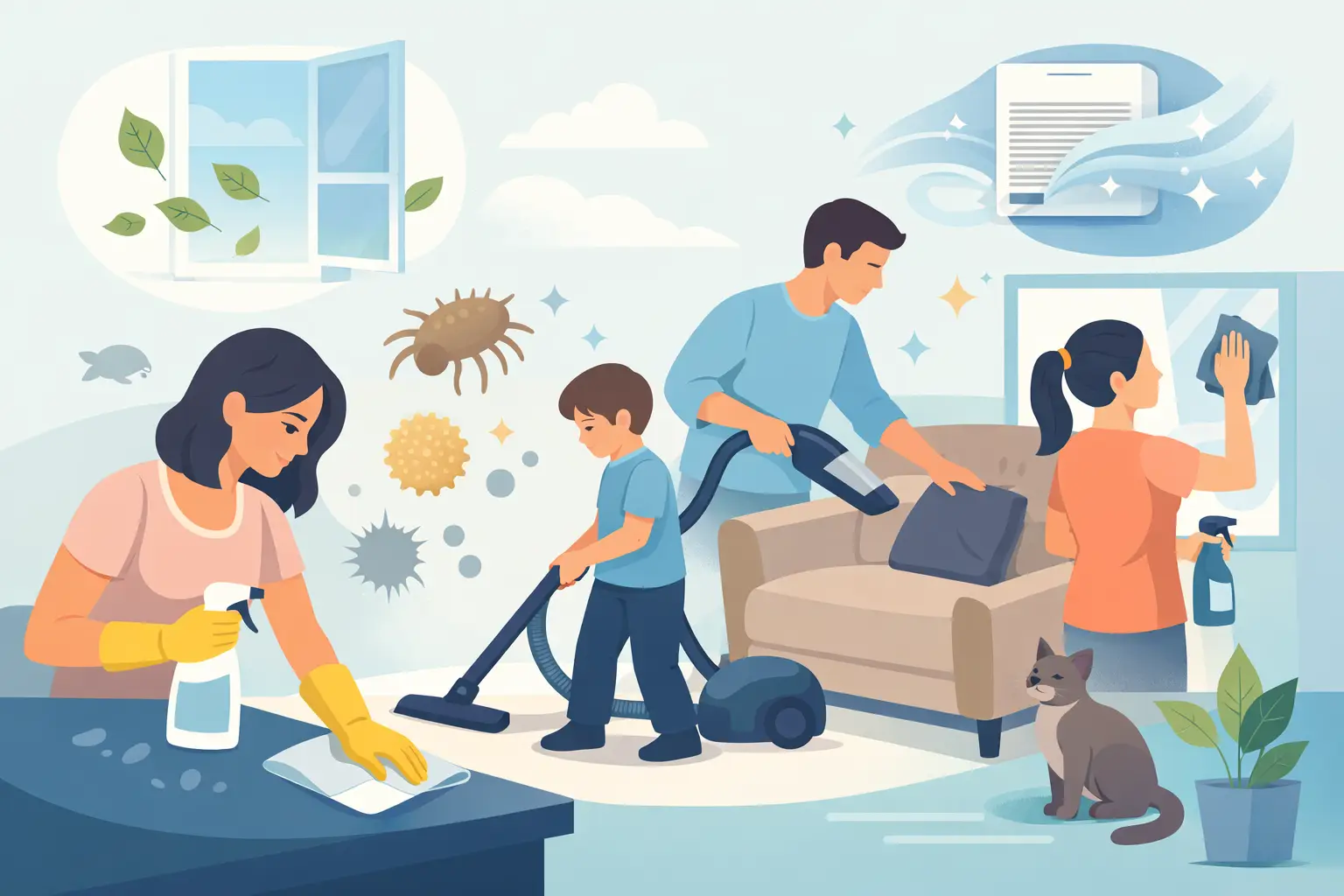
    One missed dusting session rarely causes trouble. The real issue is what builds up quietly over days – dust mites in bedding, pollen on window ledges, pet dander in soft furnishings and moisture that encourages mould. A reliable family allergy cleaning routine helps keep those triggers under control before they start affecting sleep, comfort and day-to-day life.

    For busy households, the goal is not to clean more for the sake of it. It is to clean with precision. That means focusing on the areas that collect allergens fastest, choosing methods that remove particles rather than spreading them around, and setting a rhythm your household can realistically maintain.

    Why a family allergy cleaning routine matters

    Allergy-friendly cleaning is less about perfection and more about consistency. Many common symptoms – sneezing, itchy eyes, blocked noses, overnight coughing and irritated skin – can worsen when allergens are allowed to settle into fabrics, carpets and overlooked corners. A home can look tidy and still hold a surprising amount of irritants.

    This is why occasional deep cleans, while useful, are not always enough on their own. If bedding is changed irregularly, floors are vacuumed without proper filtration, or damp areas are left untreated, allergens return quickly. A structured routine lowers that background level of exposure and helps the home feel fresher between larger cleaning sessions.

    There is also a practical benefit for families balancing work, school runs and everything else. A planned routine removes guesswork. Instead of reacting when symptoms flare up, you already know what needs attention daily, weekly and monthly.

    What to target first in an allergy-focused home

    Not every room needs the same level of attention. Bedrooms usually deserve top priority because that is where people spend long, uninterrupted periods. Bedding, mattresses, curtains and under-bed dust all contribute to overnight exposure. If someone in the household wakes congested or restless, start there.

    Living rooms come next, especially if the space includes rugs, upholstered seating, throws or pets. These soft surfaces trap dander and dust easily. Kitchens and bathrooms matter for a different reason. They are less about dust mites and more about moisture, ventilation and mould prevention.

    Hallways also play a larger role than many people expect. Shoes, coats, school bags and prams carry pollen, dust and outdoor debris into the home. A cleaner entrance area often reduces what spreads elsewhere.

    The daily habits that make the biggest difference

    A strong family allergy cleaning routine does not need to be complicated. Daily tasks should be quick, targeted and easy to repeat.

    Start with ventilation, but use judgement. Opening windows can help reduce stale air and indoor moisture, yet during high pollen days it may make symptoms worse. If pollen is a known trigger, air the home early in the morning or after rain when levels may be lower, and avoid leaving windows wide open all afternoon.

    Wipe hard surfaces with a damp microfibre cloth rather than a dry duster. Dry dusting often lifts particles into the air only for them to settle again. The same principle applies to floors. If you are dealing with fine dust or pet hair on hard flooring, vacuuming with a suitable filter is usually better than sweeping.

    In the kitchen and bathroom, keep moisture under control. Dry sinks, taps, tiles and shower screens where possible, and do not let damp towels sit in a heap. Small actions here reduce the chance of mould growth, which can be a major irritant in sensitive homes.

    It also helps to create a simple entrance routine. Shoes off at the door, coats stored neatly and bags kept off beds and sofas can cut down how much pollen and dirt travels through the house.

    Your weekly family allergy cleaning routine

    The weekly schedule is where the real progress happens. Bedding should be changed regularly, ideally once a week, because sheets and pillowcases collect skin cells, sweat and dust mite matter quickly. If symptoms are more severe, washing pillow protectors and lightweight throws more often may help.

    Vacuuming should be thorough rather than rushed. Focus on carpets, rugs, skirting boards, corners, under beds and upholstered furniture. If your vacuum does not have effective filtration, some fine particles may simply be blown back into the room. That is one of the clearest trade-offs in allergy cleaning – cheaper tools can cost you in air quality.

    Dust from top to bottom so loosened particles do not land on already-cleaned areas. Shelves, lamp bases, picture frames, blinds, headboards and the tops of wardrobes are all common dust collectors. In family homes, it is easy to keep visible surfaces presentable while neglecting higher or less obvious areas that quietly build up allergens.

    Bathrooms should be cleaned with particular attention to grout, seals, extractor fans and any areas where condensation lingers. In kitchens, wipe cupboard fronts, clean flooring thoroughly and check behind small appliances where crumbs and dust can gather.

    If you have pets, weekly washing of pet bedding is well worth the effort. Grooming also helps, but it should be done in a way that does not spread hair and dander indoors.

    Monthly jobs that stop allergens from building up

    A monthly reset supports the rest of the routine. Wash curtains if practical, or at least vacuum them carefully. Clean behind and beneath larger furniture. Wipe down radiators, vents and internal window frames. These are easy to overlook, yet they collect a fine layer of dust that circulates again once heating or airflow picks up.

    Mattresses benefit from careful vacuuming, especially around seams. Soft furnishings such as cushion covers and washable sofa throws should also be laundered regularly. If a room always seems dusty soon after cleaning, this deeper monthly attention often reveals the source.

    This is also the right time to check for hidden damp. Look at corners behind wardrobes, around windows and near exterior walls. Allergy control is not only about dust and pollen. Mould spores can be just as disruptive, and they tend to spread quietly until the problem is obvious.

    Products and methods that help – and those that do not

    Stronger is not always better. Highly fragranced products may leave a room smelling fresh, but they can irritate sensitive family members. In many cases, a simpler approach with effective, low-residue products is the better choice.

    Microfibre cloths, a good vacuum with proper filtration and washable cleaning materials usually do more for allergen control than a cupboard full of sprays. The aim is removal, not masking. If a product leaves sticky residue, it may actually encourage dust to cling to surfaces faster.

    Air purifiers can help in some homes, particularly in bedrooms, but they should not be treated as a substitute for cleaning. The same applies to dehumidifiers. They can support a healthier indoor environment where damp is an issue, yet they work best alongside regular cleaning and ventilation habits.

    When your routine needs adjusting

    No two households collect allergens in quite the same way. A family in a carpeted home with a dog will need a different routine from someone in a smaller flat with hard floors and pollen sensitivity. Season also changes the picture. Spring and summer often bring more outdoor allergens indoors, while autumn and winter can worsen condensation and mould risk.

    If someone is still struggling despite regular cleaning, it may be time to simplify the space. Fewer unnecessary textiles, less clutter on open shelving and easier-to-clean window coverings can make ongoing maintenance far more effective. This is not about making the home feel clinical. It is about reducing surfaces where irritants settle and linger.

    There are also times when professional support makes sense. Deep carpet cleaning, upholstery cleaning, post-build dust removal or a full-property reset after illness, renovation or tenancy change can dramatically improve the baseline. For families across the South West who want a healthier home without sacrificing time, this is often where a trusted service adds real value.

    Keeping the routine realistic

    The best routine is the one your household will actually keep. If a plan is too ambitious, it gets dropped the moment life becomes busy. A better approach is to anchor key tasks to the week – bedding on one day, vacuuming on another, bathroom moisture control every evening, and a monthly deeper clean booked into the diary.

    That rhythm brings peace of mind. You are no longer waiting for symptoms to tell you the house needs attention. You are staying ahead of the problem with care, consistency and the right level of detail.

    A cleaner home will never remove every allergen completely, but a thoughtful routine can make daily life noticeably easier. When cleaning is done with purpose, the result is not just a tidier space. It is a home that feels calmer, fresher and more comfortable for everyone in it.

  • End of Tenancy vs Deep Cleaning Explained

    End of Tenancy vs Deep Cleaning Explained

    If you are handing back keys next week, the difference between end of tenancy vs deep cleaning stops being a technical detail and starts affecting your deposit, your timeline and your stress levels. Many people assume they are the same service with a different label. They are not. They overlap in places, but they are designed for different outcomes.

    A deep clean is about bringing a property back to a high standard of hygiene and presentation. An end of tenancy clean is about preparing a rented property for inspection, check-out, or the next occupant. That distinction matters because landlords, letting agents and tenants are rarely judging the result by the same standard as a homeowner booking a seasonal refresh.

    End of tenancy vs deep cleaning: the real difference

    The simplest way to separate them is this: deep cleaning focuses on condition, while end of tenancy cleaning focuses on handover. Both are thorough. Both go far beyond a regular clean. But end of tenancy work is usually more detailed, more checklist-led and more closely tied to tenancy expectations.

    A standard deep clean is ideal when a home has built-up grime, neglected areas, or simply needs a top-to-bottom reset. It often covers kitchens, bathrooms, skirting boards, internal glass, flooring, dust build-up, limescale and hard-to-reach spots that are not part of everyday cleaning.

    An end of tenancy clean usually includes much of that same work, but with sharper attention to move-out detail. Think inside cupboards and drawers, inside appliances where agreed, marks on doors and frames, sanitised bathroom fittings, and presentation standards that support a smoother inventory check. In many cases, it is not just about cleanliness. It is about whether the property is ready for formal inspection.

    What a deep cleaning service is designed to do

    Deep cleaning is often the right choice when the property is still occupied or when there is no tenancy check involved. Homeowners book it before guests arrive, after renovation dust has settled, at the change of season, or when regular cleaning is no longer enough to keep standards where they want them.

    The benefit is flexibility. A deep clean can be tailored around the actual condition of the property rather than a move-out checklist. If your oven needs serious attention but your spare room is rarely used, the service can be adjusted accordingly. If you want carpets freshened, upholstery cleaned or windows included, those extras can often be added to create a more complete result.

    For busy households, this is often the more practical option. It restores comfort, improves hygiene and gives the home a polished, cared-for finish without the pressure of tenancy compliance.

    When deep cleaning makes more sense

    Deep cleaning is usually the better fit if you are staying in the property, preparing for visitors, resetting after illness, or addressing neglected build-up before it becomes harder to manage. It also suits landlords between longer maintenance cycles when the property is not changing tenant immediately.

    It can also be the right choice for sellers who want a home looking fresh for viewings, or for businesses that need a periodic higher-standard clean beyond their routine schedule. In these situations, the service is driven by presentation and cleanliness rather than inventory expectations.

    What end of tenancy cleaning is designed to do

    End of tenancy cleaning is tied to a specific moment: the end of an agreement, a tenant moving out, or a landlord preparing for the next move-in. The property is usually empty or nearly empty, which allows cleaners to reach areas that are blocked during day-to-day living.

    This service tends to be more methodical because it needs to support a handover process. Letting agents and landlords often expect the property to be returned in the same level of cleanliness recorded at check-in, allowing for fair wear and tear. That means surface cleaning alone is rarely enough.

    In practice, the clean often covers kitchens in detail, including degreasing, descaling and sanitising; bathrooms with close attention to taps, tiles, grout and fittings; and full-room cleaning that includes skirting boards, switches, sockets, frames and floors. If appliances, carpets or upholstery are part of the tenancy responsibility, those may need separate specialist treatment depending on the property and agreement.

    Why tenants and landlords should not treat it as a basic clean

    This is where people get caught out. A regular cleaner can leave a home looking tidy. A deep cleaner can leave it looking refreshed. But an end of tenancy clean needs to stand up to scrutiny in a way the others may not.

    For tenants, that can mean the difference between a straightforward departure and difficult conversations about standards. For landlords and letting agents, it affects how quickly the property can be re-let and how professionally it presents to incoming occupants. For property managers, it is part of protecting the condition of the asset.

    Areas where the two services overlap

    There is a lot of shared ground between the two. Both usually involve intensive bathroom and kitchen cleaning, dust removal from neglected areas, attention to edges and corners, stain removal where possible, and floor care that goes beyond a quick vacuum or mop.

    Both services are also useful when a property has not had a professional clean for some time. If grease has built up in the kitchen, limescale has become visible, or dust is settling on skirting boards, behind furniture and on fittings, either service will address far more than routine housekeeping.

    This overlap is why the names are sometimes used interchangeably. The difference is not that one is thorough and the other is not. The difference is the purpose behind the clean and the standard it is designed to meet.

    How to choose the right service

    The right choice depends on what happens next in the property.

    If you are moving out of a rental, choose end of tenancy cleaning. If the property is being inspected, handed back, marketed for a new tenant or prepared for a formal check-out, that service is the safer and more appropriate option.

    If you are staying put and want a full reset, choose deep cleaning. It gives you the same sense of freshness and control without paying for a handover-focused service you may not need.

    If you are a landlord between tenants, it depends on the condition of the property and the expectations around reletting. A straightforward changeover may call for a full end of tenancy clean. A property that has already been professionally cleaned but needs a refresh before viewings may only need a targeted deep clean.

    Questions worth asking before booking

    Before you book, be clear on whether the property is occupied, whether appliances need internal cleaning, whether carpets or upholstery need specialist treatment, and whether there is a letting agent checklist to follow. These details affect both the scope and the time required.

    It is also wise to be realistic about condition. Neither service can reverse damage, repair mould caused by structural issues, or remove every mark permanently. Professional cleaning can achieve excellent results, but the best providers will be honest about what is cleaning and what is restoration or maintenance.

    The cost question: is one more expensive?

    Often, yes. End of tenancy cleaning can cost more because it is usually more comprehensive and more labour-intensive. Empty-property access may help speed up some tasks, but the required level of detail can be higher, especially in kitchens and bathrooms.

    Deep cleaning prices vary more widely because the service can be tailored. A smaller occupied flat with moderate build-up may take less time than a large rental house being prepared for check-out. Size, condition, extras and access all matter more than the label alone.

    That is why the cheapest quote is not always the best value. A lower price may exclude key tasks, specialist equipment or the time needed to do the work properly. For a move-out clean, cutting corners can be particularly costly if it leads to disputes or re-cleaning.

    Why professional standards matter more than ever

    Whether you are a tenant protecting a deposit, a landlord preparing a property, or a homeowner wanting a proper reset, the standard of execution is what counts. Precision, reliability and clear scope matter far more than clever wording on a booking page.

    A professional team will explain what is included, flag any limitations, and match the service to the property rather than forcing the property into a generic package. That is especially valuable in busy areas across the South West, where move-in schedules can be tight and presentation matters from the first viewing.

    At its best, cleaning should remove pressure, not add to it. The right service gives you confidence that every room feels cared for, every surface has been properly considered and the property is ready for what comes next.

    If you are deciding between the two, think less about which name sounds more thorough and more about the result you need. A clean home feels good. A handover-ready property feels secure. Choosing the right service is how you get both peace of mind and a spotless finish.

  • Best Cleaning Methods for Carpets

    Best Cleaning Methods for Carpets

    A carpet can make a room feel finished, quieter and more comfortable – until traffic lanes darken, spills settle in and the whole space starts to look tired before its time. The best cleaning methods for carpets are not always the strongest or fastest option. They are the ones that suit the fibre, the level of soiling and the result you actually need, whether that is routine upkeep, stain removal or a full refresh.

    For busy households, landlords preparing for new tenants and businesses that need a polished, hygienic finish, choosing the right method matters. Clean too lightly and dirt remains deep in the pile. Clean too aggressively and you risk shrinkage, overwetting or damage to delicate fibres. A professional approach is less about guesswork and more about precision.

    What makes one carpet cleaning method better than another?

    The short answer is that it depends on the carpet itself. Wool, synthetic blends, loop pile and deep pile carpets all respond differently to moisture, heat and agitation. A method that works well in a busy office may not be the right choice for a wool carpet in a sitting room.

    Soiling also changes the decision. Dry dust, pet hair and surface debris respond well to regular vacuuming. Oily marks, tracked-in grime and drink spills need something more targeted. Then there is the practical side. Some clients need a carpet ready to walk on quickly, while others want the deepest possible clean and can allow drying time.

    That is why the best results usually come from matching the method to the setting, not from assuming there is one universal answer.

    Best cleaning methods for carpets at home and at work

    Vacuum cleaning – the foundation of carpet care

    It sounds basic, but vacuuming is still the most important part of carpet maintenance. Much of the dirt in carpets is dry soil, grit and dust. Left in place, those particles sit in the pile and act like fine abrasive material underfoot, wearing fibres down over time.

    In homes, high-traffic areas such as hallways, stairs and living rooms usually need vacuuming at least twice a week. In offices, receptions and shared spaces may need more frequent attention. A slow, methodical pass is more effective than a quick once-over, especially on cut pile carpets where dust settles deep.

    Vacuuming alone is not a full cleaning method for stains or embedded grime, but it extends the life of the carpet and improves the performance of every deeper clean that follows.

    Spot cleaning – best for fresh spills, not old stains

    Spot cleaning is the right first response when something is spilled. Tea, coffee, wine, sauces and muddy footprints are far easier to remove when treated quickly. The key is to blot, not scrub. Scrubbing can spread the stain, rough up the fibres and push the spill deeper into the backing.

    A mild carpet-safe solution is usually enough for fresh marks. Harsh chemicals can bleach colour, leave residue or set the stain further. Different stains need different treatment, which is where many DIY attempts go wrong. Protein-based spills, oily marks and tannin stains do not behave in the same way.

    For isolated incidents, spot cleaning is sensible and cost-effective. For multiple stains or lingering odours, it is rarely enough on its own.

    Hot water extraction – the deep clean most people mean by steam cleaning

    When people talk about steam cleaning, they often mean hot water extraction. This is one of the most effective professional methods for a thorough carpet clean. A cleaning solution is applied, the fibres are agitated where needed, and hot water is then extracted along with loosened dirt, allergens and residues.

    This method is particularly effective for heavily used carpets, end of tenancy cleaning, homes with pets and commercial spaces where appearance and hygiene both matter. It reaches below the surface and can lift out grime that routine cleaning leaves behind.

    The trade-off is drying time. Even with efficient extraction, carpets need time to dry properly. That makes technique important. Too much water or poor extraction can leave carpets damp for too long, which risks odours or browning. Done well, though, hot water extraction delivers a noticeably fresher, cleaner finish.

    Dry carpet cleaning – useful when fast turnaround matters

    Dry carpet cleaning uses low-moisture compounds or encapsulation products to lift and suspend dirt, which is then vacuumed away. It is a practical option when you need minimal disruption and quicker drying, such as in offices, communal areas or busy households where rooms need to be back in use quickly.

    This method can be very effective for surface soil and maintenance cleaning. It is also helpful for carpets that may not tolerate heavy moisture well. However, it may not achieve the same depth of clean as hot water extraction where there is heavy soiling, deep staining or trapped odour.

    In other words, dry cleaning is often excellent for convenience and appearance, but it is not always the strongest choice for restoration-level results.

    Shampooing – less common, but still useful in some cases

    Carpet shampooing was once one of the most widely used methods. It involves applying a foaming detergent and mechanically agitating the fibres to loosen dirt. In some settings, it can still be useful for heavily soiled carpets that need strong agitation.

    That said, traditional shampooing has become less popular because it can leave detergent residue behind if not rinsed properly. Residue attracts dirt, which means carpets may look clean initially but resoil more quickly. Modern professional methods generally offer better long-term results, especially when residue control is a priority.

    For that reason, shampooing is not usually the first recommendation unless the carpet condition and cleaning objective make it appropriate.

    How to choose the best carpet cleaning method

    The best cleaning methods for carpets come down to a few practical questions. What is the carpet made from? How dirty is it? Are there specific stains or odours? How quickly does the space need to be used again?

    For regular upkeep, routine vacuuming and prompt spot treatment are essential. For a visible build-up of soil, dullness or general wear, a professional deep clean is often the better investment. If speed matters most, low-moisture cleaning may be the right fit. If hygiene, freshness and extraction of embedded dirt are the priority, hot water extraction usually leads.

    Wool carpets deserve special care. They can be sensitive to overwetting, high alkalinity and overly aggressive treatment. Likewise, patterned carpets, glued installations and older carpets may need a more measured approach. This is where trained assessment makes a real difference.

    Common mistakes that shorten carpet life

    One of the biggest mistakes is waiting too long. By the time a carpet looks obviously dirty, soil has often been building for months. Another is using too much product. More detergent does not mean a better clean. It often means sticky residue and faster resoiling.

    Over-wetting is another common issue with DIY machines. Many hire units lack the extraction power of professional equipment, so carpets stay damp longer. This can create a musty smell and, in some cases, affect the backing. Using the wrong stain treatment is just as risky, particularly with bleach-based or highly perfumed products.

    There is also the temptation to treat every carpet the same way. That rarely ends well. Material, pile type and use level all matter.

    When professional carpet cleaning is the better option

    There is a place for home maintenance, but some jobs need a higher standard of care. Large areas, recurring stains, pet odours, end of tenancy requirements and commercial cleaning schedules usually benefit from professional treatment. The goal is not just to make the carpet look better for a day, but to clean it properly without compromising the fibres.

    Professional carpet cleaning also brings consistency. The method can be selected based on the carpet condition, and the equipment is designed to remove more soil and moisture in the same process. For landlords, letting agents and businesses, that reliability matters. Presentation, turnaround and hygiene all carry weight.

    For clients across South West England, this is often the difference between a carpet that appears acceptable and one that feels genuinely refreshed. Blueglade Cleaning approaches carpet care with the same focus it brings to every service – precision, care and results you can see.

    Keeping carpets cleaner for longer

    A good clean goes further when supported by sensible maintenance. Entrance mats help reduce tracked-in grit. Shoes-off areas can make a visible difference in family homes. Moving furniture slightly from time to time prevents severe wear patterns, and dealing with spills straight away stops small accidents becoming permanent marks.

    In commercial settings, scheduled cleaning is usually more cost-effective than waiting for carpets to deteriorate. Regular maintenance protects appearance, supports hygiene and helps avoid the need for more intensive restorative work later on.

    The smartest choice is not always the most intensive treatment. It is the method that fits the carpet, the setting and the standard you expect. When carpet cleaning is handled with the right level of expertise, the whole room feels lighter, cleaner and more cared for – and that is something people notice the moment they walk in.

  • Best Domestic Cleaner for Pet Hair at Home

    Best Domestic Cleaner for Pet Hair at Home

    Pet hair has a way of settling everywhere you do not want it – along skirting boards, woven into upholstery, clinging to stairs and collecting in corners just after you have cleaned. Finding the right domestic cleaner for pet hair is not only about making a home look tidier. It is about keeping floors, fabrics and air fresher, reducing the time spent on repeat cleaning, and making everyday upkeep far more manageable.

    For busy households, the challenge is rarely a lack of effort. It is usually that pet hair behaves differently from ordinary dust. Fine fur can become embedded in carpet fibres, while longer hair wraps around brush rolls and gathers under furniture. Add muddy paws, dander and the occasional accident, and a standard quick clean often stops short of what is really needed.

    What makes a domestic cleaner for pet hair effective

    A good domestic cleaner for pet hair needs to do more than glide over visible fluff. It must lift hair from soft furnishings, collect it properly rather than pushing it around, and cope with mixed surfaces such as rugs, hard floors, stairs and upholstery.

    Suction matters, but suction alone is not the full answer. On carpets, a cleaner needs agitation to loosen trapped hair. On hard flooring, it needs control, so it does not scatter fur into the edges of the room. Filtration also matters more than many people expect. If pet hair comes with dander and dust, poor filtration can put particles straight back into the air.

    In practical terms, the best results usually come from a combination of the right machine, the right attachments and the right cleaning routine. There is no single tool that solves every pet-related mess equally well.

    Choosing a domestic cleaner for pet hair by surface

    The best choice often depends on where your pet spends most of its time.

    Carpets and rugs

    Carpet is where pet hair becomes labour-intensive. Hair works into the pile, especially in hallways, lounges and favourite sleeping spots. An upright or cylinder vacuum with strong suction and a motorised brush head is often the most effective option here. If the brush roll is weak, it may leave behind the hair you can see and much of the hair you cannot.

    That said, there is a trade-off. Powerful brush heads can be excellent on durable carpet, but they may be too aggressive for delicate rugs or loop pile. In those areas, adjustable settings are useful. If a cleaner cannot adapt, you may end up protecting the rug by avoiding the very tool you bought to simplify cleaning.

    Hard floors

    On wood, laminate, tile and vinyl, pet hair behaves differently. Rather than embedding, it tends to drift into corners, under radiators and along edges. A domestic cleaner for pet hair on hard floors should have a setting that allows the head to stay close to the floor without flinging fur around.

    This is where manoeuvrability becomes important. A cleaner that performs beautifully in an open-plan room may be frustrating if it cannot get around dining legs, under sofas or into narrow spaces where fur builds up quietly over time.

    Upholstery and soft furnishings

    Sofas, chairs, pet beds and even curtains can hold surprising amounts of hair. Standard floor heads rarely do enough here. You need a machine with a proper upholstery tool, ideally one designed to grip and lift rather than simply skim the surface.

    Fabric type makes a difference. Tightly woven upholstery may release hair quite easily, while textured fabrics can hold onto it stubbornly. In some homes, a vacuum attachment and a rubber grooming-style tool used together give the best result. One lifts what is loose, the other draws out what is woven in.

    Stairs, corners and awkward areas

    If you have pets and stairs, you already know the issue. Hair settles on every tread edge and in the corners where larger floor heads struggle. A lightweight machine or one with a flexible hose makes this job far less tiring. Convenience is not a minor feature here. If a cleaner is awkward to carry or cumbersome to use, it is less likely to be used often enough to stay ahead of the build-up.

    Features worth paying for – and those that are not always essential

    A few features genuinely improve results in pet-owning homes. Tangle-resistant brush rolls are useful if you are dealing with long hair, whether from a pet, a person or both. Good filtration is worth prioritising, especially if someone in the household is sensitive to dust or dander. Easy-empty bins are also more valuable than they sound, because pet hair fills a machine quickly.

    Cordless models can be brilliant for quick daily passes in high-traffic areas. They are convenient, fast to grab and ideal for visible hair on hard floors and upholstery. The compromise is runtime and, in some cases, deep-cleaning power. For larger homes or heavier shedders, a corded machine may still be the more dependable choice.

    Wet-and-dry cleaners or carpet washers have their place too, but they are not substitutes for regular hair removal. If a carpet is full of fur, washing it before properly vacuuming can turn a simple job into a more complicated one. Hair should be removed first, then the deeper cleaning can follow.

    Why routine matters as much as the machine

    Even the best domestic cleaner for pet hair will struggle if the cleaning schedule does not match the household. Some homes need a quick daily clean in pet zones and a more thorough weekly pass throughout. Others can manage with fewer touchpoints, depending on the breed, coat type and number of animals.

    Short, regular cleaning is often more effective than waiting for a major build-up. Once hair has collected in layers across carpet, under furniture and on upholstery, removal becomes slower and more repetitive. A steady routine protects both your time and your furnishings.

    Brushing pets regularly helps, of course, but it does not replace household cleaning. Grooming reduces what ends up on floors and fabrics, yet indoor shedding still travels. Air movement, heating and everyday foot traffic carry hair much further than most people realise.

    When home cleaning is enough – and when to call professionals

    For day-to-day upkeep, the right equipment and a sensible routine usually keep pet hair under control. But there are moments when professional support makes more sense.

    If hair has built up over months, if upholstery is holding odour as well as fur, or if carpets look flat and tired despite repeated vacuuming, a deeper service can reset the space properly. This is particularly useful before guests arrive, at the end of a tenancy, after moving in, or when a home simply needs bringing back to a high standard.

    Professional cleaning is also valuable when pet hair is only one part of the issue. In many homes, it sits alongside dust, marks on skirting, paw prints on lower doors, stains on carpet and general build-up in overlooked areas. Tackling everything together often delivers a better result than trying to manage each problem separately in spare moments.

    For households across the South West, including busy homes in places such as Exeter and Plymouth, this can be the difference between constantly chasing mess and enjoying a cleaner, calmer space that stays under control for longer.

    A cleaner home without the constant battle

    Choosing the best domestic cleaner for pet hair is really about matching the tool to your home, your surfaces and your daily reality. A small cordless vacuum may be perfect for a flat with one short-haired cat. A larger family home with dogs, carpets and stairs may need something more powerful and more versatile.

    What matters most is not buying the most expensive machine or following a one-size-fits-all recommendation. It is choosing a cleaner that you will actually use, one that handles the surfaces you have, and one that removes hair efficiently enough to make a visible difference.

    If your home still feels like it is losing the battle against fur, that does not mean you are doing anything wrong. It usually means the cleaning approach needs to work harder for the space you live in. With the right setup and, when needed, professional support from a trusted team such as Blueglade Cleaning, pet hair becomes far easier to manage – and your home can keep the polished, comfortable feel it deserves.

    A clean home with pets does not need to be perfect. It just needs to feel fresh, cared for and easy to enjoy every day.