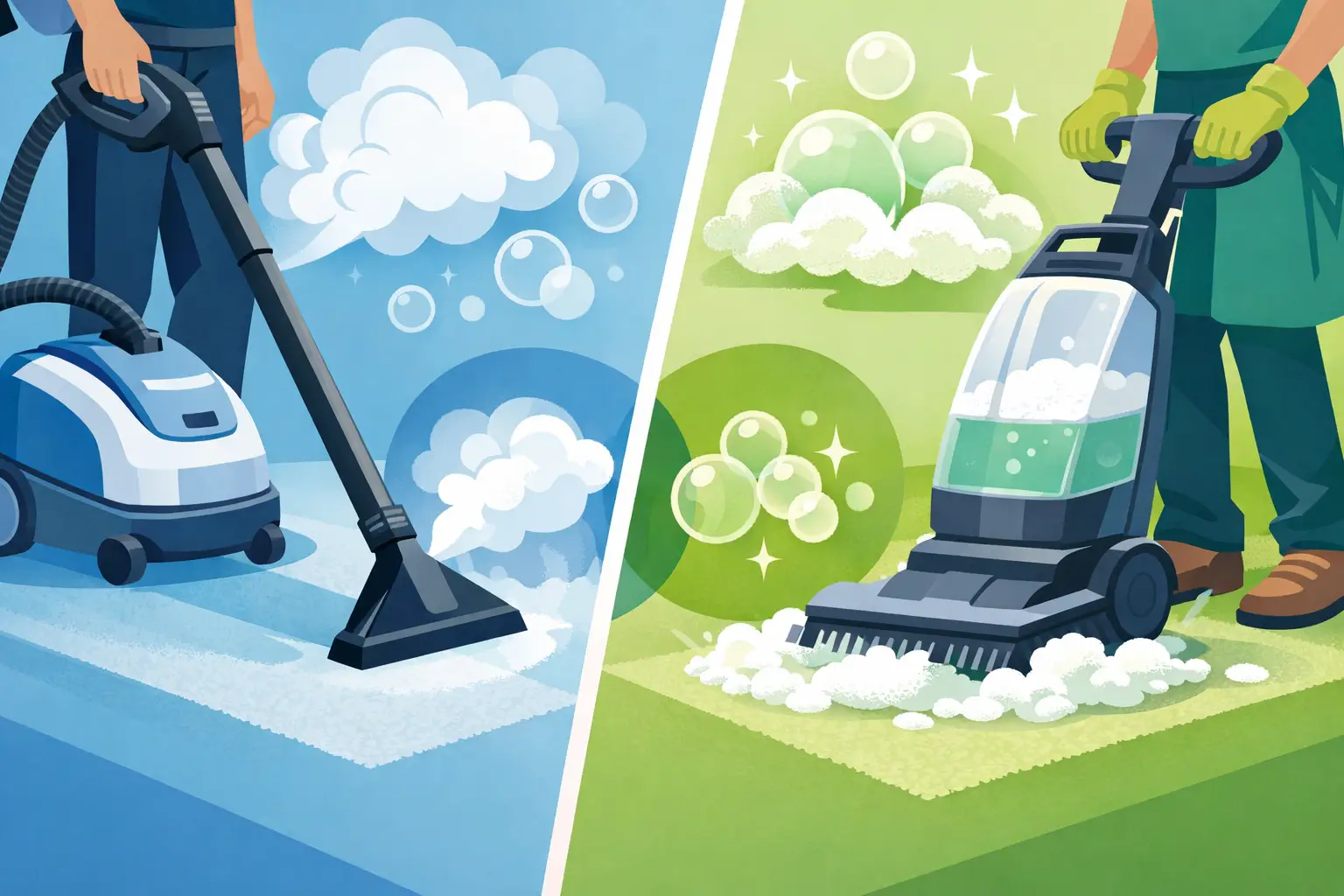
A carpet can look tired long before it is truly worn out. The real question is not whether it needs attention, but which method will bring it back properly. When weighing up steam cleaning vs shampooing, the right choice depends on what you need most – deeper hygiene, faster drying, stain treatment, or a lower upfront cost.
For busy households, landlords preparing a property, or office managers trying to keep presentation standards high, the difference matters. One method can leave carpets refreshed and ready to use within hours. The other may be helpful in certain heavy-soil situations, but it can also leave behind residue if it is not handled well. That is why understanding the method before booking is worth your time.
Steam cleaning vs shampooing: the key difference
Steam cleaning, more accurately known as hot water extraction, uses hot water and cleaning solution driven deep into carpet fibres and then extracted back out with powerful suction. Despite the name, it is not just steam alone. The process is designed to loosen dirt, lift allergens, and remove contaminants from below the surface.
Shampooing works differently. It applies a foaming detergent to the carpet and uses a machine with rotating brushes to scrub the fibres. This can make the carpet look cleaner quickly, especially on the surface, but the process often relies more heavily on detergent and mechanical agitation than extraction.
In simple terms, steam cleaning is usually about rinsing away soil from deep within the pile, while shampooing is more about scrubbing and treating the top layers. That single difference shapes the results, drying time, feel underfoot, and long-term cleanliness.
Which method cleans more thoroughly?
If your priority is hygiene and a more complete clean, steam cleaning usually comes out ahead. The hot water extraction process reaches deeper into the carpet, helping remove dust, allergens, tracked-in dirt, and residues that ordinary vacuuming cannot touch. For homes with pets, children, or allergy concerns, that deeper result is often the deciding factor.
Shampooing can improve appearance, particularly where there is visible grime matted into the fibres. The brushes do a good job of agitation, which can help break up stubborn soil. However, if too much product is left behind, that residue can attract fresh dirt more quickly. A carpet may look better immediately after cleaning but start to lose that freshness sooner than expected.
This is where professional technique matters. A poorly performed steam clean can leave too much moisture behind, and poor shampooing can leave the carpet sticky or flat. The method matters, but so does the standard of service.
What about bacteria and allergens?
Steam cleaning is generally the better option when hygiene is a major concern. The combination of heat, cleaning solution, and strong extraction helps remove pollutants more effectively than surface-level scrubbing alone. It is often the preferred choice in homes where cleanliness is not just about appearance but about creating a healthier environment.
Shampooing can still play a role, but it is usually not the first recommendation where allergy reduction or deeper sanitisation is the main aim.
Drying time and day-to-day convenience
One of the biggest practical differences between steam cleaning and shampooing is drying time. Steam cleaning uses water, but professional machines are built to extract much of that moisture back out. In many cases, carpets are dry within a few hours, though thicker piles, colder weather, and limited ventilation can extend that.
Shampooing can sometimes leave carpets wetter for longer, especially if more product and water are worked into the fibres than removed. That can be inconvenient in busy homes and commercial settings where rooms need to be back in use quickly.
For landlords turning around a tenancy, or businesses trying to minimise disruption, that timing matters. A method that cleans well but keeps a room out of action for too long is not always the practical winner.
Does faster always mean better?
Not necessarily. A quick surface refresh may suit some situations, such as light maintenance in a lower-traffic area. But if the carpet is carrying odours, stains, or months of trapped dirt, speed alone should not decide the job. The better question is how long you want the result to last.
Stain removal and appearance
There is no universal winner on every stain. Some marks respond well to agitation and pre-treatment, while others need extraction to pull the stain from deeper in the fibres. In most real-world cases, steam cleaning offers the stronger all-round result because it does not just disturb the stain – it helps remove the loosened material altogether.
Shampooing may improve the look of a heavily soiled carpet, especially where the pile needs reviving. Yet aggressive brushing can sometimes be too harsh for delicate fibres, and overworking the area may affect the texture.
For wool carpets, higher-end finishes, or upholstery fabrics, a more tailored approach is essential. The safest and most effective option depends on the material, the stain, and how long it has been there. That is another reason professional assessment has real value.
Cost, value, and long-term results
Shampooing can appear to be the cheaper option, particularly in budget cleaning packages or DIY machine hire. But lower initial cost does not always mean better value. If residue causes carpets to re-soil faster, or if the clean is more cosmetic than thorough, you may find yourself needing the service again sooner.
Steam cleaning often offers better long-term value because it removes more of what is actually embedded in the carpet. When done properly, it can help preserve the look and feel of the fibres for longer, reducing the need for repeated treatments.
For property managers and business owners, this matters beyond appearance. Carpets represent a real investment. A cleaning method that supports longevity, hygiene, and presentation can be the more economical choice over time.
When shampooing still makes sense
Although steam cleaning is often the preferred professional method, shampooing is not without merit. It can be useful for certain heavily soiled carpets where agitation is needed to loosen compacted dirt before further treatment. It may also suit older carpets in lower-risk settings where a surface improvement is the main goal rather than a deep hygienic clean.
That said, shampooing works best when used carefully, with the right products, and with a clear understanding of the carpet type. It should not be treated as a one-size-fits-all solution.
When steam cleaning is usually the better choice
Steam cleaning is generally the stronger option for family homes, rental properties, offices, and furnished spaces where cleanliness, freshness, and fabric care all matter. It is especially well suited to high-traffic areas, homes with pets, end of tenancy cleaning, and situations where odour removal is part of the brief.
For clients across homes and workplaces in the South West, this is often the method that delivers the balance people actually want – a carpet that looks better, feels cleaner, dries in a reasonable time, and supports a healthier indoor environment.
How to choose the right service
The best decision starts with the condition of the carpet rather than the name of the method. Ask what the carpet is made from, how heavily it is used, whether there are stains or odours, and how quickly the area needs to be ready again. A good cleaning provider should explain the trade-offs clearly and recommend the method that fits the space, not the method that is easiest to sell.
If you are dealing with a busy household, a managed property, or a client-facing workspace, it pays to choose a service that combines technical know-how with care. Blueglade Cleaning approaches carpet and upholstery cleaning with that balance in mind – precision in the process, practical advice, and results designed to last.
Steam cleaning vs shampooing is not really about picking a buzzword. It is about choosing the method that respects your carpet, suits your schedule, and leaves the space feeling properly refreshed. If you want a cleaner that looks good and performs well beyond the first day, the deeper clean is often the one worth choosing.
Leave a Reply