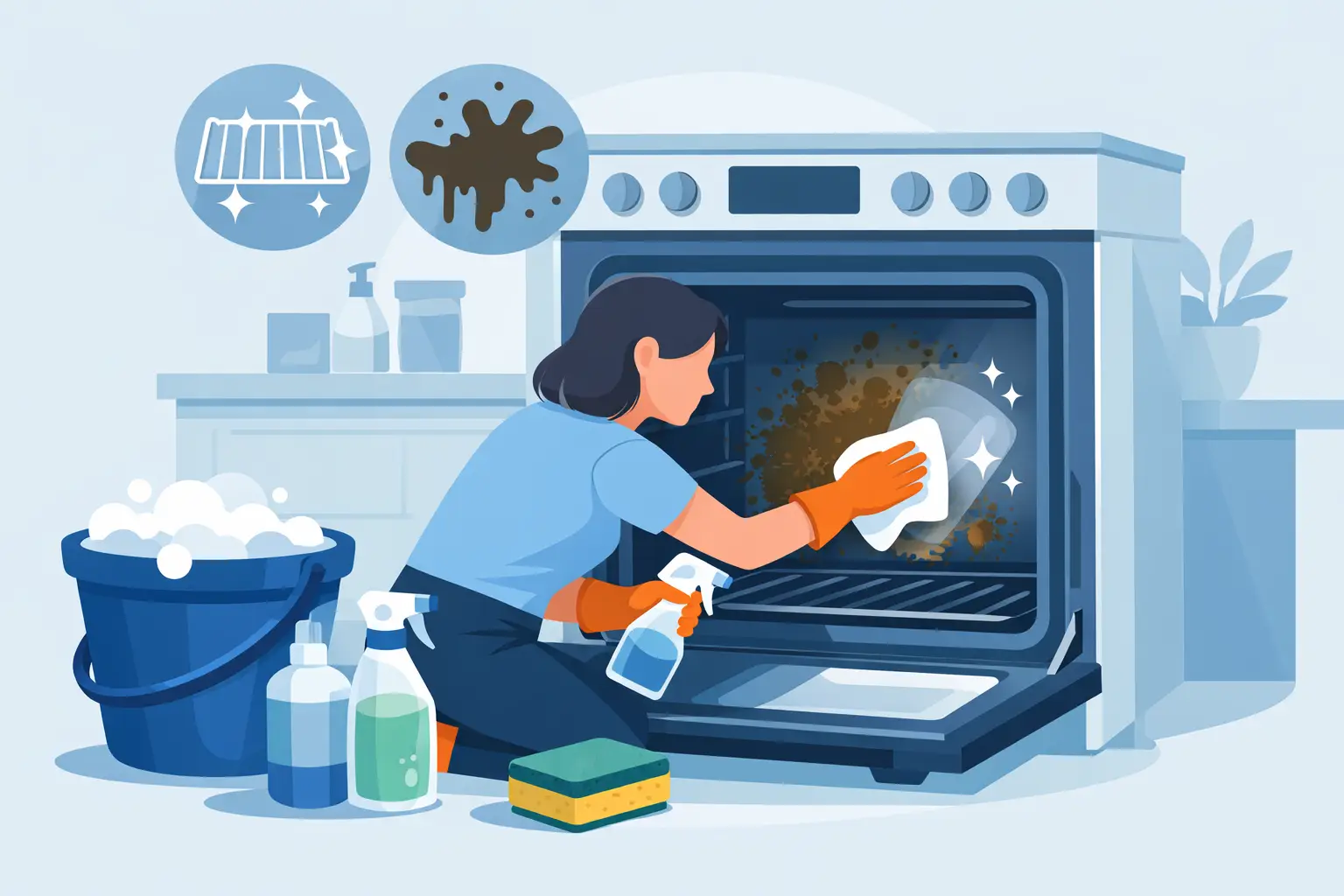
That sticky film on the oven door is rarely just one missed clean. It is usually months of splatters, heat and smoke settling into a stubborn layer that ordinary wiping will not touch. If you are wondering how to remove oven grease without wasting an afternoon scrubbing, the right method matters as much as the product you use.
A grease-heavy oven affects more than appearance. It can create unpleasant odours, produce extra smoke during cooking and make the whole kitchen feel less hygienic than it should. For busy households, rental properties and shared spaces, getting the oven back to a clean, presentable standard is often less about perfection and more about using a process that is safe, efficient and realistic.
How to remove oven grease without damaging surfaces
The first step is to let the oven cool fully. Cleaning a warm oven can seem tempting because grease softens with heat, but it also increases the risk of burns and can make products evaporate too quickly. Once cool, remove the shelves, trays and any loose crumbs. A dry cloth or hand brush helps here because it clears the debris before you introduce moisture.
Next, choose a cleaner that suits the level of build-up. For light to moderate grease, a paste of bicarbonate of soda and water can be very effective. It is gentle, widely available and suitable for many oven interiors. For heavier deposits, especially around the door edges and the roof of the oven, a specialist degreaser may save considerable time. The trade-off is that stronger products often require more ventilation and more careful handling.
Apply your chosen cleaner to greasy areas and let it dwell. This waiting time is where much of the work happens. Scrubbing too soon often leads to frustration because the grease has not had time to break down. Ten to thirty minutes is usually enough for moderate grime, while tougher areas may need longer, provided the product instructions allow it.
When you begin wiping, use a soft non-scratch pad or microfibre cloth. Work in sections rather than attacking the whole oven at once. This keeps the job controlled and helps you see where grease is lifting cleanly and where it needs a second pass. If you use an abrasive scourer on enamel or glass, you may remove the grease but leave fine scratches behind.
The areas most people miss
The inside of the oven door often needs more attention than the cavity itself. Grease builds up there quickly because it catches steam and splashes at eye level. If the glass is removable according to the manufacturer guidance, cleaning between the panels can dramatically improve the look of the oven. If it is not designed for easy access, it is best not to force it.
Shelf runners, hinges and the rubber seal around the door are also common problem areas. Grease settles into these edges and can transfer back onto clean cloths if left untouched. A small brush, such as an old washing-up brush or detailing brush, helps loosen grime from corners without damaging the finish.
Then there are the oven shelves. These are often the most awkward part because the grease is baked onto metal bars from every angle. Soaking them in hot water with washing-up liquid can help, but for heavily soiled racks, you may need a degreasing soak and a non-scratch pad afterwards. If space is limited, the bath is the usual fallback, though a towel underneath is sensible to protect the surface.
What to use for baked-on grease
Baked-on grease is where many home methods start to struggle. If the residue feels varnished rather than oily, it has been repeatedly heated and hardened over time. In these cases, a bicarbonate paste can still help, but it will usually need several rounds rather than one quick wipe.
A dedicated oven cleaner is often the faster option for severe build-up. The key is to follow the label closely, especially around contact time, gloves and ventilation. More product does not always mean better results. In fact, overapplying cleaner can leave a residue that is almost as unpleasant as the grease itself.
Steam cleaning can also help loosen stubborn grime, but it depends on the oven type and the amount of grease involved. Steam is useful for softening deposits, though it is not always strong enough to cut through thick layers on its own. Think of it as a helpful first stage, not always the full answer.
Natural methods versus specialist products
If you prefer a lower-chemical approach, bicarbonate of soda, warm water, white vinegar and washing-up liquid are the usual staples. They work well for maintenance cleans and for ovens that are dirty but not heavily carbonised. They are also easier to use in homes where strong chemical smells are a concern.
That said, natural methods do take longer. They rely more on soaking, repeat applications and patient wiping. For a lightly used family oven, that may be perfectly reasonable. For a neglected oven at the end of a tenancy, or one in a busy household where grease has built up over months, specialist products can be more practical.
There is no one-size-fits-all answer. The best approach depends on how often the oven is used, what has been cooked in it and how long the grease has been left in place. The right choice is the one that gets the result safely, without turning a cleaning job into an all-day project.
How often should you clean an oven?
A quick wipe after spills makes a bigger difference than most people expect. If grease and food residue are removed before they bake on repeatedly, deep cleaning becomes much easier. For most households, a more thorough oven clean every few months is enough to keep things under control.
If you cook often, roast regularly or use oils that splatter, you may need to clean it more frequently. Landlords and letting agents will know that ovens also attract attention during inspections and end of tenancy checks. In those situations, visible grease can make an otherwise tidy kitchen feel poorly maintained.
Signs it is time for a deeper clean
You do not need to wait until the oven looks blackened to act. A greasy smell when preheating, smoke from old splatters, cloudy oven glass and sticky shelf runners are all signs that residue is building up beyond a quick wipe-down.
At that point, surface cleaning may improve the appearance, but it will not fully deal with the grime. A deeper clean restores both presentation and usability, which matters whether you are cooking for the family, preparing a property for viewings or simply trying to keep your kitchen to a higher standard.
When professional oven cleaning is worth it
There are times when knowing how to remove oven grease is useful, and times when handing the job over is simply the better decision. If the grease is thick, burnt on and spread across shelves, door glass and the interior lining, professional cleaning can save a significant amount of time and effort.
It is also a sensible option if you are short on time, sensitive to strong cleaning products or preparing a property for sale, tenancy changeover or inspection. A professionally cleaned oven does not just look better. It feels cared for, and that has value in both domestic and commercial settings.
For busy clients across the South West, this is often where convenience becomes just as important as cleanliness. A service-led approach means the work is handled with the right products, proper care and a standard that is difficult to achieve with rushed DIY cleaning.
Blueglade Cleaning sees this often with end of tenancy cleans and deep cleans, where the oven becomes one of the most labour-intensive parts of the kitchen. Left too long, grease rarely stays a simple wipe-away job.
A few mistakes to avoid
One of the biggest mistakes is mixing products, particularly anything containing bleach with other cleaners. Another is using sharp tools to scrape grease from glass or enamel, which can damage the surface permanently. Even harsh scrubbing with the wrong pad can dull finishes and leave marks.
It is also easy to forget the final rinse. Any cleaner left behind inside the oven can create fumes or smells the next time it is heated. Once the grease is removed, wipe every cleaned area with a fresh damp cloth until no residue remains, then dry with a separate cloth for a clearer finish.
If your oven has a self-cleaning setting, check the manual before using any product inside. Some liners and coatings are designed to work in a specific way, and using the wrong cleaner may reduce their effectiveness.
A clean oven changes the feel of the whole kitchen. It looks sharper, works more pleasantly and gives you one less neglected job at the back of your mind. Whether you tackle it yourself or bring in expert help, the best approach is the one that restores a spotless result with as little hassle as possible.
Leave a Reply