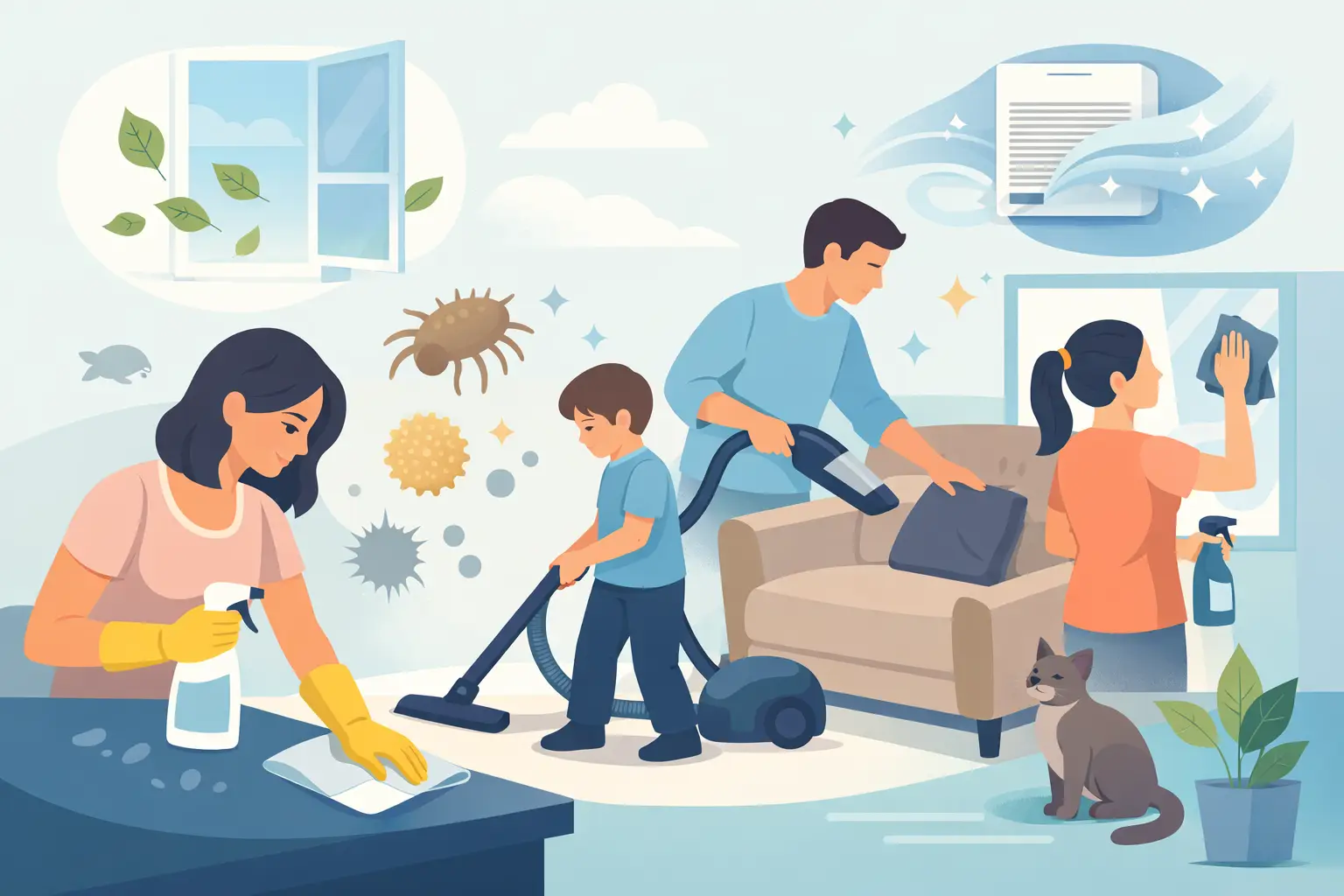
One missed dusting session rarely causes trouble. The real issue is what builds up quietly over days – dust mites in bedding, pollen on window ledges, pet dander in soft furnishings and moisture that encourages mould. A reliable family allergy cleaning routine helps keep those triggers under control before they start affecting sleep, comfort and day-to-day life.
For busy households, the goal is not to clean more for the sake of it. It is to clean with precision. That means focusing on the areas that collect allergens fastest, choosing methods that remove particles rather than spreading them around, and setting a rhythm your household can realistically maintain.
Why a family allergy cleaning routine matters
Allergy-friendly cleaning is less about perfection and more about consistency. Many common symptoms – sneezing, itchy eyes, blocked noses, overnight coughing and irritated skin – can worsen when allergens are allowed to settle into fabrics, carpets and overlooked corners. A home can look tidy and still hold a surprising amount of irritants.
This is why occasional deep cleans, while useful, are not always enough on their own. If bedding is changed irregularly, floors are vacuumed without proper filtration, or damp areas are left untreated, allergens return quickly. A structured routine lowers that background level of exposure and helps the home feel fresher between larger cleaning sessions.
There is also a practical benefit for families balancing work, school runs and everything else. A planned routine removes guesswork. Instead of reacting when symptoms flare up, you already know what needs attention daily, weekly and monthly.
What to target first in an allergy-focused home
Not every room needs the same level of attention. Bedrooms usually deserve top priority because that is where people spend long, uninterrupted periods. Bedding, mattresses, curtains and under-bed dust all contribute to overnight exposure. If someone in the household wakes congested or restless, start there.
Living rooms come next, especially if the space includes rugs, upholstered seating, throws or pets. These soft surfaces trap dander and dust easily. Kitchens and bathrooms matter for a different reason. They are less about dust mites and more about moisture, ventilation and mould prevention.
Hallways also play a larger role than many people expect. Shoes, coats, school bags and prams carry pollen, dust and outdoor debris into the home. A cleaner entrance area often reduces what spreads elsewhere.
The daily habits that make the biggest difference
A strong family allergy cleaning routine does not need to be complicated. Daily tasks should be quick, targeted and easy to repeat.
Start with ventilation, but use judgement. Opening windows can help reduce stale air and indoor moisture, yet during high pollen days it may make symptoms worse. If pollen is a known trigger, air the home early in the morning or after rain when levels may be lower, and avoid leaving windows wide open all afternoon.
Wipe hard surfaces with a damp microfibre cloth rather than a dry duster. Dry dusting often lifts particles into the air only for them to settle again. The same principle applies to floors. If you are dealing with fine dust or pet hair on hard flooring, vacuuming with a suitable filter is usually better than sweeping.
In the kitchen and bathroom, keep moisture under control. Dry sinks, taps, tiles and shower screens where possible, and do not let damp towels sit in a heap. Small actions here reduce the chance of mould growth, which can be a major irritant in sensitive homes.
It also helps to create a simple entrance routine. Shoes off at the door, coats stored neatly and bags kept off beds and sofas can cut down how much pollen and dirt travels through the house.
Your weekly family allergy cleaning routine
The weekly schedule is where the real progress happens. Bedding should be changed regularly, ideally once a week, because sheets and pillowcases collect skin cells, sweat and dust mite matter quickly. If symptoms are more severe, washing pillow protectors and lightweight throws more often may help.
Vacuuming should be thorough rather than rushed. Focus on carpets, rugs, skirting boards, corners, under beds and upholstered furniture. If your vacuum does not have effective filtration, some fine particles may simply be blown back into the room. That is one of the clearest trade-offs in allergy cleaning – cheaper tools can cost you in air quality.
Dust from top to bottom so loosened particles do not land on already-cleaned areas. Shelves, lamp bases, picture frames, blinds, headboards and the tops of wardrobes are all common dust collectors. In family homes, it is easy to keep visible surfaces presentable while neglecting higher or less obvious areas that quietly build up allergens.
Bathrooms should be cleaned with particular attention to grout, seals, extractor fans and any areas where condensation lingers. In kitchens, wipe cupboard fronts, clean flooring thoroughly and check behind small appliances where crumbs and dust can gather.
If you have pets, weekly washing of pet bedding is well worth the effort. Grooming also helps, but it should be done in a way that does not spread hair and dander indoors.
Monthly jobs that stop allergens from building up
A monthly reset supports the rest of the routine. Wash curtains if practical, or at least vacuum them carefully. Clean behind and beneath larger furniture. Wipe down radiators, vents and internal window frames. These are easy to overlook, yet they collect a fine layer of dust that circulates again once heating or airflow picks up.
Mattresses benefit from careful vacuuming, especially around seams. Soft furnishings such as cushion covers and washable sofa throws should also be laundered regularly. If a room always seems dusty soon after cleaning, this deeper monthly attention often reveals the source.
This is also the right time to check for hidden damp. Look at corners behind wardrobes, around windows and near exterior walls. Allergy control is not only about dust and pollen. Mould spores can be just as disruptive, and they tend to spread quietly until the problem is obvious.
Products and methods that help – and those that do not
Stronger is not always better. Highly fragranced products may leave a room smelling fresh, but they can irritate sensitive family members. In many cases, a simpler approach with effective, low-residue products is the better choice.
Microfibre cloths, a good vacuum with proper filtration and washable cleaning materials usually do more for allergen control than a cupboard full of sprays. The aim is removal, not masking. If a product leaves sticky residue, it may actually encourage dust to cling to surfaces faster.
Air purifiers can help in some homes, particularly in bedrooms, but they should not be treated as a substitute for cleaning. The same applies to dehumidifiers. They can support a healthier indoor environment where damp is an issue, yet they work best alongside regular cleaning and ventilation habits.
When your routine needs adjusting
No two households collect allergens in quite the same way. A family in a carpeted home with a dog will need a different routine from someone in a smaller flat with hard floors and pollen sensitivity. Season also changes the picture. Spring and summer often bring more outdoor allergens indoors, while autumn and winter can worsen condensation and mould risk.
If someone is still struggling despite regular cleaning, it may be time to simplify the space. Fewer unnecessary textiles, less clutter on open shelving and easier-to-clean window coverings can make ongoing maintenance far more effective. This is not about making the home feel clinical. It is about reducing surfaces where irritants settle and linger.
There are also times when professional support makes sense. Deep carpet cleaning, upholstery cleaning, post-build dust removal or a full-property reset after illness, renovation or tenancy change can dramatically improve the baseline. For families across the South West who want a healthier home without sacrificing time, this is often where a trusted service adds real value.
Keeping the routine realistic
The best routine is the one your household will actually keep. If a plan is too ambitious, it gets dropped the moment life becomes busy. A better approach is to anchor key tasks to the week – bedding on one day, vacuuming on another, bathroom moisture control every evening, and a monthly deeper clean booked into the diary.
That rhythm brings peace of mind. You are no longer waiting for symptoms to tell you the house needs attention. You are staying ahead of the problem with care, consistency and the right level of detail.
A cleaner home will never remove every allergen completely, but a thoughtful routine can make daily life noticeably easier. When cleaning is done with purpose, the result is not just a tidier space. It is a home that feels calmer, fresher and more comfortable for everyone in it.
Leave a Reply