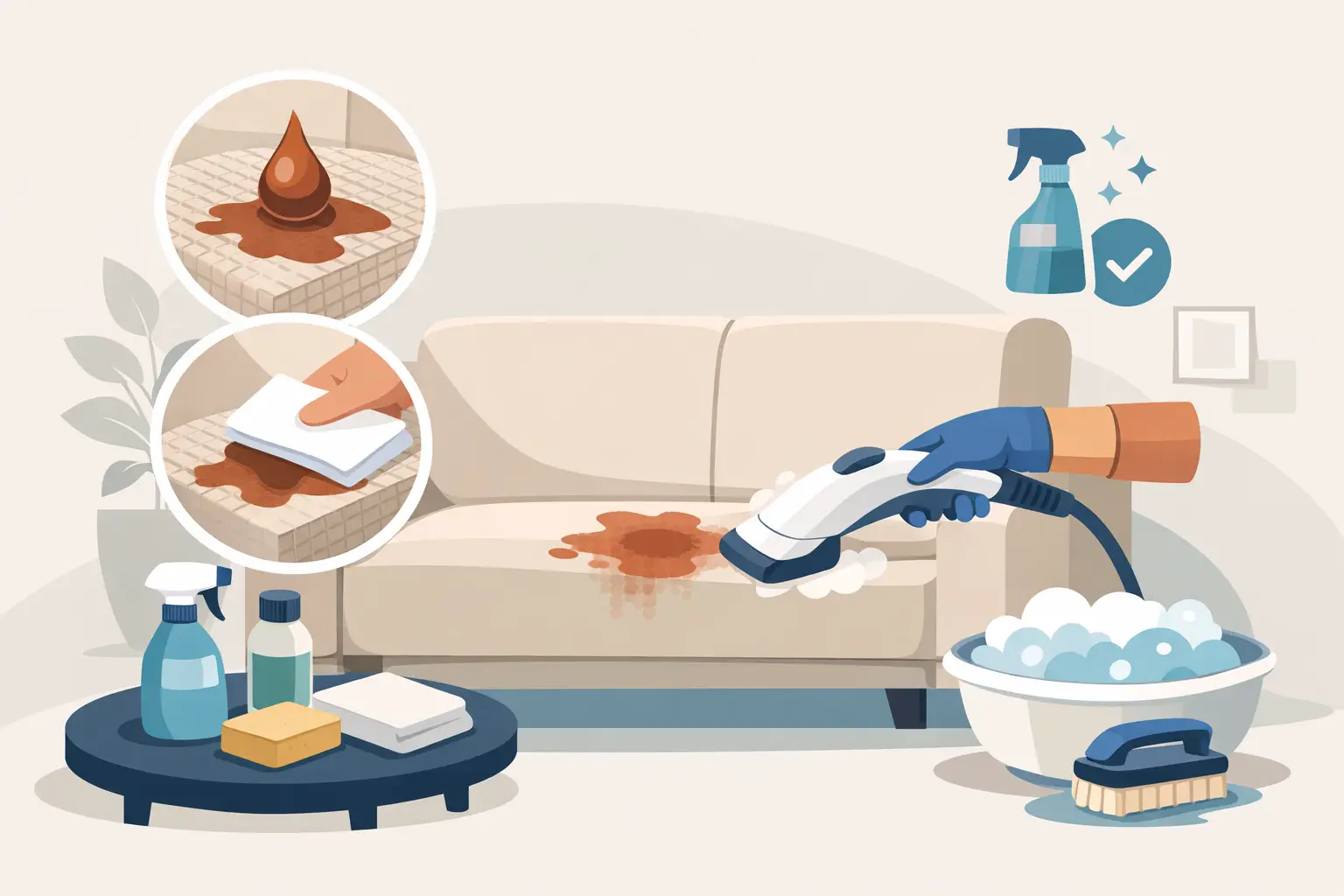
A spilled coffee on a sofa rarely happens when you have time to spare. It happens during school runs, before guests arrive, or halfway through a working lunch on the settee. That is exactly why a clear guide to upholstery stain removal matters – the faster and more confidently you act, the better your chances of lifting the mark without setting it deeper into the fabric.
Upholstery stains can look dramatic in the moment, but they do not all need the same response. The right approach depends on the fabric, the age of the stain, and what caused it in the first place. A rushed scrub with the wrong product can do more harm than the spill itself, especially on delicate fibres or cushion covers with specialist finishes.
Before you treat any stain
Start with the care label if it is still attached. Many upholstered pieces include cleaning codes that tell you whether the fabric can handle water-based products, solvent-based products, or only professional attention. If that label is missing, caution matters even more.
Always test any cleaning solution on a hidden area first, such as the back edge of a cushion or the lower rear panel. Wait for it to dry fully before deciding it is safe. Some fabrics darken temporarily with moisture, while others may lose texture, fade, or develop a ring if over-wet.
The golden rule is blot, not rub. Rubbing pushes the stain further into the fibres and can rough up the surface, leaving the area looking worn even after the stain has faded. Use a clean white cloth or plain kitchen roll so there is no risk of dye transfer.
If there are solids involved – food, mud, wax or similar – lift them away gently first. A spoon or blunt edge works better than pressing down with a cloth. Once the excess is removed, you can focus on the remaining mark.
Your guide to upholstery stain removal by stain type
Different stains behave differently, so treatment should be tailored rather than improvised.
Tea, coffee and soft drinks
These are among the most common household upholstery stains. Blot the liquid immediately, working from the outside of the stain towards the centre. That helps stop it spreading.
For most durable fabrics, a small amount of mild washing-up liquid mixed with lukewarm water is a sensible first step. Dampen a cloth rather than soaking the upholstery, then blot repeatedly. Follow with a second cloth lightly dampened with plain water to remove residue. If you leave soap behind, it can attract more dirt later.
Tea and coffee with milk can leave both a tannin stain and a greasy trace. If the mark remains after the first clean, repeat the process gently rather than increasing the strength of the solution too quickly.
Red wine and fruit juice
These need quick action. Blot at once and avoid salt, which is a popular tip but not always the most fabric-friendly choice. A mild detergent solution is usually the safest starting point for washable upholstery fabrics.
If the stain has already dried, it becomes more difficult. You may still reduce it, but older red and purple stains often need professional treatment, particularly on pale upholstery where shadowing is noticeable.
Grease, oil and butter
Greasy stains need a different mindset. Water alone is unlikely to shift them. First, blot away any excess with a dry cloth. If the fabric allows it, a small amount of washing-up liquid can help break down the grease because it is designed to cut through oils.
Use very little product and work patiently. Over-wetting can spread the oily residue further, creating a larger patch. Once the stain lifts, remove any detergent residue with a lightly damp cloth and allow the area to dry naturally.
Pet accidents
These are not just about appearance. Odour and hygiene matter too. Blot immediately and avoid hot water, which can set protein-based stains and smells.
A mild upholstery-safe cleaner may help with the visible mark, but lingering odour often needs an enzyme-based product designed for pet accidents. The key is using something suitable for the specific fabric. On delicate or high-value upholstery, professional cleaning is often the safer option because masking the smell is not the same as removing it.
Ink and cosmetics
Ink, lipstick and foundation can be stubborn because they often contain oils, waxes and pigments. These stains are where people most often make matters worse by scrubbing hard or mixing multiple products.
For ink, dab carefully and avoid spreading it. For cosmetics, lift any excess first before blotting. Solvent-based treatments may be effective on some fabrics, but this is the point where fabric sensitivity becomes a serious concern. If the upholstery is velvet, linen, wool blend or a statement piece you cannot risk damaging, it is wise to stop early and bring in a professional cleaner.
Common mistakes that make stains worse
A useful guide to upholstery stain removal should also cover what not to do. Some of the most common mistakes are treating all fabrics the same, using too much water, scrubbing aggressively, and reaching straight for bleach or strong multi-purpose sprays.
Another issue is impatience. Many stains need repeated gentle blotting rather than one heavy-handed attempt. The goal is controlled removal, not speed at any cost. Furniture fabric is not the same as a kitchen worktop, and it should not be treated that way.
Hairdryers and direct heat are also risky. Heat can set certain stains permanently and may affect the fabric’s finish. Let the area air dry naturally, ideally with good ventilation.
When DIY works – and when it doesn’t
Fresh, surface-level stains on durable synthetic upholstery are often manageable at home if you act quickly and use the right method. That is especially true for simple spills like water-based drinks or light food marks.
It becomes less straightforward when the stain is old, deeply set, oil-based, or on a delicate fabric. Patterned upholstery can also be deceptive. Even if you remove the main stain, you may leave a water mark or uneven patch that stands out in daylight.
There is also the hygiene factor. Upholstery does not just collect visible dirt. It can hold odours, allergens, body oils and bacteria beneath the surface. A stain may look gone while residue remains in the padding underneath.
For landlords preparing a property, office managers maintaining client-facing furniture, or homeowners protecting an expensive suite, professional upholstery cleaning offers more control. The process is designed not only to treat the stain but to clean evenly, protect the fabric and leave the whole piece refreshed rather than patchy.
Fabric type changes everything
Cotton and synthetic blends are often more forgiving, though they can still shrink or mark if over-wet. Linen looks elegant but tends to watermark easily. Velvet can lose its pile or texture if handled roughly. Wool blends may react badly to overly alkaline products. Leather is a category of its own and should never be treated like woven upholstery.
That is why product advice on a bottle is only half the story. The same cleaner that works well on one dining chair could spoil another. If the furniture was a considered investment, or part of a staged property where presentation matters, caution is not overthinking – it is sensible care.
How to keep stains from becoming a bigger problem
Prevention is quieter than stain removal, but it saves time and protects the finish of your furniture. Regular vacuuming helps stop dust and grit from settling into fibres, where they dull the fabric and make marks harder to remove cleanly.
It also helps to deal with spills immediately, rotate cushions where possible, and keep heavily used seating away from habits that invite staining, such as balancing mugs on the armrest. In busy homes and shared workspaces, a professional clean every so often can restore freshness before wear becomes obvious.
For clients across South-West England, especially in homes, offices and managed properties where standards need to stay high, professional upholstery cleaning can be the practical difference between chasing stains reactively and keeping furnishings consistently presentable.
If you are ever unsure, remember this: the best stain removal is not the harshest method, but the one that protects the fabric while solving the problem. A careful response today can keep your upholstery looking elegant for years to come.
Leave a Reply