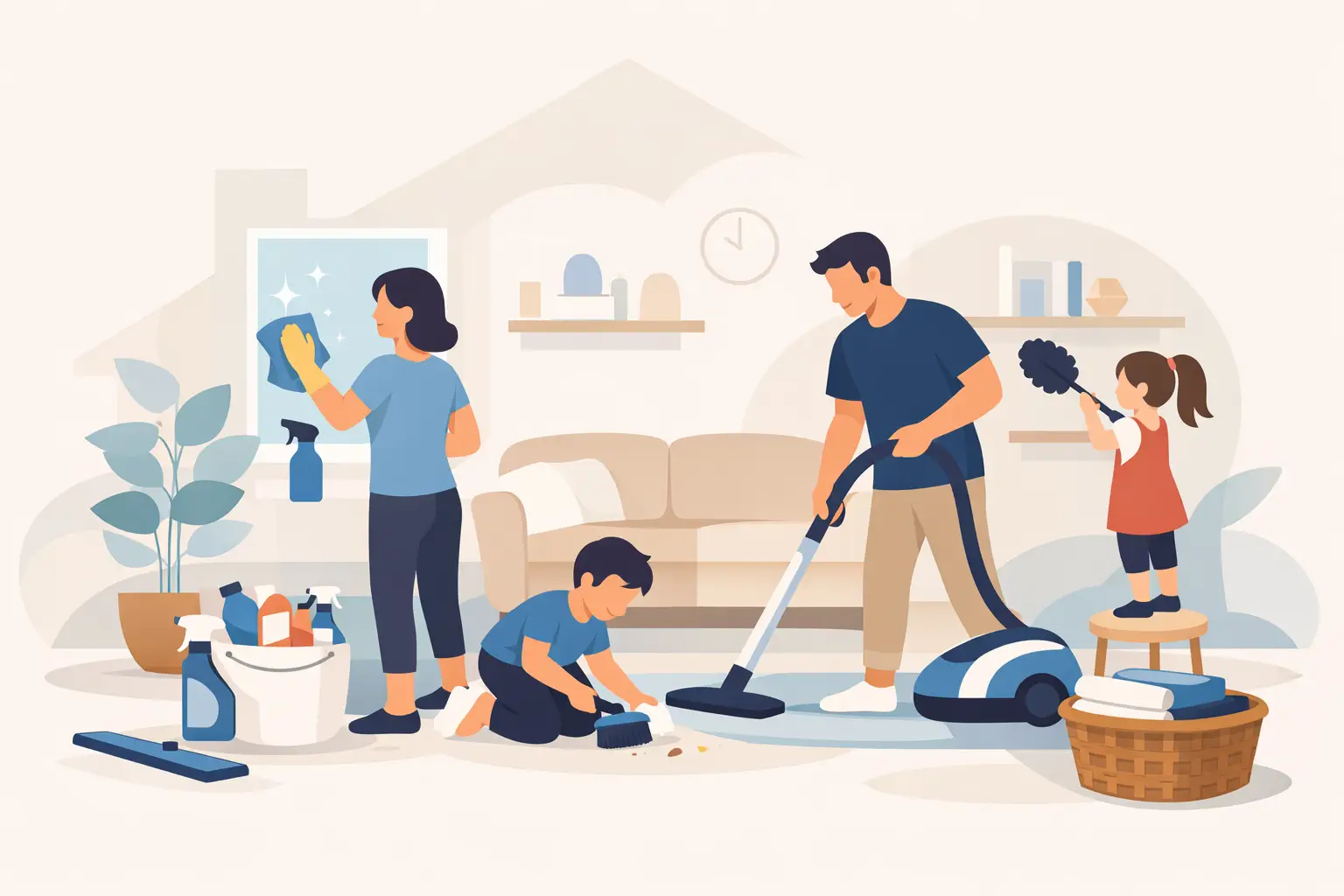
School shoes by the door, breakfast dishes still in the sink, laundry building up faster than anyone remembers starting it – family life does not create mess on a schedule. That is exactly why the best cleaning plan for families is not the most ambitious one. It is the one that keeps your home presentable, hygienic and manageable even on the weeks when everything feels full.
A strong family cleaning plan should do three things well. It should protect the areas that affect daily comfort, stop small jobs from turning into major resets, and fit around real routines rather than ideal ones. If a plan only works when everyone has spare time and endless energy, it is not a plan for family life. It is a wish list.
What the best cleaning plan for families really looks like
The most effective routine is built in layers. Instead of trying to clean the whole house to the same standard every day, it helps to separate cleaning into daily upkeep, weekly attention, and less frequent deeper work.
Daily upkeep is about control. You are not aiming for perfection. You are stopping clutter, crumbs, spills and bathroom use from making the house feel chaotic. In most family homes, this means keeping the kitchen workable, the bathrooms fresh, floors reasonably clear, and the main living area reset at the end of the day.
Weekly cleaning is where you restore standards. This is the time for hoovering throughout, mopping hard floors, changing bed linen, wiping down bathroom surfaces properly, dusting, and dealing with appliances or surfaces that collect build-up. It is enough to make the home feel clean again without asking too much from one day.
Then there is deep cleaning. Ovens, skirting boards, inside cupboards, upholstery, windows, carpets and the hard-to-reach areas usually sit outside the weekly rhythm. Families often struggle here, not because these jobs are unimportant, but because they are time-heavy and easy to postpone. That is where a scheduled seasonal reset, or professional support, can make a noticeable difference.
Start with pressure points, not perfection
Every family home has pressure points. These are the areas that become unpleasant fastest and create the most stress when ignored. For most households, they are the kitchen, the bathroom, the hallway and the main living space.
The kitchen matters because it is used constantly. Food prep, packed lunches, after-school snacks and evening meals all pass through the same surfaces. A sensible plan focuses on wiping worktops daily, staying on top of the sink, keeping the hob from building up grease, and clearing the floor often enough that crumbs do not travel through the house.
Bathrooms need a similar approach. They do not always need a full clean every day, but they do need regular attention. A quick wipe of the basin and taps, a toilet freshen-up, and keeping towels and floors under control can stop the room tipping from busy to unhygienic.
Hallways and entrances deserve more attention than they often get. Coats, shoes, bags and pet leads tend to collect there, and they set the tone for the rest of the home. If this area is organised and swept through regularly, the whole house feels calmer.
The living room is usually where family life lands. Toys, blankets, remote controls, drinks, crumbs and school things can build up quickly. A five to ten minute reset in the evening often does more for a home’s overall appearance than an occasional large tidy.
A weekly rhythm that works for busy households
The best cleaning plan for families usually follows a repeatable weekly pattern. Not because every Tuesday must look the same forever, but because routines reduce decision-making. When people know what gets done and roughly when, the house is easier to manage.
One practical approach is to anchor cleaning tasks to the week rather than assigning a major whole-house clean to a single day. For example, bathrooms can be handled early in the week, floors midweek, bedrooms later on, and kitchen extras before the weekend. This spreads the effort and makes each task feel achievable.
There is also a trade-off here. A room-by-room plan is easier to remember, but a task-based plan can be quicker. Some families prefer cleaning all bathrooms at once and then all floors at once. Others would rather finish one room fully before moving on. The right option is the one your household is most likely to keep.
If both adults work, or if the week is packed with school runs and activities, evening micro-tasks are often more realistic than long cleaning sessions. Ten focused minutes on laundry, surfaces or floor care can keep standards high enough that the weekend does not disappear into catch-up.
How to share the load without creating more friction
A family cleaning plan only works long term if it is clear who does what. That does not always mean equal time, because households are rarely balanced in exactly the same way every week. It means fair responsibility, realistic expectations and simple ownership.
Children can help, but the task needs to suit their age and the standard needs to be realistic. Younger children can put toys away, match socks or wipe low surfaces. Older children can strip beds, empty bins, load the dishwasher or hoover bedrooms. Teenagers should be expected to manage more than their own room if they are part of the shared mess.
Adults usually carry the jobs that need consistency and judgement, such as kitchens, bathrooms, laundry systems and deeper weekly resets. Where this causes friction, it often helps to define non-negotiables. For example, dishes must be cleared each evening, bathroom floors are cleaned once a week, and beds are changed on a set day. Clear standards reduce repeated reminders.
It is also sensible to avoid overcomplicating the system. A colour-coded chart may look impressive, but if no one checks it after the first week, it has not helped. A short routine everyone understands is usually more effective than an elaborate plan no one follows.
When to clean yourself and when to bring in support
There is a difference between routine upkeep and labour-intensive cleaning. Families can often stay on top of everyday mess with a good plan, but that does not mean every task should remain in-house.
If weekends are regularly lost to scrubbing bathrooms, cleaning ovens, refreshing carpets or getting the home back to a baseline standard, it may be time to rethink the approach. Professional cleaning support is not just for large homes or special occasions. For many households, it is a practical way to protect time, reduce stress and maintain a healthier environment with less disruption.
This is particularly useful after illness in the home, before guests arrive, at the start of a new school term, or when work and family demands peak at the same time. A recurring professional clean can also support the cleaning plan rather than replace it, giving your household a reliable standard to maintain between visits.
For families across the South West, that balance between daily upkeep and professional support often delivers the most sustainable result. It keeps the home consistently clean without expecting every spare hour to be spent on chores.
Common mistakes that make cleaning plans fail
The first mistake is setting the bar too high. If your plan expects spotless bedrooms, folded laundry, polished surfaces and empty baskets every single day, it will probably fail by Wednesday. Family homes need practical standards, not showroom standards.
The second is treating every room as equally urgent. They are not. A spare room can wait. A kitchen with sticky floors and a full sink usually cannot. Prioritising high-use spaces gives a better return on effort.
The third is ignoring deep cleaning altogether. Dust behind furniture, built-up grease, tired upholstery and neglected carpets slowly affect how clean a home feels. Even when the weekly routine is solid, these areas need scheduled attention.
The last mistake is relying on motivation instead of systems. Most families are not short on good intentions. They are short on time, energy and spare headspace. Good cleaning plans reduce decisions, repeat easily and allow for busy weeks without the whole house unravelling.
A cleaner home should feel easier, not harder
The best family cleaning plan is one that protects your home and your time in equal measure. It keeps daily life under control, gives proper attention to the rooms that matter most, and leaves space for outside support when the workload grows beyond what is reasonable.
A well-kept home does not need constant chasing. With the right rhythm, clear priorities and a standard built around real life, cleanliness becomes less of a burden and more of a quiet advantage every family can feel.
Leave a Reply