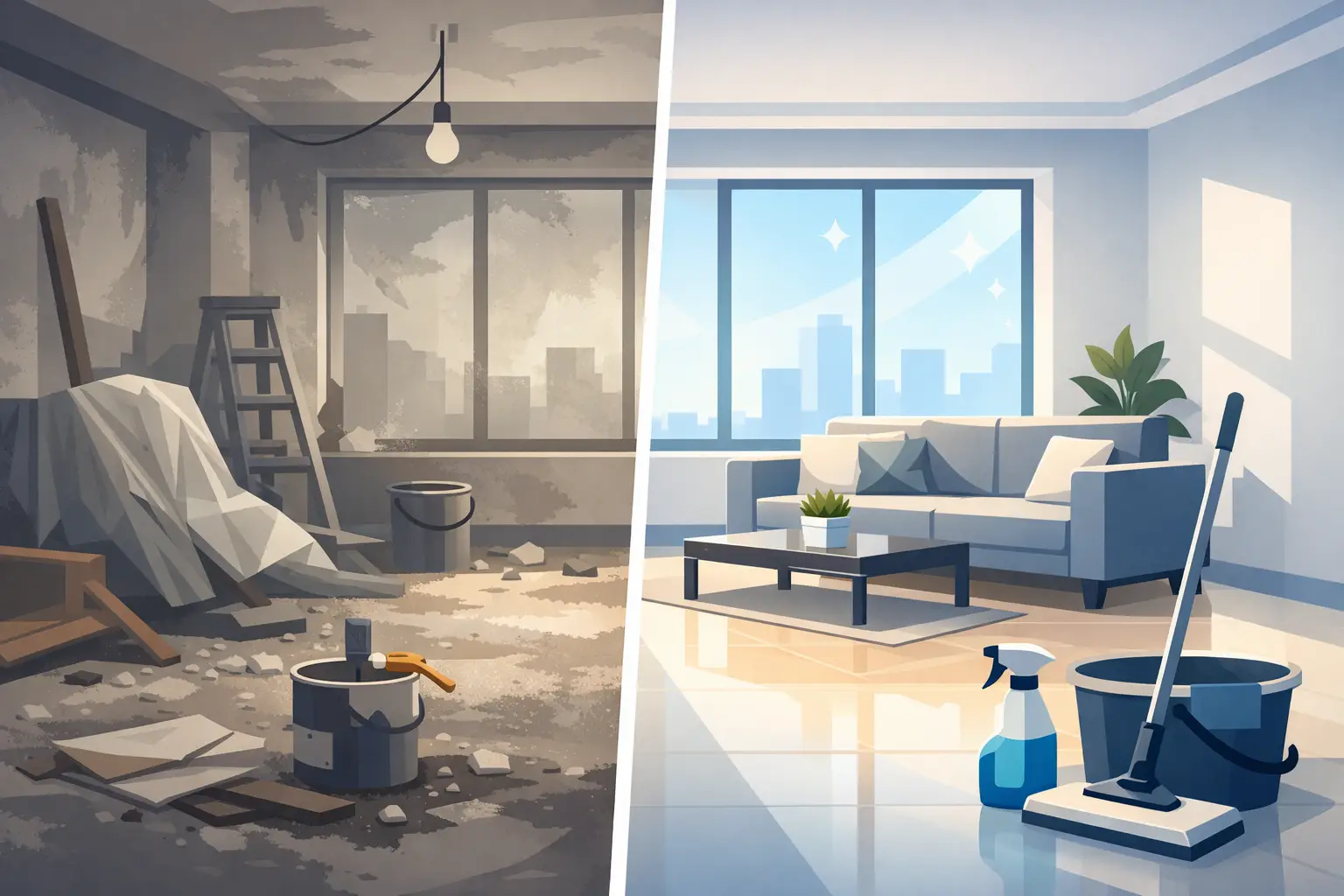
Fresh plaster dust on the skirting, protective film still clinging to frames, fine debris settled where no one expects it – this is the stage where post build cleaning before after results become very real. A newly finished property can look complete at first glance, yet still feel far from ready to live in, hand over, or present to clients. The difference is rarely cosmetic alone. It is about safety, presentation, comfort, and that final standard of finish.
Why post build cleaning before after matters
After construction or renovation, surfaces hold more than visible mess. Dust travels into corners, settles on ledges, clings to walls, and works its way into sockets, window tracks, vents, and flooring edges. Adhesive residue, paint splashes, grout haze, and silicone smears can all remain behind even after trades have done a tidy-up.
That is why the before and after of a post-build clean is often so striking. Before, a property may be technically finished but still carry the signs of work. After, the same space looks sharper, brighter, and ready for real use. Floors reflect light properly, fixtures appear crisp, and every room feels healthier and more complete.
For landlords and letting agents, that change affects how quickly a property can be marketed. For homeowners, it means moving back into a home that feels settled rather than half-finished. For commercial clients, it can shape first impressions from the moment someone walks through the door.
What “before” usually looks like
The “before” stage is not always dramatic rubble and offcuts. In many cases, it is subtler than that, which is exactly why it gets underestimated. A newly refurbished kitchen may appear tidy until daylight catches a film of dust across cabinets. A bathroom may look pristine until grout residue dulls the tiles and fingerprints show on chrome.
On larger projects, the buildup is usually more layered. There may be sawdust in joints, labels on glass, paint flecks on hard floors, and debris trapped in corners after flooring installation. In commercial spaces, suspended dust can settle again and again unless it is removed methodically, not just brushed around.
This is where trade-offs matter. A quick clean may improve appearance, but it will not always deal with the fine residue left behind after building work. That remaining dust can affect air quality, leave marks on soft furnishings, and continue to resurface for days.
What “after” should actually mean
A strong post-build cleaning before after transformation is not simply about making a room look nicer for photographs. It means the property has moved from construction mode to occupancy standard.
In practical terms, that usually includes dust removal from high and low surfaces, detailed cleaning of fixtures and fittings, polishing of internal glass, wiping down doors and frames, and careful treatment of floors according to material. Kitchens and bathrooms need extra attention because residue shows quickly on gloss units, taps, tiles, and sanitaryware.
The best after-result feels finished in every sense. You can open a cupboard without finding grit in the corners. You can run a hand along a sill without collecting dust. Windows let in clean light rather than highlighting smears. The room looks how it was meant to look when the design was first imagined.
The areas that change the most
Some parts of a property create the biggest visual impact once cleaned properly. Glass is one of them. Builders’ dust and stickers can make even new windows look dull, while a professional finish restores clarity straight away.
Floors are another. Hard flooring often carries the last signs of a project, whether that is plaster residue, paint spots, or tracked-in dust. Once cleaned correctly, the entire room appears lighter and more refined. The same goes for skirting boards, internal doors, switches, sockets, and trim. These smaller details are where quality becomes obvious.
Kitchens often deliver the most satisfying before-and-after result because they combine multiple surfaces in one space. Cabinet fronts, worktops, splashbacks, appliances, taps, and flooring all respond visibly to detailed cleaning. Bathrooms are similar, especially where grout haze or dried sealant has dulled a newly fitted finish.
Why DIY post-build cleaning can fall short
It is tempting to treat post-build cleaning as an ordinary deep clean. Sometimes that works for very light cosmetic refreshes, especially after minor decorating. But after more substantial works, the cleaning challenge is different.
Post-construction dust is finer and more persistent than everyday household dust. Some residues need the right products and methods to avoid scratching, smearing, or damaging new finishes. Fresh surfaces can also be surprisingly delicate. What removes marks from one material may spoil another.
Time is another factor. Property managers, site teams, and busy homeowners often do not just need the space cleaned well. They need it cleaned efficiently, with enough precision to support a handover, move-in, reopening, or listing date. That is where an experienced service adds value beyond convenience.
What a professional clean usually includes
A proper post-build clean is detailed by design. It tends to start with safe removal of loose debris and heavy dust, followed by a methodical clean of surfaces from top to bottom. This reduces the chance of dust resettling onto already cleaned areas.
From there, attention turns to the marks and residues that make a property feel unfinished. That can include adhesive traces, paint specks, grout haze, internal glass smears, and build-up around fixtures. Floors are then cleaned according to their finish, whether that means vacuuming, mopping, buffing, or more delicate treatment.
There is always an “it depends” element. A newly built commercial unit will need a different approach from a loft conversion in an occupied home. Some jobs call for a single intensive visit, while others benefit from a staged clean – especially where final trades are still on site and a sparkle clean is needed just before handover.
Post build cleaning before after for different clients
For homeowners, the result is usually about comfort and peace of mind. After weeks of disruption, they want to enjoy the work they have invested in without spending days wiping down dust and chasing residue from room to room.
For landlords and letting agents, the priority is presentation. Cleanliness affects photographs, viewings, and tenant confidence. A property that looks professionally finished stands a better chance of making the right impression from the start.
For offices, retail units, and other commercial premises, there is also the question of readiness. Staff and customers should not arrive to dusty surfaces, marked glass, or leftover construction mess. A polished environment signals care, competence, and attention to detail.
For builders and developers, the after stage is part of the project outcome. However strong the workmanship, leftover dust and debris can distract from it. A careful final clean helps the quality of the build speak for itself.
How to judge if the clean was done properly
The easiest test is not the wide-angle view. It is the close-up one. Check edges, corners, ledges, frames, and fittings. Look at glass in natural light. Open cupboards. Inspect around taps, sockets, and skirting boards. If dust reappears immediately, or if residue remains on touchpoints and trim, the clean has not gone far enough.
A well-finished post-build clean should feel consistent throughout the property. There should not be one immaculate room and another with dust tucked behind doors. The standard needs to carry across the whole space, because clients, tenants, and occupants notice inconsistency quickly.
That is why many customers choose a trusted specialist rather than trying to coordinate the last stage themselves. The goal is not just to remove mess. It is to deliver a space that feels truly ready.
The value of getting the timing right
Timing can make a noticeable difference to results. If cleaning happens too early, ongoing works may undo it. If it happens too late, dust can settle more deeply and delay occupation or handover.
The best approach is usually to schedule the clean once the dusty trades are complete and the property is close to final finish. In some cases, especially on larger developments or commercial projects across South-West England, a two-stage approach works better: an initial builders clean followed by a final sparkle clean once everything is in place.
That extra planning protects the standard of finish and reduces repeat work. It also gives everyone involved more confidence that the property will be ready when it needs to be.
At Blueglade Cleaning, that final stage is treated with the precision it deserves, because a newly built or refurbished space should never feel almost finished. It should feel spotless, cared for, and ready for what comes next.
If you are comparing post build cleaning before after expectations, look beyond the obvious shine. The real result is a property that feels calm, complete, and ready to step into without a second thought.
Leave a Reply