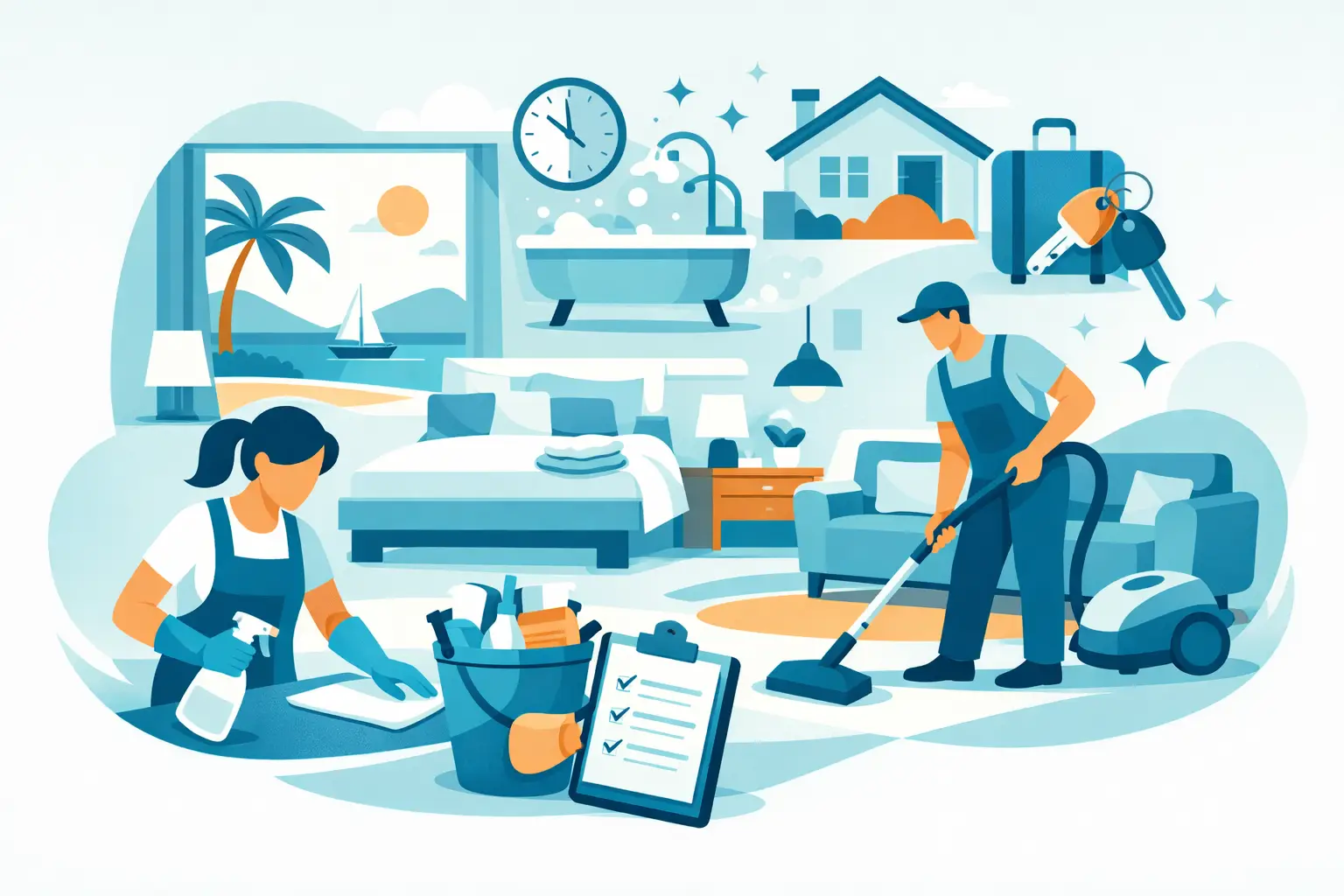
Back-to-back bookings leave very little room for error. One missed hair in the shower tray or a greasy hob can turn a five-star stay into a complaint. A reliable holiday let cleaning checklist helps you protect standards, speed up changeovers and present your property exactly as guests expect – fresh, hygienic and ready to enjoy.
For owners, hosts and property managers, cleaning is not just housekeeping. It shapes reviews, repeat bookings and how well a property holds up over time. The right checklist keeps cleaning consistent, even when different people handle the work, and makes it easier to spot the details that guests notice first.
Why a holiday let cleaning checklist matters
Holiday lets are judged differently from lived-in homes. Guests arrive with hotel-level expectations, but they also notice the character and comfort of a private property. That means your cleaning needs to do two jobs at once – it must feel immaculate, and it must still feel welcoming.
A written holiday let cleaning checklist reduces guesswork. It helps teams work methodically, room by room, and lowers the risk of overlooking easy-to-miss areas such as skirting boards, remote controls and inside bins. It also supports quality control if you manage more than one property or rely on cleaners during busy turnover periods.
There is also a practical benefit. When standards are set out clearly, stock checks, laundry rotation and damage reporting become part of the same process. Cleaning stops being a rushed task and becomes a smoother handover system.
Start with the turnaround priorities
Before the finer details, focus on the jobs that affect hygiene, presentation and guest readiness. Strip beds, remove rubbish, clear out leftover food, open windows where appropriate and gather used towels and linen first. This creates a clean starting point and makes it easier to see what needs attention.
At this stage, it is worth checking for obvious damage, missing items or maintenance issues. A chipped mug is minor. A leaking loo, stained mattress protector or broken blind is not. The sooner these are flagged, the less likely they are to interfere with the next arrival.
If your property has same-day changeovers, timing matters as much as quality. In those cases, a checklist should separate essential cleaning from periodic deep-clean tasks. Daily turnover work keeps the property guest-ready, while less frequent tasks such as washing curtains or descaling shower heads can be scheduled between longer gaps.
Kitchen cleaning checklist for holiday lets
The kitchen often tells guests whether a property is genuinely clean. It is where crumbs, grease, fingerprints and odours build up fastest, and where even a small oversight feels unhygienic.
Begin with surfaces. Worktop areas, cupboard fronts, handles, splashbacks and the dining table should be cleaned and sanitised. Pay close attention to the hob, extractor exterior, microwave interior and oven front. If the oven is part of the guest offer, it should be checked regularly for burnt-on residue rather than left until complaints arise.
The sink should be spotless and draining properly. Taps need polishing, especially in hard water areas where limescale quickly dulls the finish. Empty the fridge of any opened items left behind, wipe shelves and drawers, and check for spills in the freezer compartment if there is one.
Small appliances need the same standard. Kettles, toasters and coffee machines collect crumbs, marks and scale quickly. Guests may forgive a property that is simple, but they rarely forgive a kettle with stale water or a greasy toaster tray.
Finish by restocking essentials if that forms part of your service. That may include washing-up liquid, bin liners, dishwasher tablets or tea and coffee supplies. The key is consistency. If an item is usually provided, it should be checked every time.
Bathrooms need hotel-level attention
Bathrooms are where trust is won or lost. Even an otherwise lovely property can feel poorly managed if the shower screen is smeared or the loo base has been ignored.
Clean and disinfect the toilet thoroughly, including the seat hinges, flush area and exterior. Baths, showers, tiles and screens should be free from soap residue, hair and watermarks. Taps, mirrors and chrome fittings need a polished finish rather than a quick wipe.
Wash basins and vanity units should be checked inside and out, with special attention to plugholes and corners where product build-up gathers. Empty bathroom bins, replace liners and ensure there are no lingering odours.
Towels and bath mats should be freshly laundered and presented neatly. If toiletries are provided, check labels, wipe containers and replace anything that looks half-used or tired. Presentation matters here just as much as hygiene.
Bedrooms should feel crisp and settled
Guests notice bedrooms in seconds. If the bed is beautifully made and the room smells fresh, the whole property feels more cared for.
Strip all used bedding and inspect mattress protectors, pillows and duvets for marks. Fresh linen should be clean, well-fitted and pressed or neatly finished. Creased bedding is not always a deal-breaker in a relaxed coastal cottage, for example, but it still needs to look intentionally prepared rather than rushed.
Dust all surfaces, including bedside tables, lamp bases, headboards and wardrobe tops if accessible. Check inside drawers and wardrobes for forgotten belongings. Mirrors should be clear, windowsills dust-free and floors thoroughly vacuumed, including under the bed where practical.
Curtains, cushions and throws should be straightened and inspected. Soft furnishings pick up odours more than many hosts realise, especially in pet-friendly properties. That is why periodic deeper fabric cleaning can make a noticeable difference between standard cleans.
Living areas and entrances set the tone
The first few moments after check-in shape the guest experience. Entrances, hallways and living spaces should feel bright, clean and immediately comfortable.
Dust visible surfaces, picture frames, shelves, skirting boards and electronics. Remote controls, light switches and door handles are high-contact points that should never be skipped. Sofas should be vacuumed for crumbs, pet hair and debris down the sides of cushions.
Glass surfaces, mirrors and internal doors often show fingerprints clearly, particularly in sunny rooms. Floors should be vacuumed or mopped according to the surface type, with edges and corners given proper attention rather than a quick once-over.
If the property has decorative touches such as books, ornaments or welcome trays, keep them simple enough to clean properly. More styling can look attractive in photographs, but it also creates more dusting and more places for missed grime to hide.
Don’t forget the details guests always notice
A strong checklist goes beyond the obvious. Bad smells, sticky handles and dusty vents often do more damage than a minor scuff on the wall.
Check bins inside and outside, especially if collection day has been missed. Look at light fittings for dead insects, inspect under furniture where practical and wipe marks from painted walls or doors. Test lamps, televisions and Wi-Fi routers while resetting the space for the next stay.
Windows are another judgement point. They do not need a full professional polish at every turnover, but internal glass, patio doors and obvious smears should be addressed. In high-traffic holiday areas across the South West, where mud, sand and wet weather are common, entrance floors and thresholds often need more frequent attention than hosts first expect.
Build in stock checks and presentation
Cleaning and presentation work best together. Once the property is physically clean, walk through as a guest would. Check that cushions are arranged, blinds are straight, heating is set appropriately and any welcome information is neatly placed.
At the same time, confirm stock levels for toilet roll, hand soap, washing-up supplies and spare linen where relevant. This is also the moment to spot low-level issues before they become negative feedback, such as a flickering bulb or a musty smell in a cupboard.
For larger lets or higher-end properties, a second pair of eyes can be valuable. The person cleaning may naturally move quickly through familiar tasks, while an inspector is more likely to notice presentation gaps.
When to bring in professional support
Some hosts manage changeovers themselves, especially for one property with generous gaps between stays. That can work well if standards stay high and time is available. The challenge comes when bookings increase, travel time is involved or the cleaner is also expected to handle laundry, stock control and reporting.
Professional holiday let cleaning is often less about outsourcing a chore and more about protecting consistency. A trained team can follow a set standard, work to tight schedules and spot the issues that affect guest satisfaction. That is particularly useful for premium properties, remote owners and busy letting agents managing multiple keys and calendars.
Blueglade Cleaning supports this kind of quality-led approach with precision, care and flexible scheduling, which is exactly what holiday let turnovers demand when presentation cannot be left to chance.
A checklist should evolve with the property
No holiday let cleaning checklist stays perfect forever. Guest feedback, seasonal conditions and the age of the property all change what matters most. A beachside let may need extra focus on sand and salt marks. A family property may need constant attention to fingerprints, under-sofa debris and laundry volume.
The best checklist is one that gets used, reviewed and refined. Keep it clear, practical and tailored to the property rather than copied from a generic template. When cleaning is done with that level of care, guests may never mention it directly – and that is usually the best sign that everything felt exactly as it should.
Leave a Reply