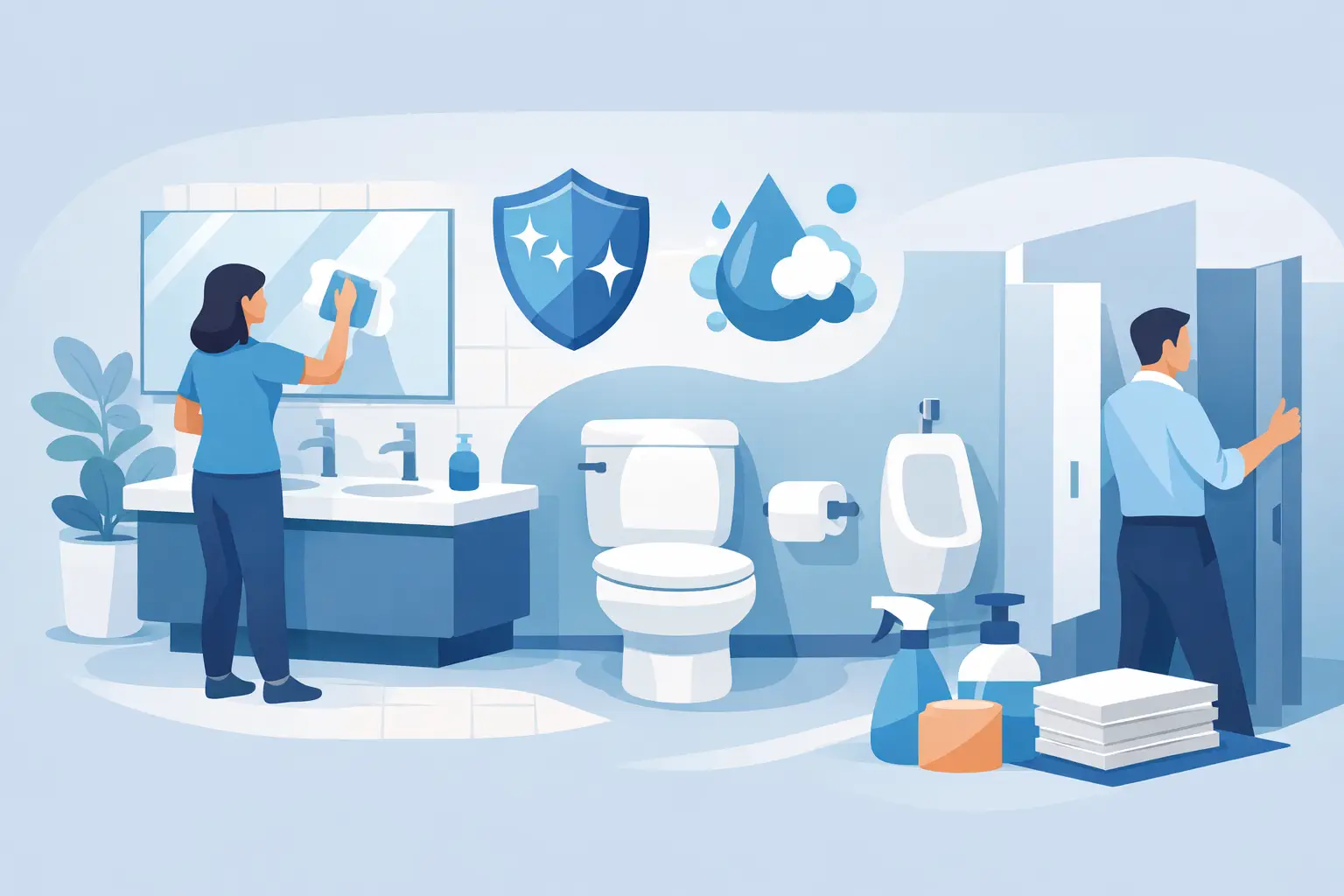
A poorly maintained washroom can change how people feel about an entire workplace in seconds. For staff, it signals that comfort and wellbeing are not a priority. For visitors and clients, it can undermine an otherwise professional first impression. This guide to office washroom hygiene sets out the practical standards that help businesses keep these essential spaces clean, comfortable and consistently presentable.
Why office washroom hygiene deserves attention
Office washrooms are high-touch, high-traffic environments. Door handles, flush plates, taps, soap dispensers, toilet seats and hand dryers are used repeatedly throughout the day, often by people from different teams, contractors and visitors. A washroom may look tidy at 9am yet need attention again before lunchtime.
The issue is not appearance alone. Effective cleaning reduces the build-up of bacteria, odours, limescale and grime, while well-stocked facilities support good hand hygiene. It also protects the wider workplace experience. Employees should not have to report an empty soap dispenser or avoid a cubicle because it has been left in an unacceptable state.
The right standard depends on the size of the premises, the number of users and whether the building welcomes clients or the public. A small office with ten people may need a thorough daily clean and simple checks. A busy shared workplace may need several touch-point cleans each day, particularly around peak periods.
Build a routine around use, not assumption
A reliable office washroom hygiene plan separates scheduled cleaning from regular inspections. The scheduled clean deals with the full room, while inspections catch the everyday issues that affect staff straight away: low paper supplies, spillages, overflowing bins and unpleasant odours.
Daily cleaning for a spotless baseline
A daily clean should leave every surface visibly fresh and hygienically cared for. Toilets and urinals need cleaning and disinfection, including flush controls, handles, surrounding tiles and hard-to-reach areas. Sinks, taps, mirrors, dispensers, door furniture and bins should receive equal attention.
Floors matter more than many businesses realise. Hair, paper, water marks and tracked-in dirt quickly make a washroom look neglected. Clean floors also reduce slip risks, particularly near basins where water can collect. Professional cleaners should use suitable products and equipment for the surface, rather than relying on a single solution for every task.
Check high-use facilities during the day
For workplaces with a larger headcount, a daily clean alone is rarely enough. A short daytime check can restore order without disrupting the office. This might include wiping basin areas, replenishing toilet roll and hand towels, emptying bins, checking soap levels and addressing any immediate issue reported by staff.
The timing should reflect how your workplace operates. Offices with busy morning arrivals may benefit from a late-morning check. Sites with meetings, training sessions or regular visitors may need checks before client-facing periods. There is no benefit in a rigid timetable that misses the times when facilities are under the greatest pressure.
Schedule deeper work before problems take hold
Limescale around taps and urinals, staining in toilet bowls, dust on extractor grilles and residue behind pipes will not always be resolved through everyday cleaning. Plan periodic deep cleaning to tackle these areas properly, along with grout lines, wall tiles, skirting boards, cubicle partitions and hard flooring.
This work is especially valuable in hard-water areas, where mineral deposits can quickly dull fixtures and affect how clean a washroom appears. Preventive care is usually more cost-effective than waiting until staining, odours or damaged finishes require extensive treatment.
Clean first, then disinfect where needed
Cleaning and disinfection are related but not identical. Cleaning removes visible dirt, residue and organic matter. Disinfection is designed to reduce germs on suitable surfaces, but it works best after the surface has been cleaned.
In practical terms, cleaners should use a clear process and fresh cloths or colour-coded equipment to avoid transferring contamination from toilets to sinks, mirrors or other areas. Toilet cleaning tools must be dedicated to that purpose and stored hygienically. Reusable cloths and mop heads need laundering or sanitising correctly between uses.
Product choice also requires care. Stronger is not automatically better. A product must be appropriate for the surface, used at the correct dilution and left for the stated contact time where disinfection is required. Overuse of harsh chemicals can damage chrome fittings, flooring and seals, while leaving a powerful fragrance does not prove that a space is clean.
Eco-conscious products can be part of a high-standard washroom programme when they are selected for their task and used properly. The aim is a genuinely hygienic result with thoughtful consideration for people, surfaces and the workplace environment.
Keep hand hygiene easy to maintain
People are much more likely to wash their hands properly when the facilities make it effortless. Soap dispensers should be full, clean and working. Basins need a dependable supply of warm water, and a suitable drying method should be available close by.
Paper towels can be practical in many offices because they also allow users to avoid touching handles immediately after washing. Hand dryers can reduce consumable use and may suit certain settings, but they need regular cleaning and maintenance. The best choice depends on footfall, space, running costs and the expectations of users.
Avoid placing bins where they obstruct access or create visual clutter. In washrooms using paper towels, bins should be large enough for demand and emptied before they overflow. Sanitary waste bins should be provided in relevant cubicles, discreetly positioned and serviced on an agreed schedule.
Make the washroom easy to use and easy to report
Washroom hygiene is a shared responsibility, but staff should not be left to solve maintenance problems themselves. A visible, simple reporting route helps facilities teams act quickly when there is a leak, blocked toilet, empty dispenser, damaged lock or persistent odour.
Small faults can become hygiene concerns if they are ignored. A dripping tap creates water marks and waste. A broken extractor fan can encourage lingering moisture and odours. A loose toilet seat or faulty flush affects comfort as well as cleanliness. Regular inspections provide an opportunity to identify these issues before they affect the working day.
Accessibility should be considered as part of the standard, not as an afterthought. Clear access, clean grab rails, working alarms, stocked dispensers at a usable height and sufficient room for manoeuvring all contribute to a respectful facility for every employee and visitor.
Give cleaning teams the information they need
Whether cleaning is managed in-house or outsourced, consistency comes from clear expectations. A site-specific checklist should identify the rooms to be cleaned, required frequencies, high-touch points, consumables to replenish and any building-specific requirements. It should also state how quality checks and issues are recorded.
A useful washroom checklist may cover the following distinct areas:
- Toilets, urinals, basins and all surrounding touchpoints
- Mirrors, cubicle doors, handles, dispensers and hand dryers
- Floors, bins, sanitary waste units and visible spillages
- Soap, toilet roll, hand towels and other essential consumables
- Ventilation, odour concerns, leaks, damage and maintenance issues
The checklist should not become a box-ticking exercise. Supervisory spot checks are valuable because they assess the finish a user actually sees: clean edges, dry floors, streak-free mirrors, fresh supplies and no obvious odour. Feedback from staff can reveal patterns that a once-daily inspection may miss.
When professional office cleaning makes a difference
For office managers, washrooms can be one of the most demanding parts of a cleaning schedule. They need close attention, the right materials and enough flexibility to respond to changing footfall. Trying to manage this around a busy internal workload can lead to inconsistent standards.
A professional cleaning partner can build a tailored programme around your premises, from routine office cleaning and daytime checks to periodic deep cleaning. At Blueglade Cleaning, trained and insured teams work with precision and care to help businesses maintain a Golden Standard of cleanliness without adding another operational burden to their day.
A clean washroom should feel unremarkable in the best possible way: stocked, fresh, dry and ready whenever someone needs it. Establish that standard, review it regularly, and your workplace will quietly communicate the care and professionalism people remember.
Leave a Reply