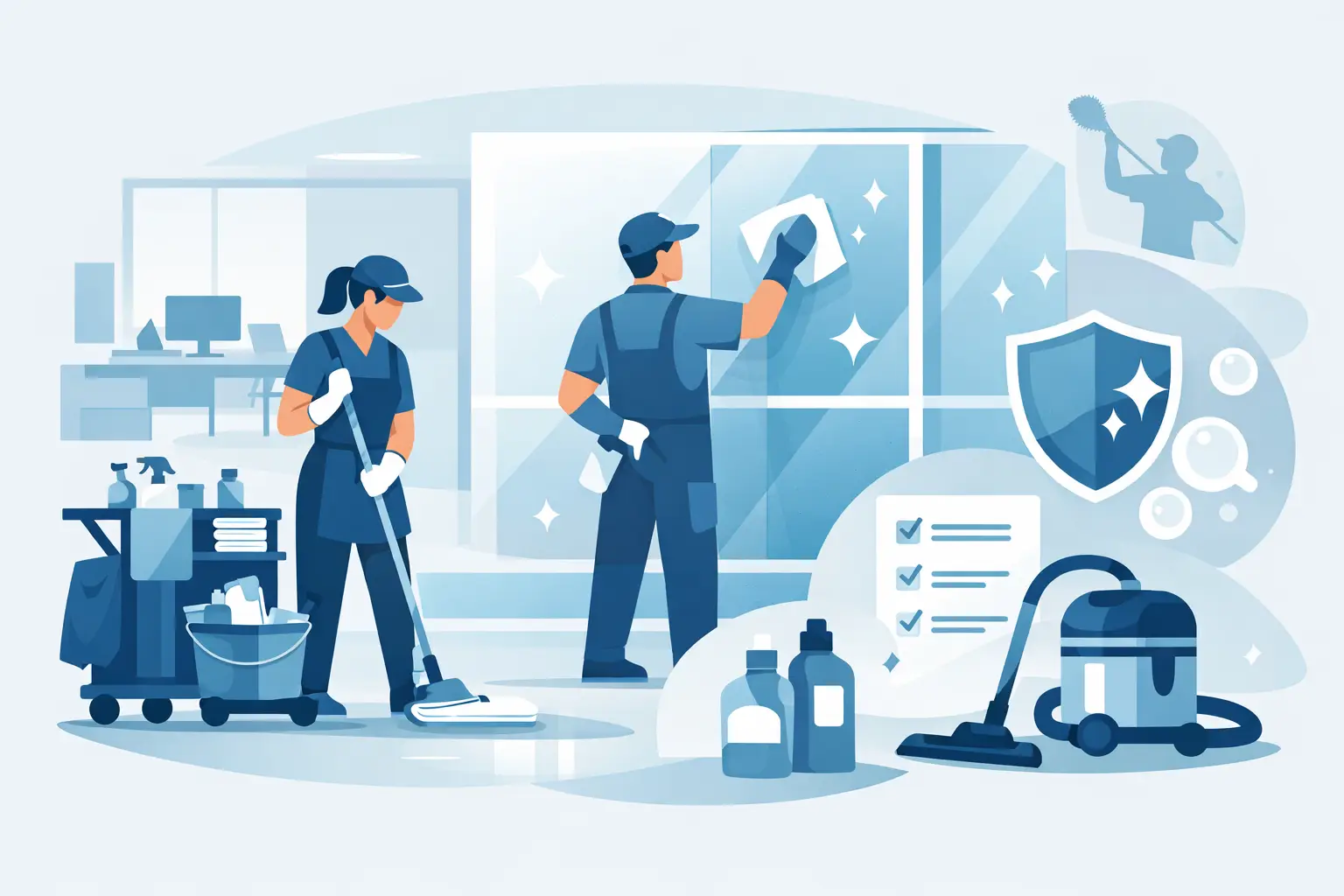
A smart-looking workspace can still fall short on hygiene. That is often the gap decision-makers notice too late – when washrooms draw complaints, floors lose their finish, or a client spots dust in a reception area. This guide to commercial cleaning standards is designed to make those expectations clearer, so you can judge quality properly and set a standard that protects presentation, health, and day-to-day confidence.
What commercial cleaning standards actually mean
Commercial cleaning standards are not just about whether a space looks tidy at first glance. They set the expected level of cleanliness for different areas, surfaces, and touchpoints, along with how often tasks should be carried out and what result counts as acceptable.
That matters because a shared office, clinic reception, retail floor, communal staircase, or post-build handover space all carry different demands. A polished boardroom table and a sanitised washroom are both signs of quality, but they are not judged in the same way. Standards help turn cleaning from a vague promise into a measurable service.
For most businesses, the real goal is consistency. Anyone can make a site look good on a quiet afternoon. The stronger test is whether the same standard is maintained during busy weeks, seasonal pressure, staff absences, and higher footfall.
A guide to commercial cleaning standards by area
The most practical way to understand standards is by looking at how they apply across a building. Cleaning should be tailored to risk, usage, and visibility rather than spread evenly for the sake of it.
Reception, entrances and client-facing areas
These spaces shape first impressions quickly. Floors should be free from visible dirt, streaks, litter, and tracked-in debris. Glass should be clear, desks dust-free, and touchpoints such as door handles, counters, and lift buttons cleaned regularly.
In high-traffic environments, the standard often needs to be maintained more than once a day. A morning clean may not be enough if visitors continue arriving through wet weather or peak trading hours. Presentation standards are usually higher here because even small lapses are more noticeable.
Offices and workstations
Office cleaning standards tend to balance appearance with practicality. Desks, skirting, internal glass, bins, flooring, and shared equipment all need regular attention. Keyboard and screen cleaning may also matter, though this depends on whether staff use hot desks, fixed desks, or sensitive equipment.
The trade-off is that personal workstations can limit access. Some businesses want every desk detailed daily. Others prefer cleaners to focus on shared areas unless desks are left clear. In that case, standards should define what can be cleaned, what should be avoided, and how clutter affects the result.
Kitchens and break areas
These zones need more than a quick wipe. Commercial cleaning standards here should cover worktops, sink areas, cupboard fronts, appliance exteriors, floors, bins, and shared touchpoints such as kettle handles and fridge doors.
If food is stored or prepared regularly, hygiene expectations rise. A kitchen that looks clean but smells unpleasant or has residue around taps and splashbacks is not meeting a premium standard. Frequency also matters. A small staff kitchenette may be fine with one daily visit, while a busy communal canteen may need more support.
Washrooms
Washrooms are where cleaning quality is judged most harshly. Fixtures should be visibly clean, sanitised, odour-controlled, and fully stocked. Floors should be dry where possible, mirrors polished, and waste removed before overflow becomes an issue.
A proper standard covers both appearance and hygiene. That means limescale control, attention to grout and corners, sanitising high-touch areas, and checking consumables. In shared commercial buildings, washroom standards often need recorded checks throughout the day rather than one completed clean.
Floors and carpets
Floor care is often treated as a background task until wear becomes obvious. Yet standards for hard floors and carpets affect both safety and appearance. Hard floors should be free from dust build-up, marks, sticky residue, and dull patches caused by poor maintenance. Carpets should be vacuumed thoroughly and treated for spots before staining becomes permanent.
This is also where the cheapest-looking result tends to show. Quick vacuum lines may give the impression of effort, but they do not replace edge work, proper debris removal, or periodic deep cleaning. Commercial sites with heavy traffic need planned maintenance, not just reactive cleaning.
How cleaning standards are measured in practice
A standard only works if it can be checked. Vague phrases such as high quality or thorough clean sound reassuring, but they leave too much room for interpretation.
The clearest approach is to define outcomes. For example, a surface should be free from dust, smears, fingerprints, and residue under normal lighting. A bin should be emptied, relined, and surrounding areas left clean. A washroom should be sanitised, odour-free, and stocked.
Site-specific checklists can help, especially in multi-room buildings or managed properties. So can routine inspections. The best commercial cleaning relationships tend to include both a clear scope and a clear feedback loop. That allows standards to stay high without every issue turning into a complaint.
Frequency matters as much as technique
One of the biggest misunderstandings in commercial cleaning is assuming that a good cleaner can make up for an unrealistic schedule. They cannot. If footfall is high, weather is poor, or a building is used heavily across the day, standards will slip unless frequency matches demand.
That does not always mean increasing every task. It may mean focusing extra visits on washrooms, entrance matting, touchpoints, or bins while keeping less-used rooms on a lighter schedule. Good planning is not about over-cleaning low-risk areas. It is about putting time where it protects the building best.
Hygiene, safety and environmental care
Commercial cleaning standards also need to reflect safe working and responsible product use. That includes correct dilution, appropriate cloth systems, safe storage, and choosing products that clean effectively without creating unnecessary risk for staff, visitors, or building users.
Eco-conscious cleaning can sit comfortably alongside high standards, but only if it is applied properly. Some businesses worry that greener products mean weaker results. In reality, it depends on the product, the surface, and the method. Premium service comes from using the right solution for the task, not the harshest one available.
Health and safety also extends beyond chemicals. Wet floor control, equipment handling, access procedures, and cleaning around occupied spaces all matter. A commercial clean should support your operations, not interrupt them or introduce avoidable hazards.
Signs your current standard is too low
Most businesses do not need a formal audit to spot a pattern. Complaints about washrooms, visible dust on edges, smeared glass, recurring odours, stained flooring, and inconsistent results across the week are usually enough to show the standard is not being maintained.
Another clue is when a site only looks right immediately after a clean. A stronger standard should hold up reasonably well between visits. If the building declines sharply within hours, the issue may be frequency, method, supervision, or the original scope of work.
For landlords, letting agents, office managers, and property teams, handover readiness is another useful test. Could you show the property, host a client, or welcome staff in at short notice without arranging a last-minute extra clean? If not, the regular standard may need attention.
Choosing a cleaning partner that can maintain standards
If you are comparing providers, look beyond price and task lists. Ask how standards are set, monitored, and adapted to your site. A dependable commercial cleaning service should be able to explain what is included, what level of finish you can expect, how quality is checked, and where specialist support may be needed.
That last point matters. Carpet cleaning, post-construction sparkle cleaning, washroom detailing, and high-touch hygiene support are not always interchangeable with routine daily cleaning. A tailored plan is usually more effective than trying to force every requirement into one generic visit.
For businesses across the South West, especially in mixed-use offices, managed blocks, retail spaces, and post-build environments, a premium standard comes from consistency, trained teams, and a clear understanding of the site. That is where experienced providers such as Blueglade Cleaning bring real value – not by overcomplicating the process, but by making high standards feel dependable.
The right standard should make your space easier to run, easier to trust, and easier to feel proud of. When cleaning is handled with precision and care, people notice – even when they do not say a word.
Leave a Reply