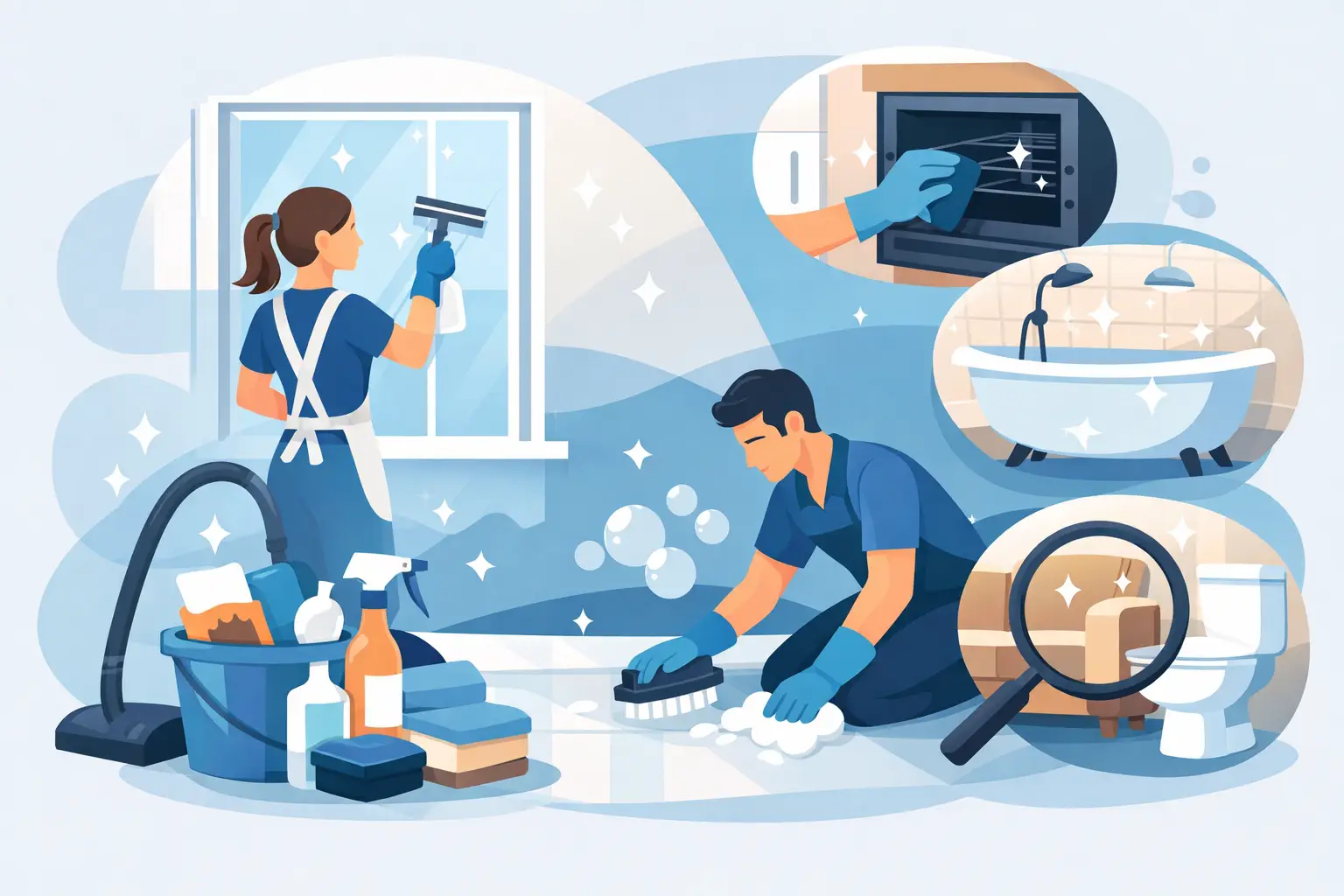
A home can look tidy at first glance and still be carrying weeks or months of hidden build-up. That is usually the point where people ask, what does a deep clean include, and how is it different from a standard clean? The short answer is that a deep clean goes beyond surface-level upkeep. It targets grime, dust, grease and bacteria in the places that regular cleaning often misses.
For busy households, landlords preparing a property, or anyone resetting a space after a hectic period, a deep clean is less about quick maintenance and more about restoring the overall standard of cleanliness. It is detailed, time-intensive and designed to leave the property feeling fresher, healthier and properly cared for.
What does a deep clean include in practice?
A deep clean usually covers all the tasks you would expect in a regular clean, but with far more attention to detail. Instead of simply wiping visible surfaces and vacuuming open floor areas, the cleaner focuses on neglected spots, stubborn residue and hard-to-reach areas.
That often means skirting boards, door frames, light switches, behind furniture where accessible, internal glass, tiled surfaces, bathroom fittings, kitchen grease, limescale and accumulated dust on high and low surfaces. In many cases, it also includes sanitising touchpoints and giving extra care to areas that affect hygiene, such as sinks, toilets, worktops and floors.
The exact scope can vary depending on the size of the property, its condition and whether it is a domestic or commercial setting. A well-kept home that receives regular professional cleaning may need a lighter deep clean than a student let after move-out, for example. The principle stays the same – more detail, more effort and a more complete result.
How a deep clean differs from regular cleaning
Regular cleaning is about maintaining standards. A deep clean is about raising them.
In a maintenance clean, the goal is to keep the property presentable and hygienic from week to week or fortnight to fortnight. The cleaner will usually focus on visible surfaces, bathrooms, kitchens, floors and general tidiness. That works well when a property is already in good order.
A deep clean is more intensive. It addresses the grime that builds slowly and is easy to overlook during everyday routines. Think soap scum around taps, grease around cooker areas, dust on top of cupboards, marks on doors, and debris that settles into corners or under furnishings. It is often the right choice before starting a recurring cleaning plan, after renovation work, before guests arrive, or when moving in or out of a property.
There is also a time difference. A standard clean is usually faster because it follows the rhythm of upkeep. A deep clean takes longer because it involves more tasks and more precision. That extra time is what delivers the noticeable reset people are usually looking for.
What does a deep clean include room by room?
Kitchen
The kitchen tends to need the most attention because it collects grease, food residue and bacteria more quickly than most other rooms. A deep clean here usually includes detailed cleaning of worktops, cupboard fronts, splashbacks, sinks, taps and external appliance surfaces.
Floors are cleaned thoroughly, with special attention to corners and edges where crumbs and dust gather. Tiles and grout may be treated if they show visible build-up. Areas behind or beneath appliances may also be cleaned where safely accessible.
It depends on the service, but internal appliance cleaning is sometimes separate. For example, oven cleaning, fridge interiors or the inside of cupboards may need to be specifically requested. That is why it is always worth checking the scope in advance rather than assuming every deep clean covers every internal surface.
Bathroom
Bathrooms are a key focus because they need more than a cosmetic wipe-down. A proper deep clean tackles limescale, soap residue, water marks and hygiene-sensitive areas.
This usually includes toilets, basins, baths, showers, taps, tiles, mirrors and floors. Shower screens, grout lines and hard-to-reach edges are often given extra care. Touchpoints such as handles and switches may also be sanitised.
If a bathroom has heavy limescale or long-term staining, results can depend on the surface type and how long the build-up has been present. Deep cleaning can make a major difference, but not every mark is fully reversible if there is permanent etching or damage.
Living areas and bedrooms
In lounges, dining rooms, hallways and bedrooms, a deep clean generally focuses on dust removal, detailed surface cleaning and floor care. Furniture is dusted, skirting boards wiped, doors and handles cleaned, and reachable high surfaces addressed.
Vacuuming is more thorough than in a standard clean, especially around edges and under accessible furniture. Hard floors are washed carefully, not just quickly mopped. Internal windows or glass panels may also be cleaned depending on the service.
Bedrooms often benefit from this level of attention because dust settles in places people rarely notice, such as behind bedside tables, on wardrobes and around bed frames. For allergy-prone households, that extra detail can make the room feel noticeably fresher.
Hallways, stairs and entrance areas
These are high-traffic zones, so they collect dirt quickly. A deep clean here usually includes dusting railings, wiping bannisters, cleaning marks from doors or walls where appropriate, and thoroughly vacuuming or mopping floors.
Because entrance areas shape first impressions, they are often a priority in rental properties, offices and homes preparing for visitors or viewings.
Add-ons and exclusions matter
One of the most common misunderstandings around deep cleaning is the assumption that it includes absolutely everything. In reality, many professional cleaning companies separate specialist tasks from general deep cleaning.
Carpet cleaning, upholstery cleaning, external window cleaning, oven cleaning and post-construction cleaning may be available, but they are often booked as standalone or add-on services. That is not a limitation. It simply reflects the fact that these jobs may require different equipment, products or more specialist handling.
If you are arranging a clean before a tenancy change, a property handover or a major event, clarity matters. Asking for a room-by-room breakdown helps ensure the service matches your priority areas.
When is a deep clean worth booking?
A deep clean is usually most worthwhile when regular cleaning is no longer enough to bring the space back to a high standard. That might be after a busy season at home, before starting recurring visits, after building work, before putting a property on the market, or ahead of a move.
It is also a sensible option for landlords and letting agents who need a property to feel genuinely refreshed, not just quickly tidied. In offices and commercial spaces, deep cleaning can help improve presentation, support hygiene standards and create a better environment for staff and visitors.
For households, there is also a convenience factor. Many people can keep up with day-to-day chores, but few have the time to scrub tile grout, remove built-up grease and clean neglected surfaces thoroughly. Handing that over to a trained team saves time and brings a level of consistency that is hard to achieve in spare moments.
What to expect from a professional deep clean
A professional deep clean should feel structured and methodical. The cleaner will typically work through the property in a planned way, focusing on detail rather than speed alone. You should expect visible improvements in cleanliness, fresher surfaces and a stronger sense that the space has been properly reset.
A quality service also involves practical communication. That means being clear about what is included, how long the clean is likely to take, and whether any areas need special attention. In larger homes, commercial premises or end of tenancy settings, the service may need to be tailored rather than treated as a one-size-fits-all booking.
That tailored approach is often what separates a basic clean from a premium result. A dependable provider will assess the condition of the property, note any problem areas and recommend the right level of service rather than overselling unnecessary extras.
For clients across the South West, from family homes to managed properties, that level of precision is often what makes a deep clean feel worthwhile. It is not only about making a room look better on the day. It is about creating a cleaner, healthier and more comfortable environment with care that reaches beyond the obvious.
If you have been looking around your home or workplace and feeling that a standard clean will not quite touch the sides, that instinct is probably right. A deep clean is the service that deals with the overlooked details, restores confidence in the space and gives you a cleaner starting point to maintain.
Leave a Reply