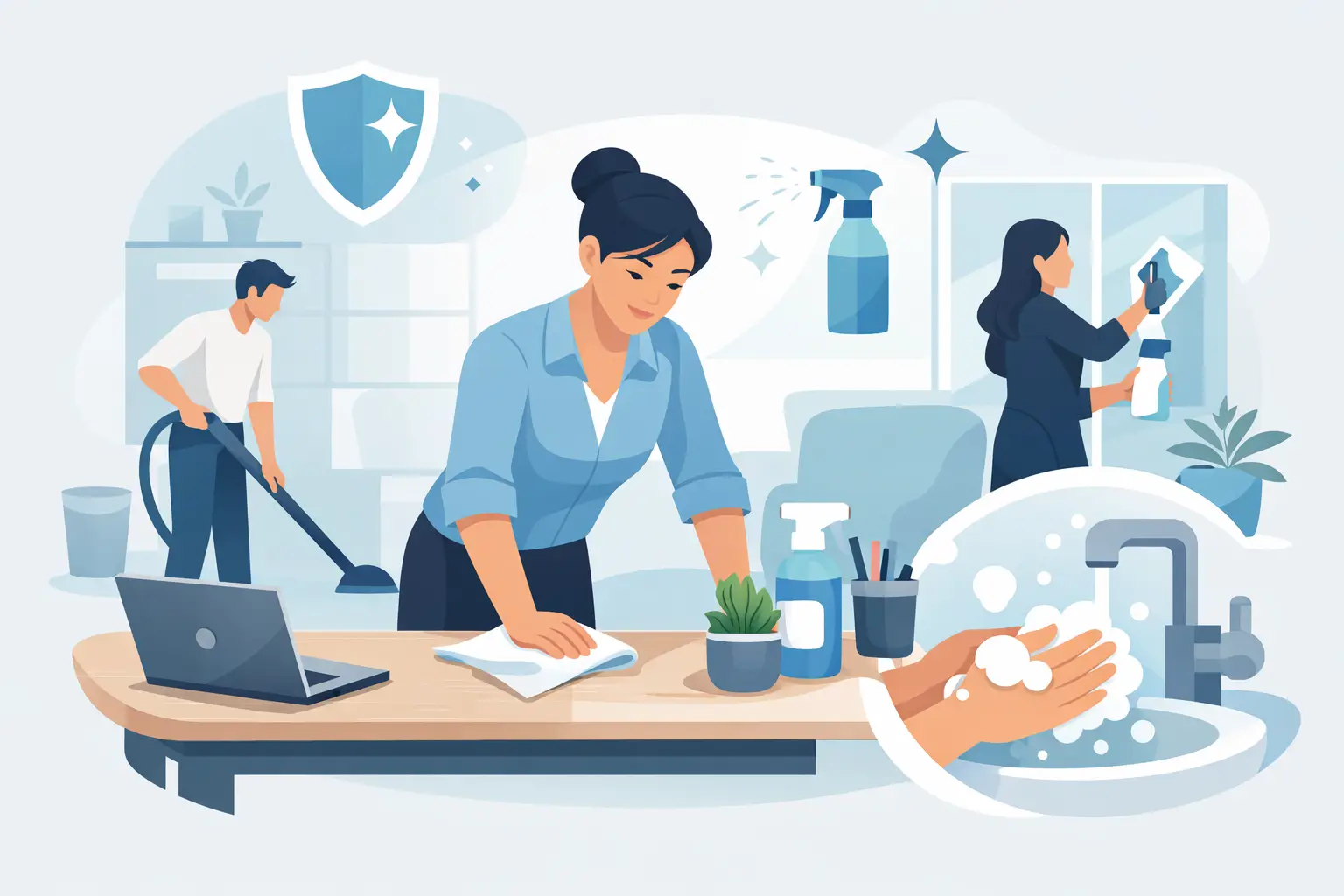
A desk can look tidy and still be carrying yesterday’s coffee rings, fingerprints on shared equipment and enough dust to trigger sneezing by mid-morning. That is usually where office standards start to slip. If you are wondering how to maintain office hygiene without turning the workplace into a constant cleaning zone, the answer is consistency, not overreaction.
A hygienic office is not only about appearances. It affects staff wellbeing, client confidence and the general ease of working through the day. When bins overflow, kitchens are neglected and washrooms are left to chance, the whole space starts to feel less professional. By contrast, a clean and well-managed office supports focus, reduces avoidable illness and makes a better impression on everyone who walks through the door.
How to maintain office hygiene with a realistic routine
The most effective hygiene standards are built around routines people can actually follow. Many offices make the mistake of treating cleaning as a once-a-day task, usually after everyone has gone home. That helps with presentation, but hygiene requires more than a single reset at the end of the day.
A better approach is to split responsibility across daily upkeep, scheduled professional cleaning and simple staff habits. Desks should be kept reasonably clear, shared areas should be checked more than once, and high-contact points should be cleaned often enough to match how the office is used. A quiet consultancy with ten people will not need the same schedule as a busy sales floor with constant visitors.
That trade-off matters. Over-cleaning low-risk areas can waste time and budget, while under-cleaning kitchens, toilets and communal touchpoints creates a problem quickly. The right plan is shaped by footfall, layout, working patterns and whether clients visit the premises regularly.
Focus on the areas that spread mess fastest
Every office has a few spaces that create most of the hygiene issues. Kitchens are usually near the top of the list. Used mugs left in the sink, food spills in microwaves and fridge shelves that never get wiped all contribute to unpleasant smells and cross-contamination. If the kitchen is shared by several teams, small issues become large ones very quickly.
Washrooms need the same level of attention. They influence how staff and visitors judge the whole business, and they cannot be allowed to fall below standard between deeper cleans. Soap dispensers, paper supplies, sanitary bins and surfaces all need regular checks. A washroom that is technically cleaned each evening can still feel neglected by lunchtime if supplies run out or wet floors are ignored.
Then there are the touchpoints that many people forget. Door handles, light switches, printer panels, kettle handles, fridge doors, lift buttons and meeting room remotes are used constantly but often cleaned inconsistently. These are not dramatic problem areas, which is exactly why they get missed.
Staff habits matter more than posters
Signage has its place, but office hygiene improves when expectations are clear and practical. People are far more likely to cooperate when the rules feel reasonable. Asking staff to wash up after themselves, clear old food from the fridge on set days and wipe down shared desks after use is simple and fair. Asking them to compensate for a poor cleaning structure is not.
This is where many businesses get stuck. They want employees to take ownership, but there is a fine line between encouraging good habits and shifting cleaning responsibility onto office staff. The workplace should still be supported by a proper cleaning plan. Staff can help keep standards stable, but they should not be expected to manage bins, sanitise washrooms or deep-clean communal areas.
A short hygiene policy often works better than a long one. Keep it specific, easy to follow and relevant to the office layout. If hot-desking is in place, include a wipe-down process. If lunches are eaten at desks, make sure bins and cleaning supplies are easy to access. When systems are convenient, compliance tends to improve.
Cleaning products and supplies should be easy to reach
People are unlikely to clean small spills or wipe surfaces if they have to search three cupboards to find the right spray. Basic supplies should be available where they are needed most. That usually means kitchen-safe cleaning products in the kitchen, hand soap and paper products stocked properly in washrooms, and suitable antibacterial wipes or sprays for shared workstations and meeting rooms.
There is also a quality issue to consider. Cheap products may seem like a saving, but they can leave streaks, unpleasant residue or strong smells that staff dislike. In some environments they may also be too harsh for frequent use. Eco-conscious products are often a better fit for modern workplaces because they support hygiene standards without creating a heavy chemical atmosphere.
The goal is not to fill the office with cleaning materials. It is to remove friction. If someone spills milk near the tea point or notices fingerprints all over a glass meeting room door, the fix should be immediate and straightforward.
Build a cleaning schedule around how the office works
A good schedule is not based on guesswork. It reflects the actual rhythm of the workplace. Offices with heavy foot traffic, client appointments or shared desks usually need more frequent attention than offices where staff are in only part of the week.
For some businesses, daily professional cleaning is the right choice. For others, several visits a week combined with strong day-to-day upkeep is enough. The point is not to buy more cleaning than you need. The point is to avoid the familiar cycle of letting standards drop, then paying for a reactive deep clean to recover them.
It helps to separate tasks by frequency. Daily priorities usually include bins, kitchens, washrooms, vacuuming or floor care in high-traffic areas, and sanitising touchpoints. Weekly or periodic tasks might include internal glass, skirting, upholstery attention, deeper appliance cleaning and more detailed dusting. Carpets and soft furnishings may need less frequent treatment, but when neglected they hold odours and dust that affect the whole office environment.
For offices in busy commercial areas across Exeter, Plymouth or the wider South West, weather can also influence the schedule. Rain, mud and winter footfall often mean entrance areas and flooring need more attention than expected.
Do not ignore air quality and hidden build-up
Office hygiene is often judged by what people can see, but comfort is just as affected by what they cannot. Dust around vents, stale smells in carpets, crumbs trapped in keyboards and grime building up on upholstered seating all reduce the sense of cleanliness even when surfaces appear neat.
This is why occasional deeper cleaning matters. Standard daily maintenance keeps the office presentable, but it does not always remove embedded dirt or build-up in harder-to-reach places. Meeting chairs, reception seating, carpets and high shelves tend to be overlooked until they look obviously tired. By then, the office can feel less cared for than intended.
If allergies, lingering odours or recurring dust are becoming noticeable, that is often a sign the routine needs adjusting. It does not always mean cleaning is poor. Sometimes it simply means the current plan is too light for the space.
Professional support keeps standards consistent
Many office managers know what good hygiene should look like. The challenge is maintaining it week after week while also managing staff, schedules, suppliers and day-to-day operations. That is where professional cleaning support makes a measurable difference.
A reliable cleaning partner brings structure, accountability and consistency. More importantly, they can tailor the service to the way your office runs rather than forcing a generic checklist onto the space. That might mean early morning visits, out-of-hours cleaning, extra attention for reception areas, or periodic deep cleaning to support the regular schedule.
For businesses that want a polished, healthy and client-ready workplace without adding internal pressure, that balance is often the smartest route. Blueglade Cleaning takes this approach by focusing on precision, reliability and tailored service plans that fit the space, the people using it and the standard the business wants to maintain.
The standard people notice is the one you keep
Anyone can arrange a tidy-up before an important meeting. The real test is whether the office still feels clean on an ordinary Wednesday afternoon. That is what staff notice, what visitors remember and what shapes confidence in your business. When hygiene is managed with care, the whole workplace feels easier to use, easier to trust and easier to be proud of.
If you want office hygiene to hold up under real daily use, build a routine that is practical, visible and consistent. The best results rarely come from dramatic changes. They come from steady standards that never slip far enough to become a problem.
Leave a Reply