Category: Uncategorized

  • One Off Cleaning vs Recurring: Which Fits?

    One Off Cleaning vs Recurring: Which Fits?

    If your kitchen always seems to need attention just after you have finally caught up, you are not choosing between cleaning options in theory. You are choosing how much time, energy, and oversight you want to give to the job every week. That is why one-off cleaning vs recurring is less about which service sounds better and more about which one genuinely suits your home, workplace, or property.

    For some clients, a single professional clean is exactly what is needed – a reset before guests arrive, a move, a handover, or the end of a hectic season. For others, the real value comes from consistency: scheduled visits that keep standards high without the stress of starting from scratch each time. Both options have their place, and the right choice depends on what you need the cleaning service to achieve.

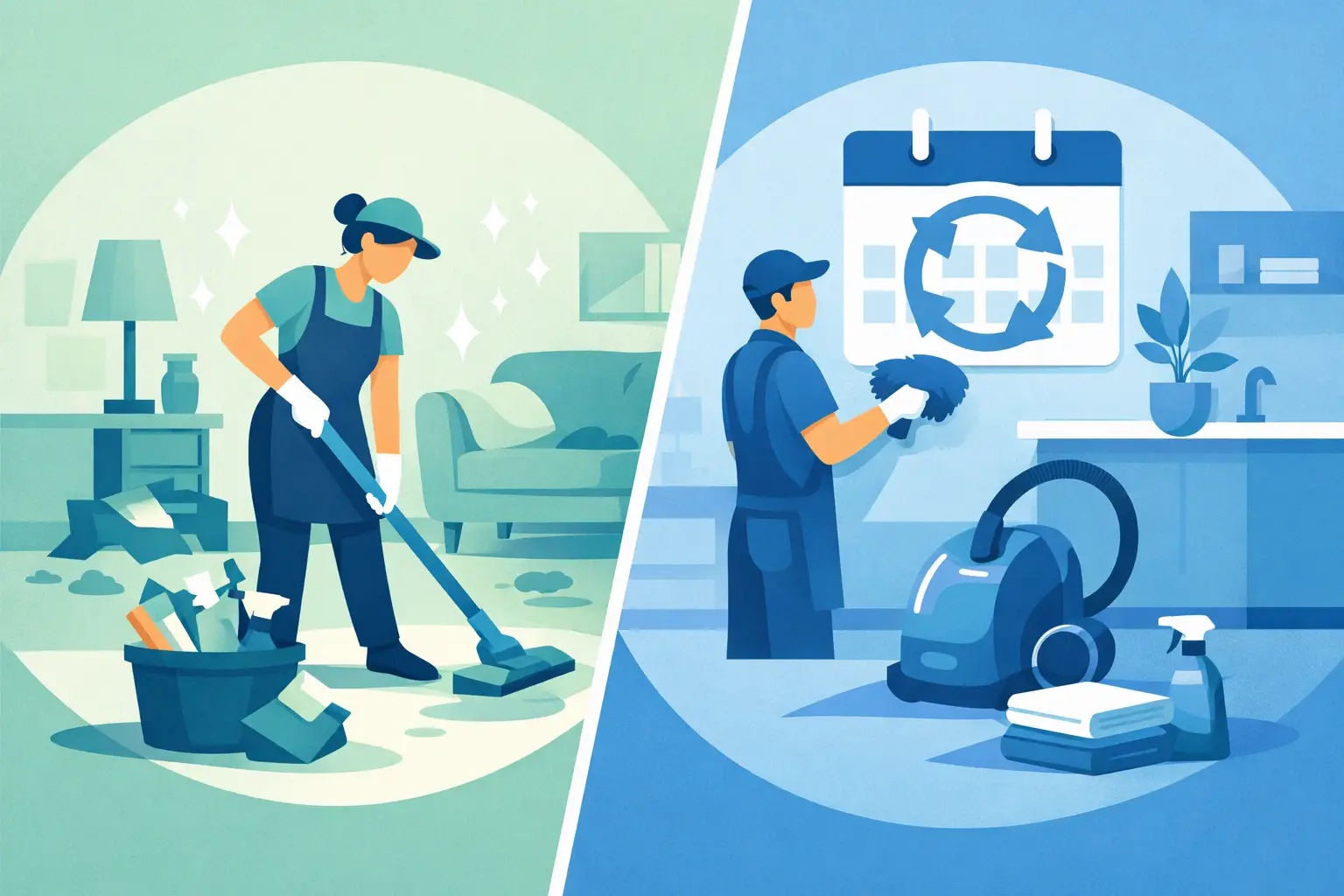
    One-off cleaning vs recurring: the real difference

    A one-off clean is a standalone service booked for a specific purpose. It is often more intensive because the team may be addressing built-up dust, grease, limescale, neglected corners, or a property that simply has not had professional attention for some time. In many cases, it is detailed, targeted, and designed to bring a space back to a strong baseline.

    Recurring cleaning is planned support at agreed intervals, usually weekly, fortnightly, or monthly. The aim is not just to make a property look presentable on a particular day, but to maintain a consistently clean, hygienic environment over time. Because the space is being looked after regularly, each visit tends to be more efficient and focused on upkeep rather than recovery.

    That difference matters. A one-off service solves an immediate problem. A recurring service reduces the chance of the problem building up again.

    When a one-off clean makes more sense

    There are times when booking a single clean is the smartest and most cost-effective decision. If you are preparing for a special event, moving in or out, finishing renovation work, or getting a rental property ready for inspection, a one-off clean can deliver exactly the level of detail required without committing to an ongoing arrangement.

    This option also suits people who usually manage their own cleaning but occasionally want professional support. Perhaps spring has arrived and the whole house needs a proper refresh. Perhaps the oven, carpets, or windows have fallen behind. In these situations, a one-off booking gives you flexibility and immediate impact.

    For landlords, letting agents, and property managers, one-off cleaning is often tied to milestones. End of tenancy cleans, post-construction sparkle cleans, and pre-sale presentation cleans are all outcome-driven jobs. The property needs to be spotless, ready, and impressive on a deadline. Recurring visits are not always necessary when the need is tied to a single handover.

    The trade-off is that one-off cleaning can feel more intensive because it often has to tackle several layers of build-up at once. If a property has been neglected for a while, the appointment may take longer and cost more than a regular maintenance visit.

    When recurring cleaning is the better investment

    Recurring cleaning is usually the right fit when cleanliness needs to stay reliable rather than occasionally impressive. Busy households, shared homes, offices, and client-facing commercial spaces benefit most from this approach because standards do not depend on someone finding spare time at the weekend.

    In a home, recurring visits help keep bathrooms sanitary, kitchens under control, dust levels down, and floors consistently cared for. That means less pressure on you between appointments and a more comfortable living environment overall. Instead of waiting until the mess becomes overwhelming, you stay ahead of it.

    In a workplace, regular cleaning supports presentation, staff wellbeing, and hygiene. That matters whether you manage a small office, a serviced property, or a larger commercial setting. Clients notice a well-kept environment. Employees do too.

    There is also a quality advantage in continuity. With recurring service, cleaners become familiar with the property, your priorities, and the level of finish you expect. That familiarity often leads to better consistency, smoother visits, and fewer instructions each time.

    Cost: upfront spend vs long-term value

    Cost is often the deciding factor, but it helps to look beyond the price of a single booking. One-off cleaning can appear simpler because you pay only when you need the service. If your cleaning needs are occasional and predictable, that may be entirely sensible.

    However, recurring cleaning often offers stronger long-term value. Regular upkeep prevents heavy build-up, which reduces the need for repeated intensive cleans. It can also help protect surfaces, flooring, upholstery, and fittings by ensuring dirt, grease, and moisture are not left to cause wear over time.

    There is a practical time-cost to consider as well. If your own cleaning routine regularly spills into evenings, weekends, or staff hours, that lost time has a value. Professional recurring support turns cleaning from a recurring problem into a managed service.

    So which option is cheaper? It depends on how the property is used, how quickly mess accumulates, and how high the presentation standard needs to be. A lightly used home may only need occasional professional attention. A busy family home or office often benefits more from scheduled care.

    One-off cleaning vs recurring for different property types

    The best option often becomes clearer when you look at the type of space involved.

    For private homes, one-off cleaning works well for seasonal resets, post-party recovery, or support before and after a move. Recurring cleaning is better when day-to-day life leaves little room for proper upkeep, especially in larger homes or busy family settings.

    For rental properties, one-off services are often the default because they align with tenancy changes, marketing preparation, and inventory deadlines. But in high-end lets, serviced accommodation, or managed blocks, recurring cleaning may be essential to maintain standards between occupants and throughout the year.

    For offices and commercial premises, recurring service is usually the stronger choice. Clean desks, hygienic washrooms, tidy reception areas, and maintained communal spaces all contribute to a more professional operation. One-off commercial cleans are still valuable, particularly after works, before inspections, or for periodic deep cleaning.

    For post-build and specialist environments, one-off cleaning is often the starting point. After construction or refurbishment, a detailed sparkle clean prepares the space for occupation or handover. After that, recurring cleaning may take over if the site becomes an active office, home, or managed property.

    Questions to ask before you book

    If you are unsure which route to take, start with the outcome rather than the service label. Ask yourself whether you need a reset or reliable maintenance. If the space is already slipping between cleans, recurring service may be the better answer. If the issue is tied to a single event or deadline, a one-off clean is likely enough.

    It also helps to consider how involved you want to be. Some clients are happy to manage day-to-day upkeep and call in professional help as needed. Others would rather hand over the responsibility and know the property will be kept to a high standard without constant planning.

    Frequency matters too. If you are booking one-off cleans every month or two, that is usually a sign that recurring cleaning would be more efficient and less disruptive. On the other hand, if you only need support once or twice a year, a regular schedule may be unnecessary.

    The strongest approach is sometimes both

    This is where the conversation becomes more practical. It is not always a strict either-or choice. Many clients get the best results by starting with a one-off deep clean and then moving to recurring maintenance. That approach creates a clean baseline first, then protects it.

    This can work particularly well in homes that have fallen behind, offices that want to improve standards quickly, or properties entering management after a period of inconsistent care. The initial service handles the heavier work. The recurring plan keeps everything polished, hygienic, and easier to manage.

    For clients across South West England who want cleaning that feels precise, dependable, and tailored rather than generic, that blended approach often delivers the most noticeable difference. It respects the reality that some spaces need recovery before they are ready for maintenance.

    The right cleaning service should make life easier, not add another decision to your list every week. If you need a sharp, immediate transformation, a one-off clean can be exactly the answer. If you want a home or workplace that stays fresh, calm, and client-ready with less effort from you, recurring cleaning is usually the smarter fit. The best choice is the one that gives you confidence when you walk through the door.

  • Guide to Regular House Cleaning at Home

    Guide to Regular House Cleaning at Home

    A home rarely feels messy all at once. More often, it happens quietly – fingerprints on the glass, crumbs under the table, a bathroom that has lost its shine, and floors that no longer look quite clean in daylight. That is exactly why a good guide to regular house cleaning matters. The goal is not to spend every spare hour tidying. It is to keep standards high with a routine that feels manageable, consistent and realistic.

    For busy households, regular cleaning works best when it is built around maintenance rather than rescue. Waiting until every room needs attention creates a bigger job, takes longer and usually feels more frustrating. A steady rhythm keeps your home fresher, supports better hygiene and protects the overall look and feel of the space.

    Why regular house cleaning works better than occasional deep cleans

    Deep cleaning has its place. It tackles the build-up that regular upkeep can miss, especially in ovens, skirting boards, upholstery and neglected corners. But on its own, it is not enough to keep a home looking polished week after week.

    Regular house cleaning is what maintains order between those more intensive visits. It stops dust from settling into fabrics, prevents limescale from taking hold, and keeps kitchens and bathrooms presentable with far less effort. There is also a practical benefit that many people overlook: cleaning little and often is usually quicker than dealing with heavy build-up later.

    That does not mean every home needs the same frequency. A one-bedroom flat occupied by one person has different needs from a family house with children, pets and constant foot traffic. The right routine depends on how you live, not on an unrealistic ideal.

    A practical guide to regular house cleaning routines

    The most effective routine starts with priorities. Focus first on the areas that affect hygiene, comfort and appearance the most. In most homes, that means the kitchen, bathrooms, floors and frequently used surfaces.

    A daily reset can be very simple. Wiping kitchen worktops, rinsing the sink, loading or unloading the dishwasher, and giving the dining area a quick tidy prevents clutter from becoming the main event. In the bathroom, a fast wipe of the basin and taps can make a surprising difference. These are small actions, but they hold the line between one proper clean and the next.

    A weekly clean is where the visible standard of the home is maintained. This is usually the right time to vacuum, mop hard floors, clean bathrooms properly, dust surfaces, change bed linen and give the kitchen more careful attention. If the home is used heavily during the week, splitting these tasks across two shorter sessions may be more realistic than trying to do everything in one go.

    Monthly or occasional tasks should sit in the background of the routine. These might include cleaning inside the microwave and fridge, wiping doors and handles, dusting skirting boards, vacuuming under furniture, or treating tiled areas where grime can gather. When these jobs are spaced out sensibly, they stop feeling overwhelming.

    Room-by-room priorities that make the biggest difference

    Not every room needs the same level of effort. A polished routine puts time where it counts.

    Kitchen

    The kitchen tends to show use fastest, and it is also one of the most important spaces for hygiene. Worktops, cupboard fronts, sinks, hobs and floors deserve regular attention. Grease and food residue build up gradually, especially around splashbacks, extractor areas and handles.

    A kitchen does not need a full top-to-bottom clean every day, but it does benefit from regular wiping and a proper weekly refresh. If spills are dealt with quickly, tougher scrubbing is needed far less often.

    Bathroom

    Bathrooms can shift from fresh to tired-looking very quickly. Water marks, soap residue and limescale are usually the main culprits. Basins, taps, mirrors, toilets and shower screens all benefit from frequent cleaning, particularly in homes with multiple occupants.

    Ventilation also matters. A bathroom may be cleaned well and still feel less fresh if moisture is allowed to linger. Opening windows where possible or using an extractor fan helps reduce dampness and keeps surfaces cleaner for longer.

    Living areas and bedrooms

    These spaces often need less heavy-duty cleaning but more attention to dust, fabrics and floors. Shelves, tables, skirting boards, bedside units and window sills can all collect dust surprisingly fast. Soft furnishings also hold onto everyday odours and particles, particularly in homes with pets.

    The balance here is simple: keep surfaces clear enough to clean easily, vacuum regularly, and rotate in occasional attention to neglected areas such as under beds or behind sofas.

    Hallways and entrances

    These areas are easy to underestimate. They collect outside dirt first and set the tone for the rest of the home. A clean entrance immediately makes the whole property feel more cared for. Regular sweeping, vacuuming and wiping of marks from doors or walls can keep this high-traffic zone under control.

    The best cleaning schedule is the one you can keep

    Many people abandon a routine because it asks too much. If your schedule depends on a spotless home every day, it will probably not last. The better approach is to set a clear standard for what “clean enough” looks like between fuller cleans.

    For some households, that means ten to fifteen minutes of maintenance each evening and a more thorough clean once a week. For others, especially larger homes or shared properties, it may make more sense to assign different areas to different days. There is no single perfect model.

    What matters is consistency. A routine should reduce stress, not create it. If certain tasks are always skipped, that is often a sign they need to be rescheduled, simplified or outsourced.

    When professional support makes more sense

    There is a point where time becomes the real issue, not intention. Many homeowners and renters know what needs doing, but work, family life and other responsibilities push regular cleaning further down the list. That is where a professional service can add real value.

    A scheduled clean brings structure and consistency that is often difficult to maintain alone. It also means key areas are cared for to a high standard on a recurring basis, rather than being left until they become a much larger task. For households that want a home to feel guest-ready, hygienic and well-presented without constant effort, regular professional cleaning is often the most efficient option.

    This is especially useful in busy parts of South-West England, where commuting, family schedules and property upkeep can leave little time for routine domestic work. A dependable service removes that pressure and replaces it with predictability.

    What to expect from a high-standard regular clean

    A quality regular cleaning service should feel thorough, not rushed. That usually includes careful attention to bathrooms, kitchens, dusting, vacuuming and floor care, along with a clear understanding of your home’s layout and priorities.

    The best results come from consistency. When the same standards are applied visit after visit, the home stays in better condition and cleaning becomes more efficient over time. There is also a noticeable difference when trained professionals handle materials and surfaces properly. Different finishes, fabrics and fixtures all need the right treatment if you want a clean home that also stays well maintained.

    Eco-conscious products are another factor worth considering. Many households now want effective cleaning that supports a healthier indoor environment without harsh residues or overpowering scents. That balance of performance and care is part of what elevates a routine clean from basic to genuinely valuable.

    Small habits that protect the clean between visits

    Even with a strong routine or professional support, a few habits make all the difference. Shoes left at the door reduce the spread of outside dirt. Wiping down the shower screen after use slows limescale. Dealing with spills as they happen stops stains from settling. Keeping surfaces reasonably clear makes cleaning faster and more effective every time.

    These are not dramatic changes, but they preserve the result. A well-kept home is rarely about one major effort. It is usually the outcome of sensible systems, repeated consistently.

    For households that want cleaning to feel less reactive and more refined, the answer is not perfection. It is having the right rhythm, the right standards and, when needed, the right support. Blueglade Cleaning is built around that idea – helping clients enjoy a home that feels cared for, polished and ready for everyday life.

    A clean home should not be another unfinished job sitting in the background. With the right routine, regular house cleaning becomes less of a burden and more of a quiet advantage you notice every single day.

  • Insured Professional Cleaners Benefits

    Insured Professional Cleaners Benefits

    When you hand over your home, office or rental property to a cleaning company, you are trusting people with more than dusting and mopping. You are trusting them with keys, furnishings, equipment, schedules and, in many cases, the presentation of a space that matters to your family, tenants or clients. That is why insured professional cleaners benefits go far beyond paperwork. Insurance is one of the clearest signs that a cleaning service takes its work, its staff and your property seriously.

    For some customers, insurance only becomes a question after something has gone wrong. A scratched floor, a broken appliance or an accidental spill on valuable upholstery can quickly turn a routine booking into an expensive problem. Working with an insured team helps protect against that risk, but the real value runs deeper. It supports professionalism, accountability and peace of mind from the start.

    Why insured professional cleaners benefits matter

    A cleaning service can look polished online and still leave gaps where it counts. Insurance is one of the practical details that helps separate a dependable provider from someone simply offering cleaning at the lowest rate. It shows that the business has taken steps to protect both its customers and its team.

    For homeowners, that means greater confidence when inviting cleaners into private living spaces. For landlords and letting agents, it means fewer worries when arranging end of tenancy or pre-let cleans. For office managers and commercial clients, it adds an extra layer of reassurance when cleaning takes place around staff, visitors, stock or specialist equipment.

    Insurance does not guarantee perfection, and any honest provider should say so. Cleaning is still hands-on work carried out in real properties with delicate surfaces, electrical items and occasional surprises. What insurance does offer is a framework for handling the unexpected properly, rather than leaving the customer to absorb the cost or chase vague promises.

    Protection for your property and belongings

    The most obvious of the insured professional cleaners benefits is financial protection if accidental damage occurs. Even highly trained cleaners can face difficult situations, especially in properties with fragile décor, expensive flooring, fitted appliances or specialist materials. A reputable company plans carefully, but accidents can still happen.

    If a service is insured, there is a clear route for dealing with incidents. That matters because replacing or repairing damaged items can be costly, and disputes become far more stressful when a cleaner is uninsured or working informally. Insurance helps turn a worst-case scenario into a managed process.

    This point is especially relevant in homes with premium furnishings or sentimental items, and in workplaces where cleaning happens around electronics, meeting rooms and shared facilities. In post-construction settings, where dust, residue and newly finished surfaces require extra care, proper cover matters even more. A company willing to invest in insurance is usually signalling that it understands the level of responsibility involved.

    It supports a more accountable service

    Insurance often sits alongside better internal standards. Businesses that carry the right cover are generally more likely to have documented processes, staff training and clear reporting if an issue arises. That does not mean every insured company delivers the same quality, but it does mean they are more likely to operate with structure and oversight.

    For the customer, that creates a different experience. You are not relying on casual arrangements or verbal assurances. You are booking a service designed to be dependable, professional and responsive if something needs attention.

    Safer for homes, workplaces and shared spaces

    Insurance is not only about protecting surfaces and belongings. It also reflects a wider commitment to safety. Professional cleaning can involve equipment, chemicals, ladders, wet floors and tasks in busy environments. In commercial settings, there may be staff moving through the same space. In residential properties, there may be children, pets or vulnerable occupants to consider.

    An insured cleaning company is more likely to approach those risks with care. That includes choosing suitable products, using equipment correctly and working in ways that reduce avoidable hazards. If you manage a workplace or communal property, this is particularly important. A clean space should feel healthier and more presentable, not introduce fresh concerns around slips, damage or disruption.

    There is also a practical reputational angle for businesses. If your office, clinic, rental property or retail unit is being cleaned by an external team, you want confidence that the contractor you have chosen reflects your standards. Insurance helps demonstrate that the cleaners entering your premises are operating professionally, not simply informally.

    Better peace of mind when handing over access

    One of the less talked-about insured professional cleaners benefits is how much easier it is to relax when access is involved. Many cleaning appointments happen while the client is out, at work or managing other responsibilities. In commercial settings, cleans may take place before opening, after hours or around sensitive areas.

    That level of trust should not be built on convenience alone. It should be backed by credentials that show the provider takes responsibility seriously. Insurance does not replace vetting, training or good communication, but it works with those things to create stronger confidence.

    For busy households, that means less second-guessing. For landlords and property managers, it means greater assurance when organising cleans between tenants or before viewings. For businesses, it means being able to focus on operations rather than worrying about whether a contractor is properly set up.

    It often reflects a higher standard of business

    Customers sometimes compare cleaning quotes purely on price, which is understandable. But the cheapest option can become the most expensive if corners have been cut on training, equipment or insurance. A professional service has operating costs for a reason. Those costs support consistency, protection and service quality.

    This is where value matters more than headline price. An insured provider may not always be the lowest quote, but they are often the safer choice for customers who want reliable outcomes and fewer risks. That is particularly true for one-off specialist work such as end of tenancy cleaning, oven cleaning, carpet care or sparkle cleans, where the property may be under close inspection afterwards.

    Why insurance matters for different types of clients

    The relevance of insurance changes slightly depending on the setting. In a family home, the focus may be on reassurance, privacy and protecting possessions. In a rented property, the concern may be avoiding disputes, meeting standards and preparing the space for handover. In an office, the priority may be protecting equipment, reducing liability concerns and maintaining a polished environment for staff and visitors.

    For construction firms and developers, there is often even more at stake. Post-build cleaning takes place in spaces that may contain newly installed fixtures, fresh finishes and detailed handover requirements. Choosing an insured team in that situation is not a luxury. It is a sensible part of protecting the final result.

    In areas such as Exeter, Plymouth, Taunton and the wider South West, many clients are juggling busy schedules, multiple properties or commercial demands. They do not just want a cleaner space. They want a service they can trust to work carefully, communicate clearly and take responsibility properly.

    What to look for beyond the insurance itself

    Insurance matters, but it should not be viewed in isolation. The strongest cleaning services combine insurance with trained staff, clear service scopes, quality checks and dependable customer support. A company should be able to explain what is included in the clean, how issues are handled and what standards the team works to.

    It is also worth paying attention to how a provider presents itself. Clear communication, transparent booking, realistic expectations and a professional approach usually sit alongside proper cover. If a company is vague about responsibility, avoids direct answers or seems too casual about your property, that is usually a warning sign.

    Blueglade Cleaning is built around this more complete standard of care – not just delivering spotless results, but giving customers the reassurance that comes from a trained, insured and accountable team. That combination is what turns a simple cleaning visit into a service you can rely on again.

    The real benefit is confidence

    At its heart, insurance supports something every cleaning customer wants: confidence. Confidence that your home will be treated with care. Confidence that your office will be cleaned professionally. Confidence that if something unexpected happens, there is a responsible process behind the service.

    That matters because cleaning is personal. It takes place in the spaces where people live, work, host clients and prepare properties for the next chapter. Choosing an insured provider helps protect those spaces, but it also protects your time, your trust and your peace of mind.

    If you are comparing cleaning services, insurance should never be an afterthought. It is one of the clearest signals that the company is serious about delivering the golden standard of cleanliness with the professionalism to match. When a cleaner is properly insured, the service feels what it should feel like from the beginning – safe, considered and ready to make life easier.

  • Best Way to Clean Upholstery Properly

    Best Way to Clean Upholstery Properly

    That faint patch on the sofa usually starts as a small annoyance, then becomes the first thing you notice every time you walk into the room. The best way to clean upholstery is not to scrub harder or soak the fabric with supermarket sprays. It is to identify the material first, treat marks with care, and clean in a way that refreshes the furniture without damaging the fibres underneath.

    Upholstery collects more than visible dirt. It holds dust, body oils, food residue, pet hair, pollen and everyday odours, all of which gradually dull the fabric and affect how fresh a room feels. In homes, offices and rental properties alike, clean upholstery helps the whole space look better kept. It also extends the life of furniture that is often expensive to replace.

    What is the best way to clean upholstery?

    The right approach depends on the fabric, the type of soiling and how long the stain has been there. A linen armchair, a synthetic office chair and a velvet headboard should not all be cleaned in the same way. That is where many DIY attempts go wrong. Too much water can leave tide marks, harsh products can strip colour, and vigorous rubbing can spread a stain deeper into the weave.

    Before using any product, check the manufacturer’s care label if it is still attached. Upholstery often includes cleaning codes that indicate whether water-based or solvent-based methods are suitable. If there is no label, caution matters more, not less. Testing a small hidden area first is always the safer option.

    For light routine cleaning, the best results usually come from a simple process. Start by vacuuming thoroughly with a soft brush attachment to remove loose dust and grit. Pay close attention to seams, piping and crevices where debris settles. This step matters because rubbing damp cleaner over dry dirt can create muddy smears and wear down the fabric.

    After vacuuming, deal with any spots individually. Blot rather than scrub. Use a clean white cloth so there is no colour transfer, and work from the outside of the mark towards the centre. A mild upholstery-safe solution is often enough for fresh spills, especially on synthetic fabrics. The goal is controlled cleaning, not saturation.

    Best way to clean upholstery stains without causing damage

    Fresh stains are always easier to handle than set-in ones. If someone spills tea, wine or sauce, absorb as much as possible straight away with a dry cloth or kitchen roll. Press gently. Rubbing at speed might feel productive, but it often pushes the spill further into the fibres and enlarges the affected area.

    Water-based marks such as squash, mud or diluted food spills can sometimes be lifted with a small amount of lukewarm water and a mild detergent solution. The cloth should be damp, not wet. After blotting, use a second cloth with plain water to remove residue, then blot dry again. Leaving soap behind can attract more dirt later.

    Greasy stains need a different approach. Body oils, butter, makeup and takeaway splashes can cling stubbornly to upholstery because oil does not break down easily with water alone. In these cases, a fabric-safe degreasing product may help, but the margin for error is smaller. Delicate materials can darken, lose finish or become patchy if the wrong cleaner is used.

    Pet accidents and odours are another situation where technique matters. Cleaning the visible patch is only part of the job. If moisture has reached the padding beneath, smells can return even after the surface looks clean. That is one reason professional upholstery cleaning is often the better option for repeated pet issues or older stains.

    Common upholstery fabrics and how they change the method

    Synthetic upholstery, including polyester and similar blends, is often more forgiving than natural fibres. It can usually handle careful spot cleaning and low-moisture methods well, though over-wetting is still a risk. These fabrics are common in family sofas, dining chairs and office seating because they are practical and durable.

    Cotton and linen tend to need more caution. They can absorb moisture quickly and are more prone to watermarking or shrinkage if cleaned too aggressively. Natural fibres also show wear more easily, particularly on pale upholstery or pieces exposed to regular sunlight.

    Velvet requires an even lighter touch. Brushing the pile the wrong way or soaking the area can flatten its texture and leave obvious shading. Leather is a separate category altogether and should be cleaned with products designed specifically for leather upholstery, not standard fabric cleaners.

    If you are unsure what you are working with, that uncertainty is a good reason to slow down. Expensive furniture, antique pieces and designer fabrics are rarely worth experimenting on.

    When home cleaning is enough and when it is not

    There is a place for sensible at-home maintenance. Regular vacuuming, quick attention to spills and occasional fabric-safe spot treatment can keep upholstery looking presentable between deeper cleans. For busy households, that may be enough to manage day-to-day wear.

    But there is a point where domestic methods stop delivering a proper result. If the sofa still looks dull after vacuuming, if there are several old stains, if odours are lingering, or if the fabric feels sticky or heavily used, surface cleaning will only do so much. The issue may be deeper in the fibres and padding rather than on the visible layer alone.

    Commercial spaces and rental properties often reach that stage faster because furniture sees heavier traffic. Reception seating, office chairs and furnished lettings can all accumulate ingrained soil that affects appearance and hygiene. In those cases, a professional service offers more than convenience. It can restore presentation standards and help protect the condition of the furniture.

    Why professional upholstery cleaning is often the smarter choice

    Professional cleaning brings precision that is difficult to match with off-the-shelf products. Trained cleaners assess the fabric first, choose a suitable method, and use equipment designed to lift dirt while controlling moisture levels. That reduces the risk of over-wetting, uneven drying and fibre damage.

    It is also more efficient. Rather than spending an afternoon testing products and hoping for the best, you can hand the job over and know the upholstery is being treated properly. For landlords, letting agents and business owners, that reliability matters. Presentation affects inspections, viewings, customer impressions and general confidence in the space.

    There is also the hygiene factor. Upholstery can trap allergens, dust and bacteria that ordinary vacuuming does not fully remove. A deep professional clean helps create a fresher, healthier environment, which is particularly valuable in homes with children, pets or allergy sufferers, as well as client-facing workplaces.

    At Blueglade Cleaning, this is exactly where a professional approach adds value – careful assessment, eco-conscious methods and a standard of finish that supports both comfort and presentation.

    Mistakes to avoid if you clean upholstery yourself

    The biggest mistake is using too much water. Upholstery is not like a hard floor or tiled surface. Once moisture sinks below the fabric, drying becomes slower and more complicated. That can lead to odours, mildew and visible water rings.

    Another common mistake is using whatever cleaner is nearest to hand. Washing-up liquid, bleach-based sprays and multipurpose household products may seem convenient, but they are not designed for upholstery fibres or dyes. The short-term effect can look acceptable, then fading or stiff texture appears later.

    Heat is another risk. Hairdryers and strong radiators are sometimes used to speed up drying, but they can set stains, distort fabric or create uneven patches. Gentle airflow and patience are safer.

    Finally, do not ignore the test patch. Even a mild product can react unpredictably depending on the fabric finish, age of the furniture or previous cleaning attempts.

    How often should upholstery be cleaned?

    For most homes, vacuuming upholstery weekly or fortnightly is a sensible routine, especially if pets or children are involved. Spot cleaning should happen as soon as spills occur. A professional deep clean every 12 to 18 months is a good benchmark for maintaining both appearance and hygiene, though high-use furniture may need attention sooner.

    In offices, rental properties and shared spaces, frequency depends on footfall and how important presentation is. If seating is used daily by multiple people, more regular professional cleaning helps preserve that clean, cared-for look that clients, tenants and visitors notice straight away.

    Clean upholstery changes how a room feels. It looks sharper, smells fresher and gives the impression that the whole space is properly looked after. If you are weighing up the best way to clean upholstery, the real answer is to match the method to the fabric, act early with stains, and know when expert care is the best protection for furniture you rely on every day.

  • Cleaning Service Satisfaction Guarantee Explained

    Cleaning Service Satisfaction Guarantee Explained

    You notice the skirting boards were missed, the glass still shows fingerprints, or the kitchen finish simply does not feel as fresh as promised. That moment is exactly where a cleaning service satisfaction guarantee matters. It is not a slogan for a brochure. It is a practical promise that if the service falls short of the agreed standard, the company takes responsibility and puts it right.

    For busy households, landlords preparing a property, office managers maintaining presentation, or site teams needing a spotless handover, that reassurance changes the booking decision. Cleaning is built on trust. You are handing over access to your home, workplace, or project and expecting visible results. A guarantee shows that the company stands behind its process, its people, and its standards.

    What a cleaning service satisfaction guarantee really means

    At its best, a guarantee is simple. If the cleaning has not been completed to the expected standard within the agreed scope, the provider will review the issue and arrange a return visit or corrective action within a reasonable timeframe.

    That sounds straightforward, but the quality of a guarantee depends on what sits behind it. A credible promise is backed by trained staff, clear checklists, quality control, responsive communication, and a realistic understanding of what can and cannot be achieved in one visit. Without those elements, the word guarantee can become little more than sales language.

    For customers, the real value is accountability. You are not left arguing over whether a result is good enough. There is already a defined route to resolve concerns. That saves time, reduces friction, and makes the entire service feel more professional.

    Why a cleaning service satisfaction guarantee matters

    Most people do not book a cleaner because they want another task to manage. They book because they want one less thing to worry about. A guarantee supports that expectation.

    In a family home, it gives confidence that regular cleaning will stay consistent rather than slipping after the first few visits. In a rental property, it provides peace of mind when timings are tight and handover standards matter. In an office, it helps decision-makers know that presentation, hygiene, and day-to-day upkeep will not be left to chance. In post-construction or end of tenancy work, where details are inspected closely, it can be the difference between a smooth sign-off and an expensive delay.

    There is also a strong signal of professionalism in any company willing to correct issues promptly. No cleaning team is immune to the occasional oversight. What separates premium service from ordinary service is how that oversight is handled. A proper guarantee tells you the company expects high standards and has a process ready if something needs attention.

    What a strong guarantee should include

    The wording should be clear, not vague. You should know what qualifies as a service issue, how quickly concerns should be reported, and what the remedy will be. In most cases, the fairest outcome is a re-clean of the missed or unsatisfactory area rather than an automatic refund.

    That matters because cleaning results are usually best judged in person, against the agreed task list, and while conditions are still recent. If a team can return quickly, they can correct genuine misses efficiently. This is often better for the customer than a refund that still leaves the property or workspace below standard.

    A strong guarantee also respects scope. If you book a regular maintenance clean, the result will differ from a deep clean, post-build clean, or specialist carpet treatment. Good providers are upfront about that. They explain what is included, what may require extra time, and what falls outside the booking. Clear expectations are part of good service, not small print.

    The difference between a guarantee and an unrealistic promise

    Not every issue points to poor cleaning. Some stains are permanent. Limescale that has built up over years may improve without disappearing completely. Worn grout, etched glass, paint splashes, and damaged surfaces can limit what any cleaner can achieve, however experienced they are.

    That is why the best guarantees are realistic. They cover the quality of the service delivered, not impossible results. If a company promises perfection in every circumstance, it is worth asking how they define it. In professional cleaning, honesty is often a better indicator of quality than grand claims.

    The most dependable providers explain the likely outcome before the work begins. They will tell you where a finish can be restored, where improvement is likely, and where expectations need to be managed. That kind of clarity protects both sides and usually leads to better satisfaction.

    How guarantees work across different cleaning services

    A guarantee should adapt to the service type. In regular domestic cleaning, consistency is usually the main concern. Customers want the same standard maintained week after week, with kitchens, bathrooms, floors, dusting, and finishing details handled with care.

    For deep cleaning, the focus often shifts to neglected areas, heavier build-up, and more detailed work. Here, a guarantee should reflect the scope discussed in advance, especially if the property has not been professionally cleaned for some time.

    In office cleaning, satisfaction is tied to reliability as much as appearance. Missed bins, washroom presentation, reception areas, and touchpoint hygiene can affect staff experience and client impressions. The guarantee should support regular performance, not only one-off corrections.

    For end of tenancy cleaning, the stakes can be higher. Tenants want to protect deposits, while landlords and letting agents want a property ready for viewings or new occupants. A strong guarantee gives everyone more confidence that standards will be met and any legitimate concerns addressed quickly.

    Post-construction and sparkle cleaning involve another layer of complexity. Fine dust, protective film residue, paint traces, and handover pressures all require specialist attention. Here, experience matters just as much as the guarantee itself, because the quality of the original clean has a direct impact on the final result.

    Questions worth asking before you book

    A guarantee only helps if you understand it before the appointment. Ask how concerns should be reported, how soon the team can return, and whether corrective visits cover the whole property or only the affected areas. It is also sensible to ask whether photos are helpful for reporting issues and whether there is a named contact for aftercare.

    You should also check how the company defines the service scope. If oven cleaning, internal windows, carpet cleaning, or upholstery work are separate services, that should be clear from the start. Good communication prevents disappointment and makes the guarantee easier to use fairly.

    Another useful question is who carries out the work. A trained and insured team, supported by consistent processes, is far more likely to deliver a dependable clean than an informal arrangement with little quality control behind it.

    Why guarantees build long-term trust

    The strongest reason to choose a provider with a clear guarantee is not that something will go wrong. It is that the company has already thought carefully about putting it right.

    That mindset usually shows up in the rest of the experience. Bookings are better organised. Service plans are clearer. Staff are better trained. Communication feels calmer and more confident. Instead of treating cleaning as a quick transaction, the company treats it as an ongoing responsibility.

    This is where premium yet accessible service makes a real difference. Customers want spotless results, but they also want ease, professionalism, and the confidence that they will be looked after if a detail is missed. A company such as Blueglade Cleaning positions its service around that balance – precision, care, and accountability working together rather than as separate promises.

    A cleaning service satisfaction guarantee is not the whole story, but it is one of the clearest signs that a provider takes standards seriously. When the promise is backed by skilled people, clear scope, and responsive support, it turns an ordinary booking into a more dependable experience.

    If you are choosing a cleaning partner for your home, workplace, or property portfolio, look beyond the headline claim. Ask what the guarantee means in practice, how issues are resolved, and whether the service is designed around real accountability. Clean spaces should feel effortless for the customer, and the right guarantee helps make that possible.

  • Office Cleaning Checklist Example for Workplaces

    When a meeting room smells stale by 10am and fingerprints have already returned to the glass door, it is usually a sign that cleaning is happening reactively rather than to plan. A strong office cleaning checklist example gives structure to the routine, helps standards stay consistent, and makes it far easier to protect both presentation and hygiene across the working week.

    For office managers and business owners, that matters for more than appearances. A tidy reception builds confidence before a word is spoken. Clean washrooms shape how staff and visitors judge the whole business. Well-maintained desks, kitchens and shared touchpoints also support a healthier environment, especially in busy workplaces where many people use the same surfaces every day.

    What a good office cleaning checklist example should cover

    The best checklist is not simply a long list of chores. It should reflect how the office is used, where dirt builds up fastest, and which areas are most visible to staff, clients and visitors. A small professional suite needs a different rhythm from a call centre, co-working hub or medical-adjacent office.

    That is why a useful checklist usually works in layers. Daily tasks keep the space presentable and hygienic. Weekly tasks deal with build-up that is not always obvious at first glance. Monthly tasks focus on deeper attention and detail work that preserves a polished standard over time.

    It also helps to divide tasks by area rather than by cleaner. That way, expectations are clearer and nothing is missed when schedules change.

    Office cleaning checklist example by frequency

    Daily office cleaning tasks

    Daily cleaning should focus on the parts of the office people notice first and use most often. Reception desks, entrance glass, floors in high-traffic areas, kitchen counters and washroom fixtures all fall into this category.

    A practical daily routine may include emptying bins and replacing liners, vacuuming carpeted walkways, mopping hard floors, wiping reception surfaces, sanitising door handles, light switches and shared desks, and spot-cleaning internal glass. In the kitchen, sinks, worktops, taps, appliance fronts and dining tables should be cleaned and disinfected. In washrooms, toilets, basins, mirrors and touchpoints should be cleaned thoroughly, with toilet tissue, soap and hand towels replenished as needed.

    For many offices, daily attention to touchpoints is now non-negotiable. Keypads, lift buttons, handrails, printer panels and meeting room controls are handled constantly, yet easily forgotten if they are not written into the checklist.

    Weekly office cleaning tasks

    Weekly cleaning is where the office starts to feel properly maintained rather than merely tidied. These tasks target areas that gather dust, marks and hidden grime over a few days.

    A weekly schedule often includes dusting skirting boards, shelves and window ledges, wiping desk partitions, cleaning chair arms and backs, polishing internal glass more thoroughly, and vacuuming under accessible furniture. Kitchens may need a more detailed clean of cupboard fronts, splashbacks, microwaves and fridge exteriors. Washrooms benefit from descaling around taps and sinks, along with a closer clean of partitions, dispensers and tiled surfaces.

    Meeting rooms should also be reviewed weekly, particularly if they host clients. Tables, chair legs, screens, remote controls and presentation equipment can quickly lose their professional finish if left too long.

    Monthly office cleaning tasks

    Monthly tasks are less about firefighting and more about protecting standards. They help prevent the office from gradually slipping into a tired look, even when the daily basics are being done well.

    This part of an office cleaning checklist example may include deep vacuuming around edges and under heavier furniture, internal window cleaning, detailed dusting of vents and high surfaces, deep cleaning kitchen appliances, sanitising waste bins, and removing scuffs from walls and doors where possible. Upholstered seating may also need freshening, especially in waiting areas and breakout spaces.

    If the office has carpets, this is also the stage to consider whether periodic professional carpet cleaning should sit outside the regular checklist on a quarterly or biannual basis. The same applies to upholstery, external windows and specialist floor treatments.

    Area-by-area checklist for a typical office

    Reception and entrance

    This is the first impression zone, so it needs a sharper standard than most back-office areas. Floors should be vacuumed or mopped, entrance mats checked, glass doors spot-cleaned, and reception counters wiped and sanitised. Dust on display shelves, marks on walls and smeared chrome fittings can make an otherwise smart business feel neglected.

    Desks and open-plan spaces

    Cleaning around active desks needs care. Some businesses prefer cleaners to wipe only exposed surfaces, while others want full desk cleaning if paperwork is cleared at the end of the day. The checklist should make that distinction clear. Shared desks, hot-desking stations and communal equipment generally need more frequent sanitising than allocated workspaces.

    Meeting rooms

    Meeting rooms often cycle from spotless to scruffy in hours. Tables should be wiped, chairs aligned, bins emptied and technology touchpoints cleaned. If refreshments are served regularly, check for cup rings, crumbs and stains on soft seating.

    Kitchens and breakout areas

    These spaces can become the biggest source of complaints if expectations are vague. Worktops, sinks, taps, cupboard handles, tables and appliance fronts should be part of the regular routine. Fridge interiors and microwaves are often the awkward middle ground – everyone uses them, but nobody wants ownership. A checklist removes that ambiguity.

    Washrooms

    Washrooms demand the highest level of consistency. Toilets, urinals, basins, mirrors, taps, dispensers and floors should all be cleaned to a clear standard, with stock checks built into every visit. If the washroom smells clean but soap dispensers are empty, the job will still feel incomplete.

    Why checklists fail in real offices

    Most checklist problems come down to one of three things. The first is overcomplication. If the list is too long, too vague or unrealistic for the time allowed, corners will be cut. The second is poor ownership. If nobody checks outcomes, the document becomes background noise. The third is a mismatch between the checklist and the office itself.

    An office with heavy client footfall may need entrance glass and washrooms checked twice a day. A quieter office might need fewer visits but more detailed periodic cleaning. It depends on staffing levels, layout, flooring, food use and how image-sensitive the business is.

    This is where a tailored plan makes a real difference. A premium cleaning service should not force every workplace into the same pattern. It should build around the site, the schedule and the standard expected.

    How to tailor your office cleaning checklist example

    Start with the spaces people notice first. For most businesses, that means the entrance, reception, washrooms, meeting rooms and kitchen. Then look at usage. Areas with constant traffic and shared contact points should sit higher on the schedule than low-use storage rooms or private offices.

    After that, consider timing. Some tasks are best done after hours, while others may need a daytime check, especially in washrooms and communal areas. It is also worth deciding what counts as routine cleaning and what sits outside it. Deep carpet cleaning, high-level dusting and specialist floor care may need separate planning.

    Finally, make the checklist measurable. Terms such as clean as needed are far weaker than wipe and sanitise all door handles, empty all bins, or replenish all consumables. Clear language supports consistent delivery.

    A cleaner office supports more than appearance

    A well-kept workplace feels calmer, more professional and easier to manage. Staff notice when kitchens are fresh, washrooms are stocked and shared areas are treated with care. Visitors notice too, often within moments of walking through the door.

    That is why the right checklist is not just an operational document. It is part of how a business presents itself and how it looks after the people inside it. For companies that want dependable standards without constant oversight, working with a trained team such as Blueglade Cleaning can turn that checklist from a good intention into a consistently spotless result.

    If your current routine feels patchy, start with the basics, tighten the schedule around real usage, and build from there. The cleanest offices are rarely the ones doing the most – they are the ones doing the right things, at the right time, with care.

  • How to Choose the Best Home Cleaning Services

    How to Choose the Best Home Cleaning Services

    A cleaner home should not come at the cost of your evenings, your weekends, or your peace of mind. The best home cleaning services do more than tidy up – they give you back time, reduce daily stress, and keep your space consistently presentable, hygienic, and comfortable to live in.

    That sounds simple, but choosing the right service is not always straightforward. One company may be ideal for regular weekly upkeep, while another is better suited to deep cleaning, end of tenancy work, or specialist tasks such as carpet, oven, or upholstery cleaning. The difference usually comes down to reliability, attention to detail, and whether the service is built around your needs rather than a one-size-fits-all checklist.

    What makes the best home cleaning services stand out?

    The strongest providers share a few qualities that are easy to recognise once you know what to look for. First, they are dependable. That means turning up on time, communicating clearly, and delivering a standard that feels consistent from one visit to the next.

    Second, they work with care. A good cleaner can make a room look neater. A professional cleaning company should do more than that. It should clean with precision, notice overlooked areas, and understand how to treat different materials properly, from worktops and tiled surfaces to carpets, glass, and soft furnishings.

    Third, the service should feel tailored. A busy family home does not need the same approach as a one-bedroom rental flat preparing for a check-out inspection. Likewise, a homeowner wanting weekly maintenance may need a very different plan from someone booking a one-off deep clean before guests arrive. The best services ask the right questions at the outset and shape the visit around your priorities.

    Start with the type of cleaning you actually need

    Many people begin by searching for the best home cleaning services when what they really need is clarity on the job itself. That matters because pricing, time on site, and the team required can vary significantly.

    For ongoing support, regular cleaning is often the right fit. This is ideal when you want kitchens, bathrooms, floors, dusting, and general surface cleaning kept under control on a scheduled basis. The main value here is consistency. Instead of letting mess build up and dealing with it in exhausting bursts, you keep the home in a continuously cared-for state.

    If your property has been neglected for a while, or you want a more intensive reset, deep cleaning is the better option. This usually involves more time and closer attention to areas that are not always covered during routine visits, such as skirting boards, internal glass, built-up grease, limescale, and hard-to-reach corners.

    Specialist cleaning also deserves separate consideration. Carpets, upholstery, ovens, and windows often require different equipment, products, and techniques. If these are important to you, make sure the company can provide them properly rather than treating them as an afterthought.

    Reliability matters more than the lowest price

    Price is always part of the decision, and understandably so. But if you focus only on finding the cheapest quote, you can end up paying twice – once in money and again in frustration.

    A lower price may reflect shorter appointments, limited scope, inexperienced cleaners, or inconsistent standards. It can also mean corners are cut on insurance, training, or product quality. None of that feels like value when the result is patchy cleaning, missed tasks, or the need to chase for corrections.

    A premium yet accessible service should offer something more meaningful than a low headline rate. You are paying for professionalism, accountability, safer processes, and the confidence that your home is being cared for properly. In practical terms, that often means better results, less supervision on your part, and fewer unpleasant surprises.

    Questions worth asking before you book

    The best decision usually comes from a short, sensible conversation rather than guesswork. Ask what is included in the service, whether cleaning materials and equipment are provided, and how long the visit is expected to take. Those details tell you a lot about how organised the company is.

    It is also wise to ask whether the team is trained and insured. This should be standard for any professional provider, but it is still worth confirming. If a company is serious about quality, it will not hesitate to explain its standards, process, and approach to customer satisfaction.

    Flexibility matters too. You may need weekly visits, fortnightly support, or a one-time booking at short notice. A good provider should be able to offer practical scheduling options without making the process complicated.

    Signs of a service built around quality

    A polished cleaning company does not rely on vague promises. It explains what happens before, during, and after the visit. That includes booking, confirmation, arrival windows, service scope, and any follow-up if something needs attention.

    Look for a business that treats cleaning as a professional service rather than a simple task. The difference is visible in the details. Surfaces are not just wiped – they are cleaned appropriately. Bathrooms are not merely freshened – they are sanitised with care. Kitchens are not just made to look better – grease, fingerprints, crumbs, and residue are dealt with properly.

    Eco-conscious practice is another marker of quality, especially for households that care about indoor air quality, children, pets, or reducing the use of harsh chemicals. A thoughtful company will balance effective cleaning with safe, responsible product choices.

    Best home cleaning services for busy households

    For busy professionals, parents, landlords, and tenants, convenience is not a luxury. It is often the reason for booking in the first place. The best home cleaning services understand that clients are not looking to manage cleaners minute by minute. They want a reliable partner who can take responsibility and deliver a spotless result without adding more admin to the day.

    That means simple booking, clear communication, and no confusion about what has been agreed. It also means cleaners who work efficiently and respectfully within the home. Trust is a major part of the service. You should feel comfortable handing over access and confident that the job will be completed to a high standard.

    For landlords, letting agents, and tenants, the priorities may be slightly different. Attention to presentation, tenancy-ready finishes, and dependable turnaround times often matter most. In those cases, choosing a company with experience in end of tenancy and property-focused cleaning is usually the smarter route.

    When one-off cleaning makes more sense

    Not every home needs a recurring schedule. Sometimes a one-off service is the right answer. This is common before hosting guests, after renovation work, during seasonal resets, or when life has simply become too busy for the usual routine.

    A one-time booking can also be a useful starting point if you are unsure about committing to regular visits. It lets you assess the company’s standards, professionalism, and attention to detail before deciding on an ongoing arrangement.

    For homes affected by building work or refurbishment, general cleaning may not be enough. Dust settles into unexpected places, fine particles cling to surfaces, and rooms need a more methodical finish before they are truly ready to enjoy. In that setting, a specialist post-construction or sparkle clean is often far more effective than standard housekeeping.

    Why tailored plans usually deliver better results

    No two homes are identical, and the best cleaning outcomes come from recognising that early. A flat occupied by one person with a hybrid work schedule will have different pressure points from a family home with pets and heavy daily use.

    That is why tailored cleaning plans matter. They allow the service to focus on where help is most valuable, whether that is bathrooms that need more frequent attention, kitchens that carry the brunt of family life, or living areas that must always be guest-ready.

    This is where a company such as Blueglade Cleaning earns trust – not by treating every booking the same, but by delivering precision, flexibility, and care in line with the property and the people using it. That approach turns cleaning from a basic transaction into a genuinely supportive service.

    The best choice is the one that removes hassle

    The best home cleaning services are not necessarily the ones with the longest checklist or the lowest hourly rate. They are the ones that make life easier while maintaining a visibly high standard. They save time, reduce mental load, and help your home feel calm, clean, and ready for everyday life.

    If a service is reliable, well-structured, and tailored to your priorities, it does more than clean surfaces. It creates breathing room. And for most households, that is the real value – coming home to a space that has been cared for properly, without having to carry the whole job yourself.

  • 10 Best Eco Friendly Cleaning Products

    10 Best Eco Friendly Cleaning Products

    If you have ever bought a spray labelled “green” only to find it struggles with grease, leaves streaks on glass, or costs far more than your usual cleaner, you are not alone. Finding the best eco-friendly cleaning products is less about clever packaging and more about performance, safety, and knowing which formulas suit the job in front of you.

    For busy households, landlords preparing a property, and office managers responsible for clean, presentable spaces, the real question is not whether eco-friendly cleaning can work. It can. The better question is which products actually deliver a polished finish without filling the air with harsh fumes or leaving behind unnecessary residues.

    What makes the best eco-friendly cleaning products worth choosing?

    A strong eco-friendly cleaner should do three things well. First, it needs to clean properly. There is no value in a product that sounds responsible but requires twice the effort. Second, it should reduce exposure to more aggressive chemicals, which matters in homes with children, pets, allergy concerns, or limited ventilation. Third, it should be more considered in its wider impact, whether that means biodegradable ingredients, refill options, concentrated formulas, or packaging that creates less waste.

    That said, there are trade-offs. Not every eco-friendly product is automatically superior, and not every conventional cleaner is equally harsh. Some greener formulas excel at day-to-day maintenance but need backup for heavy limescale, ingrained oven grime, or post-construction dust. In practice, the best results usually come from using the right product for the right surface and keeping expectations realistic.

    The best eco-friendly cleaning products by category

    1. Multi-surface sprays for daily upkeep

    A reliable multi-surface spray is often the backbone of an eco-friendly cleaning kit. The strongest options cut through fingerprints, light grease, and everyday dust on sealed worktops, tables, cupboards, and hard surfaces without leaving a sticky film.

    What matters most here is balance. A good spray should be gentle enough for frequent use but still effective enough that you are not endlessly wiping the same patch. Citrus-based and plant-derived surfactant formulas tend to perform well in kitchens and communal spaces, especially where presentation matters.

    2. Washing-up liquids that cut grease properly

    For many people, the real test is the sink. Eco-friendly washing-up liquids have improved considerably, and the best ones now break down grease without the overpowering scent and dry-handed aftermath of older formulas.

    If you are managing a busy household or a workplace kitchenette, concentrated formulas are often the smarter choice. They tend to last longer, reduce packaging, and offer better value over time. A weaker liquid used in large amounts is not necessarily the greener option.

    3. Bathroom cleaners that tackle soap scum and water marks

    Bathrooms are where many “green” products are unfairly judged, because this is one of the toughest areas to clean. The best eco-friendly cleaning products for bathrooms need enough acidity or active cleaning power to deal with taps, tiles, screens, and basins without damaging finishes.

    This is also where surface compatibility matters. Natural stone, speciality fittings, and older sealants may need more careful treatment. An eco-friendly cleaner can still cause issues if it is the wrong formula for the material. A polished result comes from matching product strength to the job rather than assuming one bottle does everything.

    4. Glass cleaners that leave no streaks

    There is little point cleaning windows, mirrors, and glazed partitions if they end up smeared. The better eco-friendly glass cleaners evaporate cleanly, lift light grime fast, and work well with quality cloths.

    This category highlights an often-missed point – product and method go together. Even an excellent cleaner will underperform if applied too heavily or used with a cloth that redistributes dirt. For offices and homes alike, technique often makes the difference between acceptable and immaculate.

    5. Floor cleaners for sealed wood, vinyl, laminate, and tile

    Floor care needs a slightly more tailored approach. The best eco-friendly floor cleaners remove day-to-day dirt without leaving slippery residue or dulling the finish. Low-foam concentrates are especially useful because they allow precise dilution and tend to be more economical.

    Overuse is a common problem. More product does not mean a cleaner floor. In fact, using too much can create build-up that attracts fresh dirt and spoils the finish. For clients who want spaces to feel fresh, bright, and well-kept, restraint is often part of the professional standard.

    6. Laundry detergents with a lower-impact profile

    Eco-friendly laundry products are no longer niche, and many now clean well at lower temperatures. That matters for both energy use and fabric care. For households and furnished properties, choosing a detergent that cleans effectively without overpowering fragrance can make rooms feel fresher rather than artificially scented.

    The catch is stain removal. Some gentler detergents perform very well on routine loads but struggle with heavy food, oil, or workwear stains. In those cases, a separate stain treatment may still be needed. Practical cleaning is rarely about one miracle product.

    7. Refillable and concentrated cleaning systems

    One of the most sensible developments in this space is the rise of refillable bottles and concentrated pods or liquids. These can reduce plastic waste and storage needs while still delivering professional-looking results.

    They are especially useful for people who like a neat, organised cleaning setup or who manage multiple rooms and properties. The main condition is consistency. If the concentrate is diluted incorrectly, results can vary. For anyone who wants convenience without compromise, simple systems tend to work best.

    8. Carpet and upholstery cleaners with gentler formulations

    Soft furnishings benefit from careful product selection. Eco-friendlier spot cleaners and fabric-safe solutions can be a strong choice for routine refreshes, especially in family homes, rental properties, and offices where upholstery picks up daily use.

    However, this is an area where deep soiling often calls for specialist equipment and trained handling. A gentler product may be ideal for maintenance, but it will not always replace a professional clean when carpets are heavily stained or furniture needs a proper revival.

    9. Oven and degreasing products with fewer harsh fumes

    Oven cleaning is one of the clearest examples of trade-offs in eco-friendly cleaning. Lower-fume formulas are more pleasant to use and can be a good fit for lighter build-up or frequent maintenance. Yet baked-on grease and carbon deposits remain stubborn.

    For heavily soiled ovens, hob surrounds, or extractor areas, you may still need stronger specialist support. The smarter approach is regular upkeep with gentler products, rather than waiting until the grime demands a far more aggressive treatment.

    10. Specialist products for end of tenancy and post-build cleaning

    Move-out cleans, sparkle cleans, and post-construction work are different from weekly wiping and tidying. Dust is finer, residue is more varied, and standards are often higher because the space needs to be inspection-ready.

    Eco-friendly products still have a place here, particularly for glass, surfaces, floors, and final detailing. But results depend on the full process – proper dust removal, surface-safe methods, and a clear sequence of work. This is why professional cleaners often combine eco-conscious product choices with trained technique rather than relying on labels alone.

    How to choose the best eco-friendly cleaning products for your space

    Start with the space itself. A family kitchen, a managed rental, and a client-facing office all have different demands. In a home, you may prioritise lower odour and everyday safety. In an office, speed, finish, and consistency may matter more. In a tenancy clean, broad surface compatibility and reliable results are key.

    It also helps to think in terms of maintenance versus restoration. For ongoing cleaning, eco-friendly products are often an excellent fit because they support regular care without overwhelming the space. For neglected areas, there may be moments where a targeted specialist product or professional service is the better route.

    Look beyond branding claims. Ingredient transparency, refill options, concentrated formats, and clear usage guidance are all better signals than vague promises. If a product cannot explain what it is for and how to use it properly, it is unlikely to make cleaning easier.

    When product choice matters less than cleaning method

    There is a point many people overlook – even the best eco-friendly cleaning products cannot compensate for poor technique. Using the wrong cloth, the wrong dilution, or the wrong order of cleaning can reduce results dramatically.

    For example, spraying directly onto every surface can waste product and create smears. Over-wetting floors can leave marks. Using one cloth across kitchen and bathroom areas can spread rather than remove grime. A cleaner, healthier finish comes from method, timing, and attention to detail just as much as from what is in the bottle.

    That is where professional support can make the difference. A trained team knows which eco-conscious products suit sealed stone, glazed surfaces, carpets, ovens, office touchpoints, and high-traffic floors. More importantly, they know how to use them efficiently so the result feels truly clean, not simply perfumed.

    At Blueglade Cleaning, that standard matters. Eco-friendly practice should not mean compromise. It should mean a space that looks refined, feels healthier, and is cared for with precision.

    The best choice is usually not the loudest product on the shelf. It is the one that fits your space, respects the surfaces, and delivers a finish you can see the moment you walk through the door.

  • How to Choose Residential Cleaning Services Near Me

    How to Choose Residential Cleaning Services Near Me

    Typing residential cleaning services near me into a search bar usually happens at a very specific moment – after a long week, before guests arrive, during a house move, or when keeping up at home has simply become too much. The real question is not whether you can find a cleaner nearby. It is whether you can find a team you would feel comfortable letting into your home, trusting with your routine, and relying on for consistently high standards.

    That is where the choice matters. Residential cleaning should feel less like a gamble and more like a well-run service – clear, dependable, tailored to your space, and designed to make life easier.

    What people really mean by residential cleaning services near me

    Most people are not just looking for someone local. They are looking for convenience, accountability, and a cleaner who can actually meet the needs of their home. A nearby provider is often more flexible with scheduling, more familiar with local properties, and better positioned to offer regular support rather than a one-off visit that never quite fits your routine.

    The phrase also covers more than one type of service. For one household, it means weekly maintenance cleaning to stay on top of dust, bathrooms, kitchens, and floors. For another, it means a deep clean before a family event, an end of tenancy clean at the end of a rental, or specialist support such as carpet, oven, upholstery, or window cleaning.

    A good provider will not treat every booking the same. Homes differ in size, layout, lifestyle, pets, children, and the amount of wear they see day to day. The best service feels tailored from the start.

    Start with the service you actually need

    One of the most common mistakes is comparing quotes before defining the job. A regular clean and a deep clean are not interchangeable, and expecting one to deliver the results of the other often leads to disappointment.

    Regular cleaning is best for maintaining a home that is already in reasonable order. It usually focuses on high-use areas and repeat tasks that keep the property fresh, hygienic, and presentable. Deep cleaning is more detailed and more time-intensive. It tackles the build-up that forms over time around skirting boards, appliances, bathrooms, hard-to-reach corners, and other overlooked areas.

    If you are moving in or out, handing back a rental, preparing a property for sale, or dealing with post-renovation dust, you may need something more specialised. In those cases, a provider with a broader service range is often the better choice because they can match the cleaning plan to the situation rather than forcing everything into a basic package.

    What separates a reliable cleaner from a risky one

    Price matters, but reliability matters more. A cheap service quickly becomes expensive if standards are inconsistent, appointments change at short notice, or you end up re-cleaning parts of the home yourself.

    A professional residential cleaning company should be clear about its process. That includes what is covered, how long the visit is likely to take, whether the team is trained and insured, and how any issues are handled. These details are not sales extras. They are the foundations of trust.

    Look for signs of proper structure behind the service. A dependable company does not rely on vague promises. It offers clear communication, straightforward booking, realistic timeframes, and a consistent standard from one visit to the next. That is especially important if you want recurring support rather than a single clean.

    There is also a practical difference between an individual cleaner and an established cleaning company. An individual may offer a lower rate and a more personal arrangement. A company, however, may provide stronger cover in terms of insurance, training, equipment, availability, and continuity if your usual cleaner is unavailable. Neither option is automatically right for everyone. It depends on whether you value flexibility, formal systems, or a mix of both.

    Questions worth asking before you book

    The strongest bookings usually begin with a short, sensible conversation. You do not need to interrogate anyone, but a few practical questions can save frustration later.

    Ask what is included in the service and what falls outside the standard visit. Ask whether cleaning products and equipment are supplied, and whether eco-friendly products are available if that matters to your household. Ask how the company prices the job – by time, by property size, by condition, or by service type. If you have pets, fragile finishes, access restrictions, or particular priorities, mention them early.

    It is also worth asking how quality is managed. A professional answer should feel calm and confident, not evasive. If something is missed, what happens next? If you want the same cleaner each time, is that possible? If you need to reschedule, how much notice is required?

    Good providers welcome these questions because they show that you care about standards, and that usually leads to a better fit on both sides.

    Why local knowledge makes a difference

    Choosing local residential cleaning services near me is not only about cutting travel distance. It often improves the service itself. Local teams tend to understand the housing stock in the area, whether that means compact city flats, larger family homes, period properties, or rental properties with tight turnaround times.

    That local familiarity can shape everything from scheduling to the type of cleaning required. A cleaner who regularly works with landlords and letting agents, for example, will usually understand the pressure of handover deadlines. A team used to family homes may be better at balancing presentation with practical day-to-day upkeep.

    There is also reassurance in using a service that has an active presence in your area. It often means stronger accountability and a better chance of building an ongoing relationship rather than arranging each visit from scratch.

    The role of eco-friendly cleaning in modern homes

    For many households, eco-friendly cleaning is no longer a bonus. It is part of choosing a service that feels responsible and safe. That does not mean compromising on results. It means using products and methods that are effective while being more considerate of indoor air quality, children, pets, and the wider environment.

    This is one area where it helps to avoid assumptions. Some companies use greener products as standard, while others offer them on request. If sustainability matters to you, ask how the service approaches it in practical terms. The answer should go beyond vague claims and explain how products, processes, and waste are handled.

    A quality-led cleaner understands that a healthier home is not just one that looks spotless. It is one that feels fresher, safer, and easier to live in.

    When a premium service is worth paying for

    Not every home needs the highest-spec service every week. Sometimes a straightforward maintenance clean is enough. But there are situations where paying for a premium provider is the sensible choice.

    If your time is limited, if presentation matters, or if you have had disappointing experiences in the past, quality becomes more valuable. A premium service usually brings stronger attention to detail, better communication, well-trained staff, and a more polished customer experience from booking to completion.

    That does not mean paying for unnecessary extras. It means paying for less hassle, fewer missed details, and more confidence in the result. For busy professionals, landlords between tenancies, or households managing work and family life, that reliability is often what makes the service worthwhile.

    Companies such as Blueglade Cleaning position themselves around exactly that balance – premium standards delivered in a way that still feels practical, accessible, and built around the customer.

    Red flags to watch for

    A vague quote with no clear scope is one warning sign. So is reluctance to explain what is included, whether the team is insured, or how complaints are resolved. If communication is poor before the booking, it rarely improves afterwards.

    Be cautious of prices that seem far below the market without any explanation. Sometimes there is a genuine reason. Often, though, it means corners will be cut on time, staffing, products, or consistency. Cleaning is one of those services where the cheapest option can create the most work for you.

    You should also pay attention to how the company talks about your home. A professional provider listens first, asks sensible questions, and gives a recommendation based on your actual needs. If everything is pushed into the same package, it may not be a tailored service at all.

    Choosing with confidence

    The best cleaning service is not simply the nearest result or the lowest quote. It is the one that fits your home, your expectations, and your schedule with the least friction. That usually comes down to clarity, professionalism, and whether the company makes you feel looked after rather than rushed through a booking form.

    A well-chosen cleaner does more than tidy surfaces. It gives you back time, reduces mental load, and helps your home feel consistently calm, cared for, and ready for everyday life. When you find a team that delivers that with precision and care, keeping a clean home starts to feel much easier than managing it all yourself.

    The right service should leave you with one clear feeling when the door closes behind the cleaning team – relief.

  • Tenant Deposit Cleaning Requirements Explained

    Tenant Deposit Cleaning Requirements Explained

    The final inspection is where most move-out stress shows up. A tenant may feel the property looks clean enough, while a landlord or letting agent sees missed grease, limescale, dust and carpet marks that could affect the return of the deposit. That is why tenant deposit cleaning requirements matter – not as a vague idea of making a place tidy, but as a practical standard tied to the condition the property is left in.

    For most renters, the key point is simple. You are usually expected to return the property in a condition that reflects how it was at the start of the tenancy, allowing for fair wear and tear. That sounds straightforward, but in practice it can become a grey area. A worn carpet is not the same as a stained carpet. Faded paint is not the same as grease build-up on walls near the hob. Knowing where that line sits can make the difference between a smooth checkout and a costly dispute.

    What tenant deposit cleaning requirements usually mean

    In the UK, a landlord cannot expect a tenant to leave a property in a better condition than it was at move-in. Equally, a tenant cannot assume a quick vacuum and wiped worktop will be enough if the home was professionally cleaned before the tenancy began. The benchmark is usually the inventory, check-in report and the overall standard of cleanliness recorded at the start.

    This is why tenant deposit cleaning requirements are less about opinion and more about evidence. If the original report notes freshly cleaned carpets, grease-free kitchen surfaces, descaled bathrooms and polished internal windows, the checkout inspection is likely to compare against those points. Where there is no strong documentation, disagreements become more likely.

    For landlords and agents, fairness matters just as much as standards. Deposit deductions must be reasonable, evidenced and proportionate. For tenants, that means cleaning issues often become expensive not because the whole property is dirty, but because several smaller misses add up across kitchens, bathrooms, floors and appliances.

    The areas that attract the most attention

    Kitchens are nearly always inspected hardest. Ovens, extractor fans, hobs, splashbacks, cupboard fronts and internal cupboards tend to hold grease and crumbs that are easy to overlook during a rushed move. If a fridge freezer is included, it should usually be emptied, defrosted where needed and wiped inside and out. A clean-looking kitchen at first glance can still fail checkout standards if the detailing has been missed.

    Bathrooms come next. Limescale on taps, shower screens, tiles and toilet rims is one of the most common reasons a bathroom is marked down. Soap residue, hair in plugholes and dust on skirting boards also make a difference because they suggest the cleaning was superficial rather than thorough.

    Living areas and bedrooms are often simpler, but they still need attention. Dust on ledges, inside wardrobes, around sockets, behind doors and along skirting boards is frequently spotted during inspections. Carpets should be vacuumed properly, and any visible marks should be treated where possible. If the tenancy agreement mentions carpet cleaning, that clause still needs to be interpreted reasonably, especially if there is no damage and the carpet has simply aged through ordinary use.

    Fair wear and tear versus poor cleaning

    This is where many disputes begin. Fair wear and tear covers the natural decline that comes from normal living over time. Carpets flatten. Paintwork dulls. Sealant discolours with age. None of that should be treated as a cleaning failure.

    Poor cleaning, on the other hand, leaves behind removable dirt, grease, dust, staining or odour. Burnt-on food in an oven, mould caused by lack of cleaning around a shower, sticky cupboard shelves or heavily marked internal glass are not wear and tear issues. They are usually seen as conditions that could have been improved before handover.

    The length of the tenancy matters too. A home occupied for three years will not look identical to the day the keys were collected, even if it has been well looked after. Landlords and tenants both benefit from a realistic view here. The standard should be high, but not detached from how homes are actually used.

    Does a tenant need professional cleaning?

    Not always. There is no blanket rule that every tenant must pay for a professional clean at the end of a tenancy. What matters is the result. If a tenant can achieve the required standard themselves, that may be perfectly acceptable.

    That said, professional end of tenancy cleaning often becomes the sensible option when time is short, the property is large, or the original check-in standard was high. It is also helpful where appliances, carpets or bathrooms need more than a surface clean. A trained team works with precision, reaches the overlooked areas and delivers the kind of consistent finish that stands up better during inspection.

    For landlords, agents and property managers, professional cleaning also helps streamline turnaround between tenancies. A property that is spotless, fresh and presentation-ready is easier to remarket, photograph and hand over with confidence. For tenants, it can reduce stress at a point when packing, removals and paperwork are already taking over.

    How to prepare for deposit-safe cleaning

    The best approach starts before the final cleaning itself. If possible, check the inventory and any move-in photos first. They provide the clearest guide to what the property looked like when the tenancy began. Then walk through each room with a practical eye rather than a hopeful one.

    Ask simple questions. Is the oven truly clean or just less dirty than before? Are there water marks on taps? Are the insides of cupboards free from crumbs and spills? Have high and low surfaces both been covered? A property usually passes inspection on detail, not effort.

    It also helps to clean after furniture has been removed. Empty rooms expose dust, scuffs and forgotten debris. They also make it easier to reach skirting boards, corners, under radiators and behind doors. If cleaning happens before the move is complete, there is a good chance some areas will need to be redone.

    Where stains, carpet issues or heavy grease are involved, specialist treatment may be worth arranging rather than hoping for the best. This is especially true in properties with pets, shared accommodation, or longer tenancies where build-up is harder to tackle with standard domestic products.

    A practical standard for landlords and letting agents

    Landlords and agents benefit from clarity. If expectations are vague, disputes become more likely and resolution takes time. Check-in reports should be detailed, dated and supported by photos. Checkout inspections should be consistent and focus on condition, not preference.

    It is also wise to avoid overstating cleaning expectations in a way that ignores fair wear and tear or suggests tenants must improve the property beyond its original standard. A reasonable, evidence-based approach protects everyone. It keeps deductions credible, reduces back-and-forth and supports smoother changeovers.

    For busy property professionals, a reliable cleaning partner can make this easier. A service that understands inspection points, works methodically and leaves homes ready for handover offers more than convenience. It protects presentation, supports occupancy timelines and reduces the risk of avoidable complaints.

    When cleaning disputes happen

    Most deposit cleaning disagreements are not about one dramatic issue. They are about accumulation – a dusty blind here, a greasy extractor there, limescale in the shower, crumbs in drawers, marks on internal glass. Individually they may seem minor. Together, they can suggest the property was not returned to an acceptable standard.

    If a dispute does arise, evidence matters most. Tenants should keep photos and any cleaning receipts. Landlords and agents should rely on inventories, checkout photos and clear notes. A calm, documented approach tends to resolve matters more effectively than broad claims about whether a place looked clean.

    In many cases, the most cost-effective choice is to get the cleaning right before the inspection rather than argue afterwards. That means being realistic about the condition of the property and the standard expected at handover.

    A strong finish matters. Whether you are moving out, preparing a rental for new occupants or managing multiple properties, clean is not just about appearance – it is about confidence. When the detail is handled properly, the handover feels simpler, the standard is easier to prove and everyone moves forward with less friction. For clients who want that process handled with care and precision, Blueglade Cleaning provides the kind of dependable, professional support that makes checkout cleaning feel far less daunting.