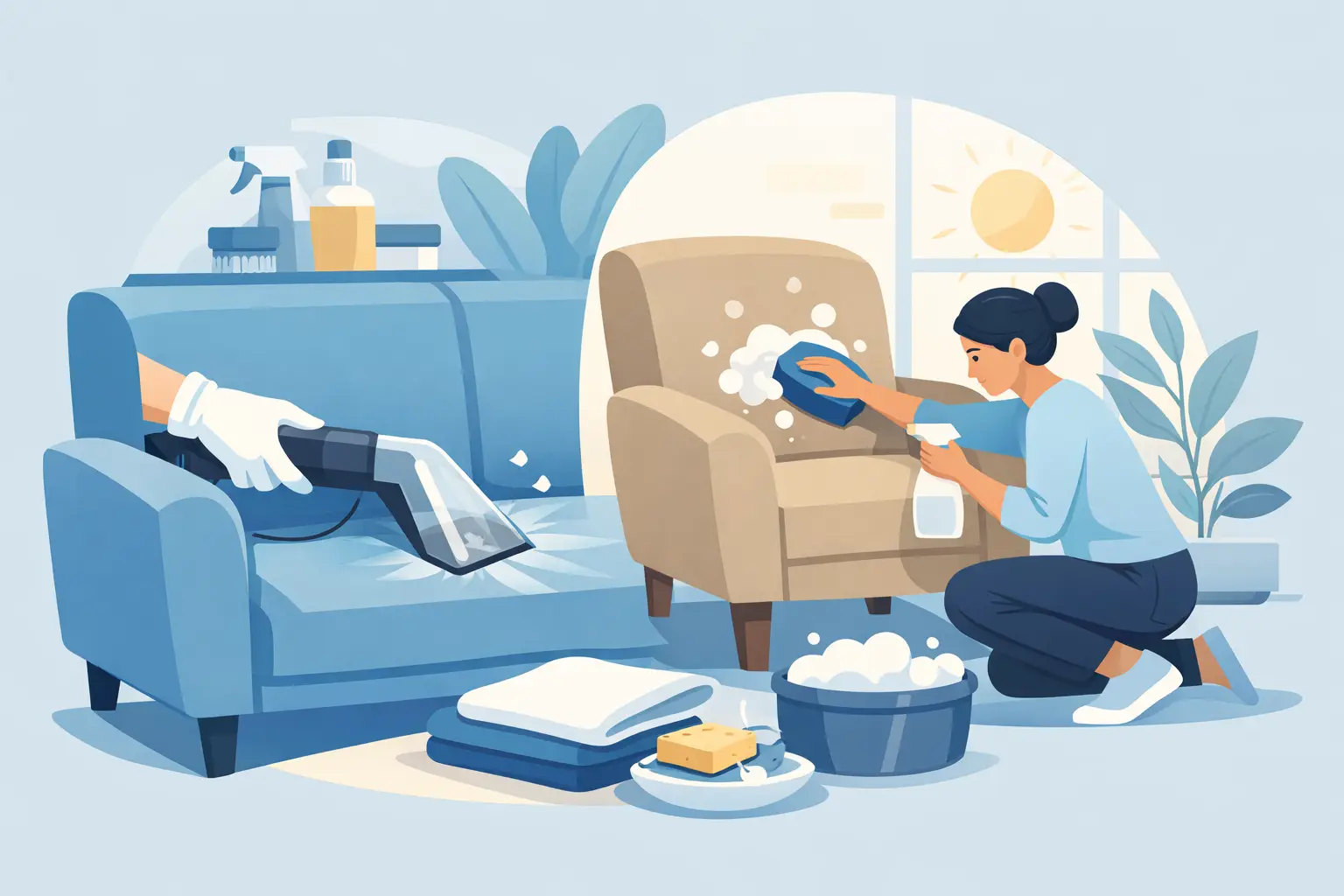
That faint patch on the sofa usually starts as a small annoyance, then becomes the first thing you notice every time you walk into the room. The best way to clean upholstery is not to scrub harder or soak the fabric with supermarket sprays. It is to identify the material first, treat marks with care, and clean in a way that refreshes the furniture without damaging the fibres underneath.
Upholstery collects more than visible dirt. It holds dust, body oils, food residue, pet hair, pollen and everyday odours, all of which gradually dull the fabric and affect how fresh a room feels. In homes, offices and rental properties alike, clean upholstery helps the whole space look better kept. It also extends the life of furniture that is often expensive to replace.
What is the best way to clean upholstery?
The right approach depends on the fabric, the type of soiling and how long the stain has been there. A linen armchair, a synthetic office chair and a velvet headboard should not all be cleaned in the same way. That is where many DIY attempts go wrong. Too much water can leave tide marks, harsh products can strip colour, and vigorous rubbing can spread a stain deeper into the weave.
Before using any product, check the manufacturer’s care label if it is still attached. Upholstery often includes cleaning codes that indicate whether water-based or solvent-based methods are suitable. If there is no label, caution matters more, not less. Testing a small hidden area first is always the safer option.
For light routine cleaning, the best results usually come from a simple process. Start by vacuuming thoroughly with a soft brush attachment to remove loose dust and grit. Pay close attention to seams, piping and crevices where debris settles. This step matters because rubbing damp cleaner over dry dirt can create muddy smears and wear down the fabric.
After vacuuming, deal with any spots individually. Blot rather than scrub. Use a clean white cloth so there is no colour transfer, and work from the outside of the mark towards the centre. A mild upholstery-safe solution is often enough for fresh spills, especially on synthetic fabrics. The goal is controlled cleaning, not saturation.
Best way to clean upholstery stains without causing damage
Fresh stains are always easier to handle than set-in ones. If someone spills tea, wine or sauce, absorb as much as possible straight away with a dry cloth or kitchen roll. Press gently. Rubbing at speed might feel productive, but it often pushes the spill further into the fibres and enlarges the affected area.
Water-based marks such as squash, mud or diluted food spills can sometimes be lifted with a small amount of lukewarm water and a mild detergent solution. The cloth should be damp, not wet. After blotting, use a second cloth with plain water to remove residue, then blot dry again. Leaving soap behind can attract more dirt later.
Greasy stains need a different approach. Body oils, butter, makeup and takeaway splashes can cling stubbornly to upholstery because oil does not break down easily with water alone. In these cases, a fabric-safe degreasing product may help, but the margin for error is smaller. Delicate materials can darken, lose finish or become patchy if the wrong cleaner is used.
Pet accidents and odours are another situation where technique matters. Cleaning the visible patch is only part of the job. If moisture has reached the padding beneath, smells can return even after the surface looks clean. That is one reason professional upholstery cleaning is often the better option for repeated pet issues or older stains.
Common upholstery fabrics and how they change the method
Synthetic upholstery, including polyester and similar blends, is often more forgiving than natural fibres. It can usually handle careful spot cleaning and low-moisture methods well, though over-wetting is still a risk. These fabrics are common in family sofas, dining chairs and office seating because they are practical and durable.
Cotton and linen tend to need more caution. They can absorb moisture quickly and are more prone to watermarking or shrinkage if cleaned too aggressively. Natural fibres also show wear more easily, particularly on pale upholstery or pieces exposed to regular sunlight.
Velvet requires an even lighter touch. Brushing the pile the wrong way or soaking the area can flatten its texture and leave obvious shading. Leather is a separate category altogether and should be cleaned with products designed specifically for leather upholstery, not standard fabric cleaners.
If you are unsure what you are working with, that uncertainty is a good reason to slow down. Expensive furniture, antique pieces and designer fabrics are rarely worth experimenting on.
When home cleaning is enough and when it is not
There is a place for sensible at-home maintenance. Regular vacuuming, quick attention to spills and occasional fabric-safe spot treatment can keep upholstery looking presentable between deeper cleans. For busy households, that may be enough to manage day-to-day wear.
But there is a point where domestic methods stop delivering a proper result. If the sofa still looks dull after vacuuming, if there are several old stains, if odours are lingering, or if the fabric feels sticky or heavily used, surface cleaning will only do so much. The issue may be deeper in the fibres and padding rather than on the visible layer alone.
Commercial spaces and rental properties often reach that stage faster because furniture sees heavier traffic. Reception seating, office chairs and furnished lettings can all accumulate ingrained soil that affects appearance and hygiene. In those cases, a professional service offers more than convenience. It can restore presentation standards and help protect the condition of the furniture.
Why professional upholstery cleaning is often the smarter choice
Professional cleaning brings precision that is difficult to match with off-the-shelf products. Trained cleaners assess the fabric first, choose a suitable method, and use equipment designed to lift dirt while controlling moisture levels. That reduces the risk of over-wetting, uneven drying and fibre damage.
It is also more efficient. Rather than spending an afternoon testing products and hoping for the best, you can hand the job over and know the upholstery is being treated properly. For landlords, letting agents and business owners, that reliability matters. Presentation affects inspections, viewings, customer impressions and general confidence in the space.
There is also the hygiene factor. Upholstery can trap allergens, dust and bacteria that ordinary vacuuming does not fully remove. A deep professional clean helps create a fresher, healthier environment, which is particularly valuable in homes with children, pets or allergy sufferers, as well as client-facing workplaces.
At Blueglade Cleaning, this is exactly where a professional approach adds value – careful assessment, eco-conscious methods and a standard of finish that supports both comfort and presentation.
Mistakes to avoid if you clean upholstery yourself
The biggest mistake is using too much water. Upholstery is not like a hard floor or tiled surface. Once moisture sinks below the fabric, drying becomes slower and more complicated. That can lead to odours, mildew and visible water rings.
Another common mistake is using whatever cleaner is nearest to hand. Washing-up liquid, bleach-based sprays and multipurpose household products may seem convenient, but they are not designed for upholstery fibres or dyes. The short-term effect can look acceptable, then fading or stiff texture appears later.
Heat is another risk. Hairdryers and strong radiators are sometimes used to speed up drying, but they can set stains, distort fabric or create uneven patches. Gentle airflow and patience are safer.
Finally, do not ignore the test patch. Even a mild product can react unpredictably depending on the fabric finish, age of the furniture or previous cleaning attempts.
How often should upholstery be cleaned?
For most homes, vacuuming upholstery weekly or fortnightly is a sensible routine, especially if pets or children are involved. Spot cleaning should happen as soon as spills occur. A professional deep clean every 12 to 18 months is a good benchmark for maintaining both appearance and hygiene, though high-use furniture may need attention sooner.
In offices, rental properties and shared spaces, frequency depends on footfall and how important presentation is. If seating is used daily by multiple people, more regular professional cleaning helps preserve that clean, cared-for look that clients, tenants and visitors notice straight away.
Clean upholstery changes how a room feels. It looks sharper, smells fresher and gives the impression that the whole space is properly looked after. If you are weighing up the best way to clean upholstery, the real answer is to match the method to the fabric, act early with stains, and know when expert care is the best protection for furniture you rely on every day.
Leave a Reply