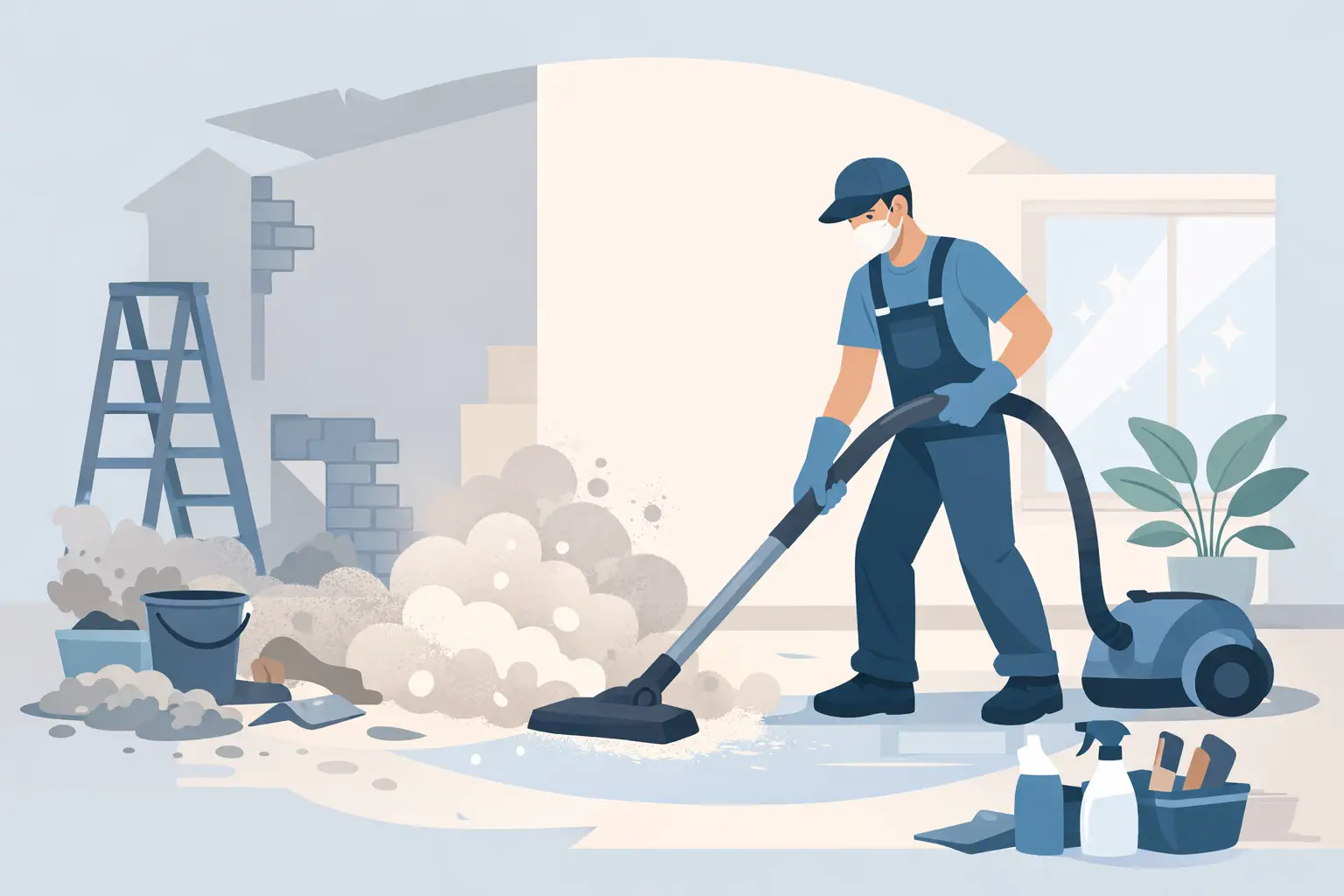
Fresh plaster, cut timber, drilled brick, sanding residue – building work can improve a property beautifully, but the dust it leaves behind has a way of settling into every surface, corner and fabric. After builders’ dust removal is not the final quick tidy many people expect. It is a detailed cleaning process that turns a newly finished project into a space that actually feels complete.
Whether you have had a kitchen fitted, a loft converted, an office refurbished or a rental property repaired between tenancies, the difference between a surface-level clean and a proper post-build clean is easy to spot. One leaves a room looking acceptable at first glance. The other leaves it ready to live in, work in or hand over with confidence.
Why after builders’ dust removal is more demanding than standard cleaning
Builders’ dust is finer, more stubborn and more widespread than ordinary household dust. It travels well beyond the room where work took place, settles on high and low surfaces, and often returns after the first clean as disturbed particles continue to fall.
This is why a basic wipe-down rarely solves the problem. If the wrong cloths, vacuums or methods are used, dust is simply pushed around or lifted into the air and allowed to settle again. On delicate finishes, rushed cleaning can also leave scratches, smears or dull patches.
A proper clean requires order. Dust has to be removed from the highest points first, then worked steadily down through walls, fittings, ledges, skirting boards and floors. Soft furnishings, vents, sockets, frames and internal glass all need close attention. In commercial settings, presentation matters just as much as cleanliness. Clients, tenants, staff and inspectors notice the details.
Where post-build dust tends to hide
The obvious areas are usually addressed first – floors, countertops and windowsills. The less obvious areas are what make a property still feel dusty days later.
Fine debris often sits on top of doors, inside wardrobes, along skirting edges, around pipework, behind radiators and in the tracks of sliding doors or windows. It clings to textured walls, settles into carpet fibres and collects on light fittings. In kitchens and bathrooms, it can rest invisibly on tiles, extractor surfaces and cabinet tops until steam or movement reveals it.
This is also why people often think the dust is “coming back”. In many cases, it was never fully removed from hidden or high-level surfaces in the first place.
What a professional approach looks like
A professional after builders’ dust removal service is designed around precision rather than speed alone. The first step is usually to assess the type of work carried out and the condition of the property. A newly built extension creates a different cleaning challenge from a single-room refurbishment or a decorated rental preparing for new tenants.
From there, the cleaning process should follow a methodical sequence. Dry dust removal comes before wet cleaning in many areas, because mixing dust with moisture too early can create a paste that is harder to lift from paintwork, wood and hard flooring. HEPA-filtered vacuuming is especially useful for capturing fine particles rather than recirculating them.
Once loose dust is under control, attention turns to deeper detailing. This may include wiping internal ledges, polishing accessible surfaces, removing residue from glass, cleaning around switches and sockets, and treating floors according to material. Carpets may need vacuuming more than once, while hard floors often require careful mopping after the dust load has been reduced.
In premium spaces or handover situations, presentation matters. Smear-free glass, dust-free skirting, clean frames and spotless sanitaryware all contribute to that finished impression.
The difference between DIY and specialist cleaning
For very light dust after minor decorating, a careful DIY clean may be enough. If the work was limited, the property is already fairly empty, and you have the right equipment and time, it can be manageable.
Larger jobs are different. Multi-room renovations, joinery work, plastering, floor sanding and construction projects create volume and spread that are difficult to tackle casually. Domestic vacuums are not always suitable for ultra-fine dust. Standard cloths can leave surfaces streaked. And if the property needs to be occupied quickly, handed over to tenants or presented to clients, the margin for error is smaller.
There is also the question of time. Many homeowners and site managers reach the same point – the building work is finished, but the property still does not feel finished because the cleaning stage has become its own project. Bringing in a trained team allows the final phase to move quickly and properly.
Surfaces that need extra care
After building work, not every surface should be treated the same way. Newly painted walls may still be delicate. Timber can show micro-scratches if wiped with gritty cloths. Glass often carries dust, adhesive marks and polishing haze that need different techniques. Stone, laminate and vinyl flooring each respond differently to cleaning products and too much moisture.
This is where experience matters. Effective cleaning is not just about removing dust – it is about protecting the finish underneath it. A careful approach helps preserve the result you have invested in.
For landlords and letting agents, this is especially valuable. A property that has been improved between occupancies should look fresh, not marked by careless post-work cleaning. For offices and commercial units, clean presentation supports both compliance and reputation.
Timing matters more than many people realise
One of the most common issues with after builders’ dust removal is starting too soon. If contractors are still moving in and out, carrying materials, sanding surfaces or making final fixes, dust will continue to circulate. Cleaning at that stage can feel like starting the same job twice.
The best results usually come once the works are genuinely complete, waste has been removed and no further dusty activity is expected. That said, timing depends on the project. Sometimes an initial clean is needed to reduce heavy dust, followed by a final sparkle clean once all finishing touches are done.
This two-stage approach can be the right choice for larger residential and commercial projects, especially where deadlines are tight. It keeps the site manageable while ensuring the final standard is fit for occupancy or handover.
What clients should expect from a quality service
A quality service should feel organised from the outset. That means clear communication, realistic expectations and a cleaning scope that matches the condition of the property. Not every post-build clean is the same, so the service should reflect the job rather than force it into a generic checklist.
Clients should expect close attention to detail, careful treatment of surfaces and a result that noticeably improves both cleanliness and presentation. In many cases, this includes floors, skirting boards, internal windows, frames, fixtures, sanitaryware, kitchen surfaces and dust-prone touchpoints throughout the property.
They should also expect reassurance. After any renovation or construction work, there is usually a point when the space looks worse before it looks better. A dependable cleaning partner removes that final layer of stress and helps bring the project over the line.
When professional after builders’ dust removal adds the most value
The value is highest when standards matter, time is limited or the property needs to impress from day one. That could mean a family eager to move back into a refurbished home, a landlord preparing for check-in, a business reopening after fit-out work, or a construction firm needing a polished finish for handover.
In areas such as Exeter, Plymouth, Taunton and across the wider South West, where projects range from period property updates to modern commercial refits, no two spaces are quite alike. Older homes may hold dust in original features and uneven surfaces, while newer builds often require a more presentation-led finish. The cleaning plan should reflect that reality.
This is where a service-led company such as Blueglade Cleaning can make the final stage feel straightforward. Not by overcomplicating the process, but by handling it with the precision, care and consistency that post-build environments demand.
After the noise, the mess and the disruption, the last thing any client wants is a room that still feels gritty, cloudy or unfinished. A properly cleaned space changes that immediately. It lets the workmanship speak for itself and gives you the simple relief of walking in and knowing the job is finally done.
Leave a Reply