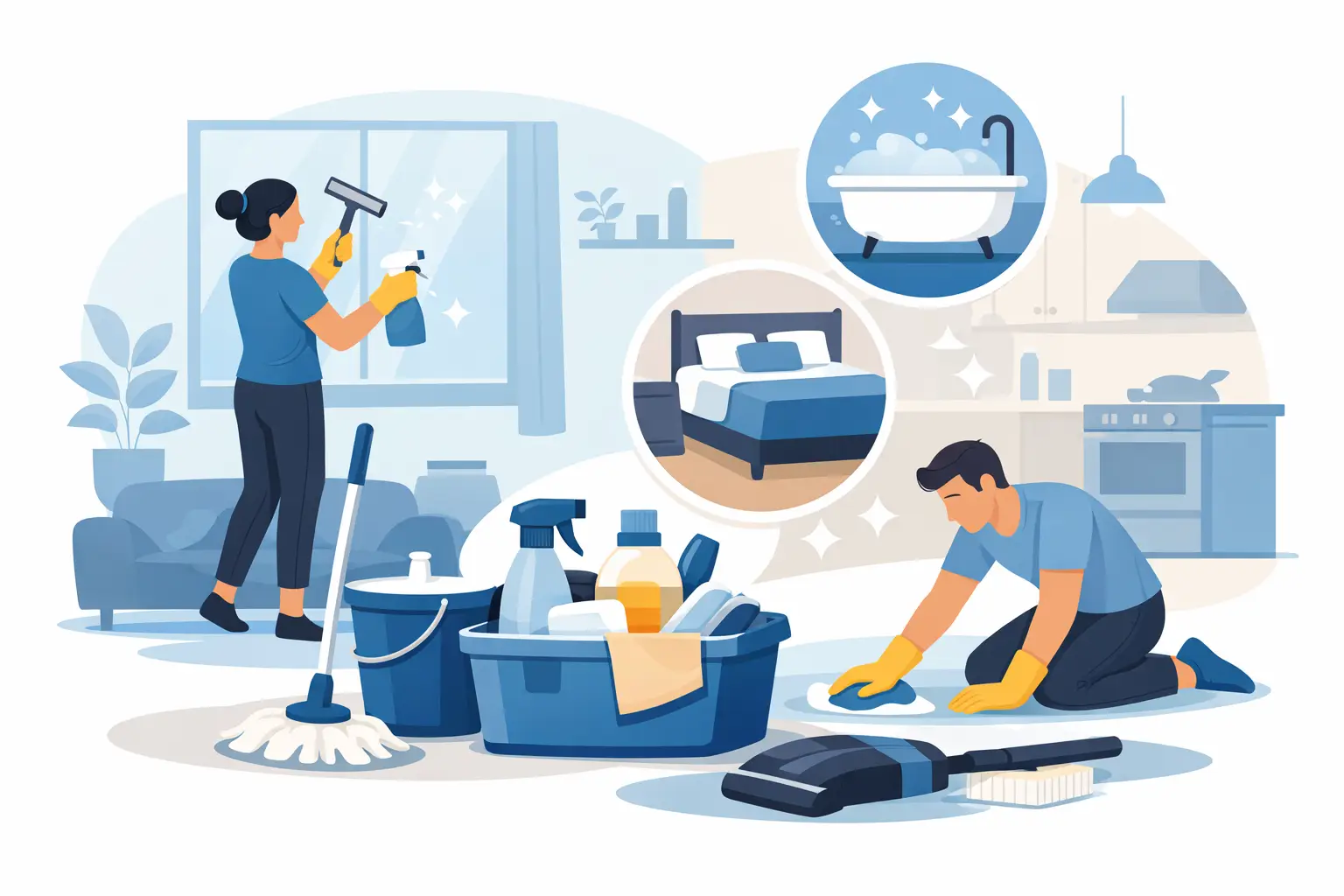
Most homes look clean until you start noticing the details – the grease above the hob, the dust behind the radiator, the marks on skirting boards, the crumbs tucked into sofa corners. That is where a proper deep cleaning checklist earns its place. It turns an overwhelming job into a clear plan and helps you restore the kind of freshness that daily tidying simply cannot maintain.
Deep cleaning is not about making a room look presentable for an hour. It is about dealing with built-up grime, overlooked surfaces and the areas that affect hygiene, comfort and presentation over time. For busy households, landlords preparing a property, or anyone resetting their space after a demanding season, a structured approach saves time and avoids missed tasks.
What a deep cleaning checklist should cover
A useful deep cleaning checklist goes beyond wiping visible surfaces. It should include high-touch areas, hidden dust traps, appliances, fixtures, soft furnishings and those easy-to-ignore edges where dirt quietly builds up. The exact scope depends on the property and how it is used.
A family home with pets will need more attention on upholstery, flooring and odour control. A rental property may need closer focus on kitchens, bathrooms and presentation details for viewings or handover. An office or commercial setting often calls for a different standard again, with shared touchpoints, washrooms and reception areas carrying more weight.
That is why deep cleaning is never entirely one-size-fits-all. The checklist should be consistent, but the priority areas should reflect real use.
Before you start: prepare the space properly
The easiest way to lose time is to clean around clutter. Before any product comes out, clear surfaces, put away loose items and decide whether you are cleaning room by room or tackling the whole property in zones. Working top to bottom is usually the most efficient method, because dust and debris inevitably fall as you go.
Ventilation matters too. Open windows where practical, especially when cleaning kitchens, bathrooms and enclosed bedrooms. Gather cloths, a vacuum with attachments, a mop, suitable cleaning products and a step stool if needed. If you are using specialist products on stone, wood, delicate fabrics or stainless steel, check compatibility first. A poor product choice can create more work than the dirt itself.
Kitchen deep cleaning checklist
The kitchen tends to carry the heaviest build-up, even in well-kept homes. Grease, food residue and moisture create a combination that needs more than a quick wipe.
Start with cupboard fronts, handles, splashbacks and worktops. Then move to the areas that often escape routine cleaning – the top of cabinets, extractor fans, light fittings and the spaces behind small appliances. Pull out the toaster, kettle and microwave if possible, and clean underneath and behind them.
Appliances deserve special attention. The hob should be degreased thoroughly, including burner caps or rings. The oven may need a full internal clean if residue has baked on over time. Fridge shelves, seals and drawers should be emptied, washed and dried before restocking. If the freezer is due for attention, plan enough time for safe defrosting.
Finish with the sink, taps and drain area, then clean skirting boards, corners and flooring. In many kitchens, the floor tells the real story of how deep the clean has been.
Kitchen details people often miss
Handles, bin lids, switch plates and the outside of the extractor hood are touched constantly and cleaned less often than they should be. These small points make a noticeable difference to hygiene and the final impression of the room.
Bathroom deep cleaning checklist
Bathrooms need a balance of descaling, disinfecting and detail work. Limescale, soap residue and trapped moisture can make even a tidy bathroom feel less than fresh.
Begin with the shower or bath, paying close attention to grout lines, seals, screens and taps. Descale where needed and allow product dwell time rather than scrubbing immediately. Toilets should be cleaned inside and out, including the base, flush handle and surrounding floor. Sinks and vanity units should be emptied if practical so drawers, shelves and surfaces can be wiped properly.
Mirrors, tiles and chrome finishes benefit from a final polish once residue has been removed. Then turn to the less obvious areas: extractor covers, towel rails, pipework, light switches and the top edge of doors. A bathroom can look bright at eye level while still holding dust and grime around the edges.
If there is any mould or persistent staining, the right response depends on the cause. Surface mould can often be treated, but recurring moisture problems may need ventilation improvements as well as cleaning.
Bedrooms and living spaces
These rooms often need less heavy-duty product and more methodical dust removal. Start high, with cornices, curtain poles, lampshades and the tops of wardrobes. Then move to shelves, frames, mirrors, side tables and skirting boards.
Soft furnishings hold more dust than most people expect. Vacuum sofas thoroughly, including under cushions and along seams. Curtains, rugs and mattresses should be treated according to their material and condition. Rotating and vacuuming a mattress can help refresh a bedroom, but stains or allergens may call for more specialist care.
In living areas, electronics should be dusted carefully, not saturated with product. Under furniture matters just as much as visible flooring, especially where pet hair and dust collect. If a room still feels dull after cleaning, it is often because fabric surfaces and hidden edges have been skipped.
The hidden build-up in bedrooms
Headboards, bedside lamps, radiators and wardrobes are common dust zones. These are the details that improve air quality and help a freshly cleaned room feel genuinely restful.
Hallways, stairs and overlooked transition spaces
Hallways and landings take heavy daily traffic but are rarely given the time they need. Doors, handles, bannisters, stair spindles and wall marks all affect the feel of the property as a whole. Because these are transition spaces, they set the tone before someone even enters the main rooms.
Vacuum stair edges carefully and clean skirting boards and corners. If flooring is hard, mop with attention to edges and around thresholds. If carpets are tired or stained, a general clean may not be enough to restore the finish.
Windows, frames and finishing touches
A deep clean is often judged by the finishing touches. Internal glass, window sills, frames and tracks collect dust, condensation residue and insects over time. Clean these thoroughly and wipe any surrounding marks from walls or paintwork where safe to do so.
Then check the details that bring everything together: switches, sockets, door frames, handles, vents and radiators. These surfaces are easy to miss when moving quickly, but they are exactly what makes a property feel either carefully cleaned or only half done.
When to handle it yourself and when to book professional support
Some deep cleans are very manageable with a free day, the right supplies and a room-by-room plan. Others become less practical once the property is larger, the build-up is heavier, or the timing is tight. That is especially true before moving, after renovation work, or when preparing a home or commercial space for guests, tenants or clients.
Professional support is often less about inability and more about efficiency, standards and peace of mind. A trained team will usually notice what gets missed, use the right products for each surface and complete the work faster than most households can. For clients who want a polished result without giving up an entire weekend, that convenience matters.
In areas such as Exeter, Plymouth, Taunton and across the wider South West, many clients book a deep clean as a reset before returning to regular maintenance cleaning. It is a sensible approach. Once the property has been brought back to a high standard, it becomes far easier to keep it there.
A smarter way to use your checklist
The best deep cleaning checklist is not the longest one. It is the one you can actually follow. Break the property into sections, focus first on the areas with the greatest build-up, and be realistic about what needs specialist attention. If time is limited, start with the kitchen, bathrooms and soft furnishings, then move to finishing details once the core hygiene tasks are complete.
If you prefer a more hands-off route, companies such as Blueglade Cleaning provide a more refined alternative to tackling everything yourself – with the precision, care and consistency that a true deep clean demands.
A thoroughly cleaned space does more than look better. It feels calmer, healthier and easier to live or work in, which is often the real reason this kind of cleaning is worth doing at all.
Leave a Reply