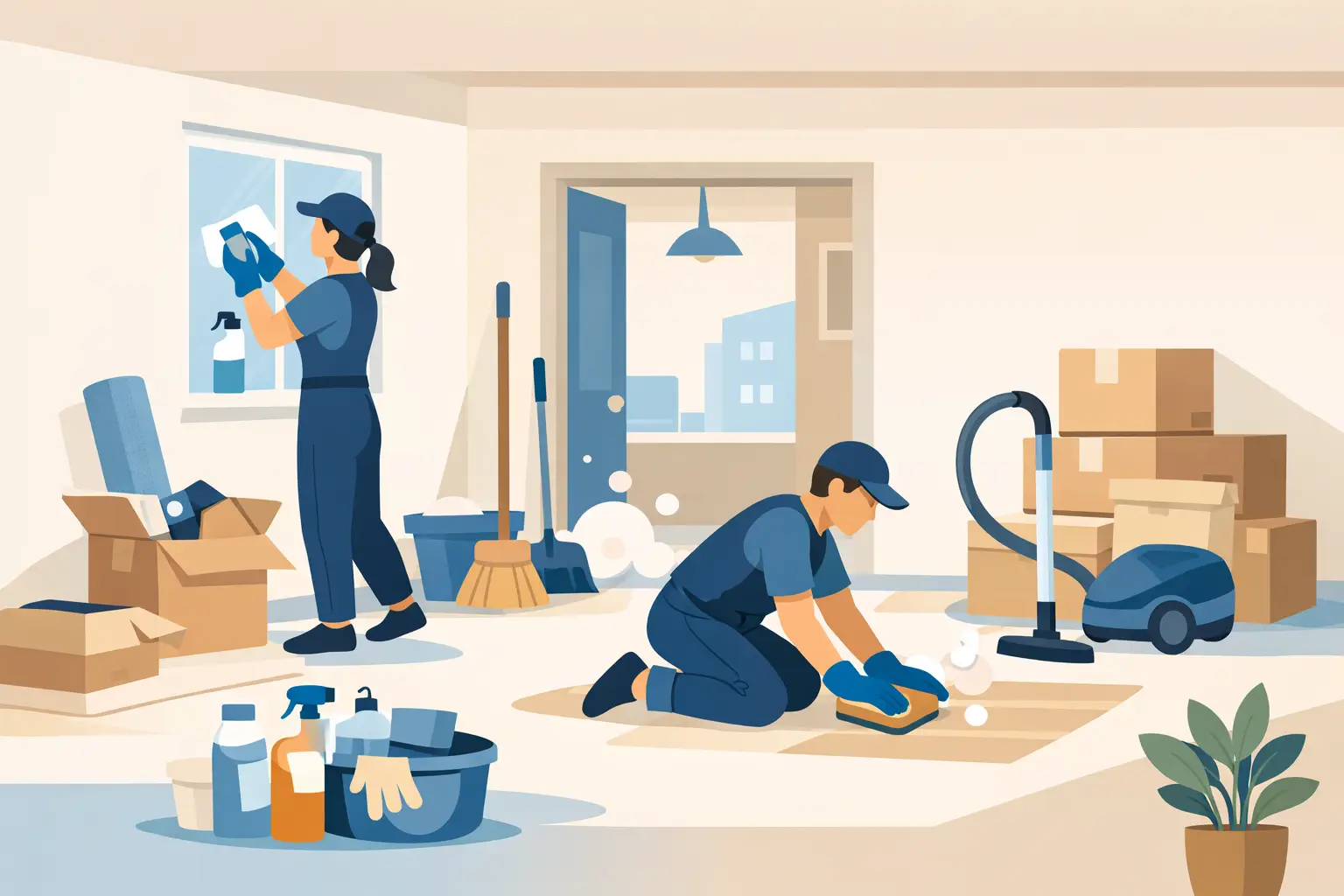
The final few days before you hand back keys are rarely calm. There are boxes in the hallway, paperwork to finish, and that nagging question of whether the property is actually clean enough. This guide to move out cleaning is designed to make that final stage simpler, whether you are a tenant protecting your deposit, a landlord preparing for new occupants, or a property manager working to a tight turnaround.
Move-out cleaning is not quite the same as a regular weekly clean. The standard is usually higher, and the details matter more. Skirting boards, inside cupboards, limescale around taps, oven grease, and marks on internal glass all attract attention when a property is being inspected empty. The good news is that with the right plan, the job becomes far more manageable.
What makes move-out cleaning different?
A lived-in home can look tidy while still hiding a surprising amount of grime. Once furniture is removed, every missed patch becomes obvious. Dust gathers behind wardrobes, crumbs collect under appliances, and carpet traffic marks stand out more clearly in bare rooms.
That is why a proper guide to move out cleaning needs to focus on presentation as well as hygiene. The goal is to leave the property fresh, neutral, and ready for handover. In practical terms, that means cleaning areas that are easy to overlook during normal day-to-day maintenance.
There is also a balance to strike. Not every property needs the same level of work. A modern flat that has been well maintained may only need a thorough top-to-bottom clean. A family home after several years of occupancy may need deeper attention, especially in kitchens, bathrooms, and carpets.
Start with a realistic plan
The biggest mistake people make is leaving everything until moving day. Cleaning around half-packed boxes wastes time and often leads to rushed results. If possible, begin in stages a week or two before your move.
Start with cupboards, shelves, and areas you use less often. Clean them as you empty them. This spreads the workload and avoids the last-minute scramble. On the final day, you can then focus on floors, bathrooms, kitchen surfaces, and finishing touches.
It also helps to check your tenancy agreement or inventory report. Some landlords and letting agents are very specific about expectations, especially around ovens, extractor fans, white goods, and flooring. If there are any points of dispute later, being able to show that you cleaned to a clear standard is helpful.
The best order for move-out cleaning
A methodical approach saves effort. In most homes, it makes sense to work top to bottom and room by room. Dust high surfaces first, then clean mid-level areas such as cupboards, sills, and worktops, and leave floors until the end.
If the property is empty, start in the rooms furthest from the entrance and work your way out. This prevents you from walking dirt back into spaces you have already finished. It sounds simple, but it makes a visible difference.
Kitchen
The kitchen usually takes the longest, and for good reason. Grease, food residue, water marks, and hidden crumbs build up quickly. Begin by emptying every cupboard and drawer, then wipe inside and out. Pay attention to handles, hinges, and shelf edges.
Worktops, splashbacks, sinks, and taps should be degreased and descaled where needed. The hob, extractor, and oven often need the deepest cleaning. If the oven has baked-on grease, this can become a project in itself, and it is one of the most common reasons tenants decide to bring in professional support.
Do not forget the fridge and freezer if they are included in the property. They should be emptied, switched off if appropriate, defrosted, and wiped dry. Any lingering odour will be noticed straight away.
Bathroom
Bathrooms are judged quickly because signs of neglect are so obvious. Limescale around taps and shower screens, soap residue on tiles, and discolouration in grout can make the room feel less cared for than it really is.
Focus on descaling and polishing. Clean the toilet thoroughly, including behind the base. Wash the bath or shower tray, remove residue from screens and chrome fittings, and wipe mirrors until streak-free. Cabinets and vanity units should be emptied and cleaned inside as well as outside.
If mould has formed around sealant, it depends on how severe it is. Light surface staining may respond to suitable cleaning products. If the sealant itself is worn or damaged, that becomes more of a maintenance issue than a cleaning one.
Bedrooms and living areas
These rooms are usually more straightforward, but details still matter. Wipe wardrobes inside and out, dust skirting boards, clean window sills, remove cobwebs from corners, and check internal glass for fingerprints or smears.
Marks on walls are a grey area. A light scuff may be removable with careful spot cleaning, but aggressive scrubbing can damage paint. If a mark is part of fair wear and tear, cleaning alone may not solve it. It is better to be cautious than to create a patchy finish.
Floors and carpets
Hard floors should be vacuumed and then cleaned with the correct method for the material. Wood, laminate, vinyl, and tile all respond differently to moisture and cleaning products, so avoid soaking the floor.
Carpets deserve special attention at move-out stage. Vacuuming improves appearance, but it will not always remove odours, stains, or embedded soil. If the tenancy agreement requires professional carpet cleaning, or if the carpet has visible marks, specialist treatment may be the better route.
Common areas people forget
Even careful cleaners tend to miss the same spots. Light switches, plug sockets, door frames, radiator tops, curtain rails, and the tops of kitchen cupboards often escape notice. So do the edges behind freestanding appliances and the inside of the washing machine drawer.
Windows are another area where expectations vary. Some handovers only require internal glass to be cleaned. Others call for a fuller finish. If you are unsure, it is worth clarifying in advance rather than guessing.
Should you do it yourself or book a professional clean?
It depends on your timeline, the condition of the property, and how confident you feel tackling deep cleaning tasks. If you have kept the home in excellent condition and can dedicate uninterrupted time, a DIY approach may be perfectly reasonable.
Professional move-out cleaning becomes more attractive when the property is large, the oven is heavily soiled, carpets need specialist treatment, or the handover window is tight. For landlords and letting agents, it can also help create consistency between tenancies. For busy tenants, it removes a physically demanding task at a point when there is already enough to manage.
A professional service should bring precision, proper equipment, and a checklist-led approach. That matters when standards are high and presentation influences deposits, inspections, and first impressions. In busy areas across South-West England, where turnaround times can be short, reliability is often just as valuable as the clean itself.
A simple move-out cleaning checklist
If you want a practical benchmark, make sure the property is empty first, then check that all surfaces are dust-free, cupboards and drawers are wiped out, kitchen appliances are cleaned, bathrooms are descaled, windows are clear on the inside, and floors are thoroughly vacuumed and washed where suitable. Finish by taking rubbish away, checking for odours, and doing one final walk-through with fresh eyes.
That last check matters. Open every cupboard, stand in each doorway, and look at the room as an inspector would. Empty spaces reveal flaws quickly.
How to avoid problems at handover
Photographs are useful once cleaning is finished, especially if you are a tenant. Well-lit images of each room, key appliances, and the overall condition of the property provide a simple record. Keep any receipts too, particularly if you have paid for carpet, oven, or end of tenancy cleaning.
Timing also matters. If repairs, painting, or removals happen after the clean, some of the benefit is lost. Ideally, cleaning should be the final substantial job before handover.
For anyone who wants the process handled with care and consistency, Blueglade Cleaning understands that move-out cleaning is about more than surface shine. It is about leaving a property ready for its next chapter, with less stress for the people handing it over.
A clean exit always feels better than a rushed one, and when the last box is gone, that peace of mind is worth the effort.
Leave a Reply