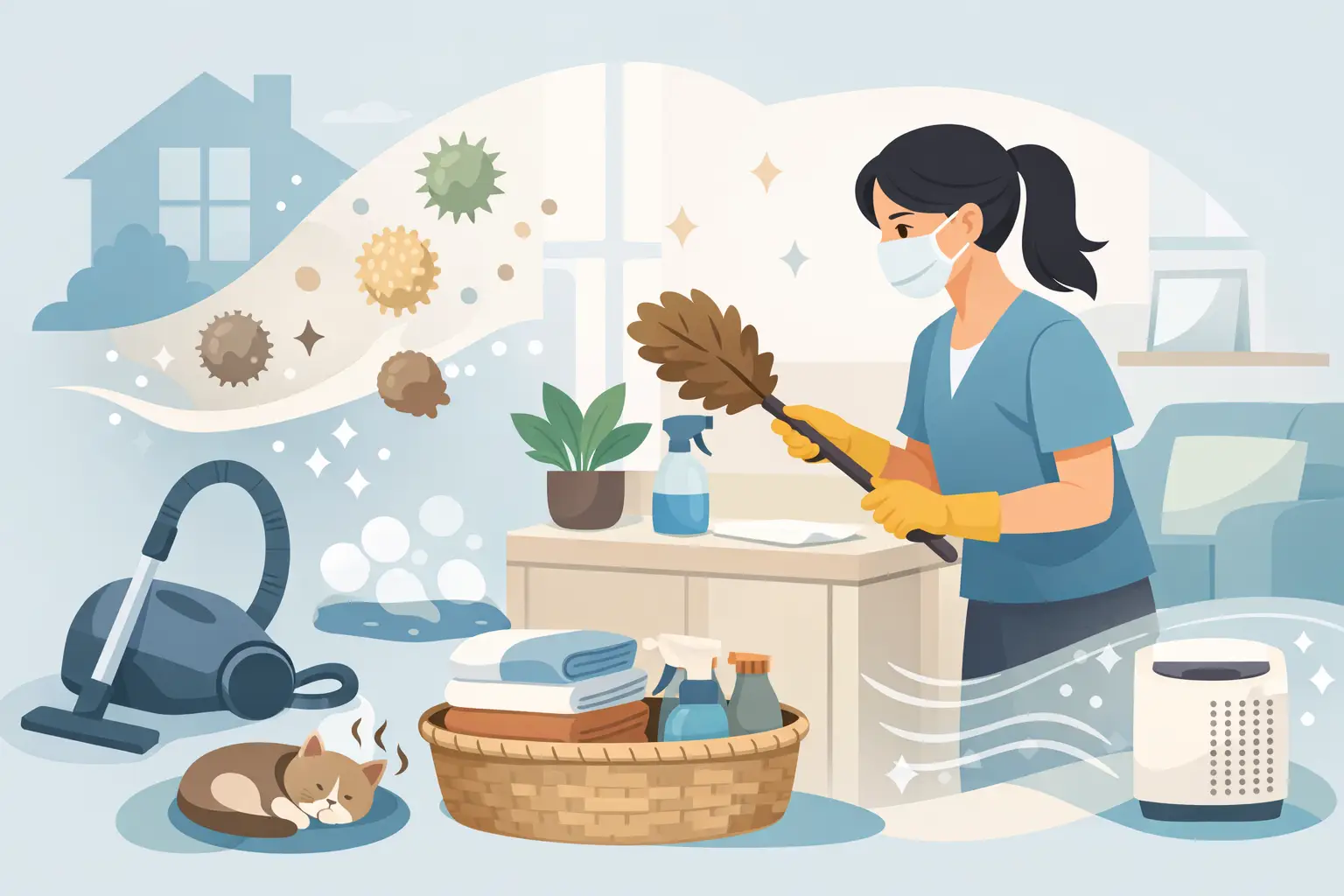
A room can look tidy and still be working against you. If you wake up congested, start sneezing as soon as the heating comes on, or notice itchy eyes after sitting on the sofa, the issue is often what you cannot see – dust mites, pet dander, pollen and trapped particles settled into everyday surfaces. Effective home cleaning for allergy sufferers is less about making a space look presentable and more about reducing the triggers that build up quietly over time.
For busy households, that distinction matters. A quick once-over may deal with crumbs and visible dust, but allergens tend to collect in fabrics, carpets, mattresses, skirting boards and overlooked corners. The right approach is precise, consistent and gentle enough not to stir everything back into the air.
Why home cleaning for allergy sufferers needs a different approach
Standard cleaning often focuses on appearance first. Allergy-conscious cleaning focuses on exposure. That means choosing methods that remove particles rather than spreading them around, and paying more attention to the surfaces that trap irritants most effectively.
Dry dusting, for example, can make a room seem cleaner for a few minutes while actually lifting allergens into the air. Strongly fragranced products may leave a fresh scent, but for some people they add another layer of irritation. Even vacuuming can be unhelpful if the machine does not filter fine particles properly.
This is where a more tailored routine makes a real difference. The goal is not to sterilise the home. It is to lower the daily allergen load so the space feels calmer, fresher and easier to live in.
The biggest allergy hotspots in the home
Bedrooms deserve attention first. Bedding, mattresses, curtains and upholstered headboards are prime places for dust mites and settled dust. Because you spend hours there every night, even a moderate build-up can have an outsized effect on sleep quality and morning symptoms.
Living rooms come next, especially if you have rugs, fabric sofas or pets. Soft furnishings hold on to dander and dust far more than hard surfaces do. If windows are open during high pollen periods, that can add another layer to carpets, cushions and blinds.
Kitchens and bathrooms are less associated with dust allergies, but they matter for a different reason. Moisture encourages mould, and mould spores are a common trigger. Grout lines, seals around sinks and baths, extractor fans and any area with poor ventilation should be cleaned before visible growth becomes a larger problem.
Hallways and entrances are often underestimated. Shoes, coats, bags and prams can bring in pollen, dirt and outdoor particles that then move through the rest of the property.
What actually helps reduce allergens
The most effective cleaning routines combine removal, containment and consistency. Removal means lifting dust and particles away from surfaces. Containment means not redistributing them into the air. Consistency matters because allergens return quickly, especially in busy homes.
Microfibre cloths are useful because they trap dust rather than just pushing it along. Damp dusting usually works better than dry wiping. Vacuum cleaners with high-efficiency filtration are preferable, particularly on carpets, rugs and upholstery. In homes with severe sensitivities, technique matters too. Cleaning from top to bottom helps stop dust from resettling on areas you have already finished.
Product choice is worth considering carefully. There is no universal rule that natural products are always better or that antibacterial products are always necessary. For many allergy sufferers, low-fragrance or fragrance-free options are the safer route, especially in bedrooms and smaller rooms with limited airflow. The aim is a genuinely clean finish, not a heavy scent that masks residue.
A realistic cleaning routine for allergy-prone homes
Daily perfection is neither practical nor necessary. What works better is a reliable rhythm.
In high-use spaces, frequent light cleaning keeps allergen levels from building up. Floors near entrances, kitchen surfaces, dining areas and pet zones benefit from regular attention. Bedrooms usually need a little more structure, with bedding changed often and surrounding surfaces cleaned before dust becomes obvious.
Weekly cleaning should go beyond the visible middle of the room. Skirting boards, bedside tables, lamps, shelves, window sills and under furniture all collect dust. Upholstery should not be ignored simply because it looks clean. Soft furnishings are often where symptoms linger.
Then there are the less frequent but important tasks: deep cleaning carpets, washing curtains where suitable, refreshing mattresses, cleaning behind larger furniture and dealing with areas that quietly accumulate dust for months. These jobs are easy to postpone, but they often make the biggest difference to comfort.
Carpets, upholstery and soft furnishings
This is where trade-offs come in. Carpets create warmth, comfort and sound insulation, but they also hold allergens. That does not always mean they need to be removed. In many homes, regular professional carpet cleaning combined with effective vacuuming is enough to keep them manageable.
The same applies to sofas, armchairs and dining chairs with fabric seats. These surfaces absorb everyday life – dust, hair, skin flakes, outdoor particles and spills. If someone in the home has recurring symptoms, upholstery cleaning can be one of the most worthwhile services because it targets a source that routine wiping will never reach.
Curtains, throws and cushions also deserve attention. If they are washable, keeping them on a sensible laundering schedule helps. If not, they may need a more specialist approach. The right answer depends on the fabric, the level of use and how sensitive the household is.
The role of deep cleaning
A regular tidy-up supports presentation. A deep clean supports a healthier baseline. For allergy sufferers, deep cleaning is often the point at which a home starts to feel noticeably different.
That is because deep cleaning tackles the areas that ordinary routines tend to skim over: behind beds, under sofas, around radiators, along skirting boards, inside window tracks, on top of cupboards and in the detailed edges where dust settles undisturbed. In kitchens and bathrooms, it also addresses grease, residue and moisture-prone zones that can contribute to poor air quality.
This is particularly valuable after renovation work, at the end of a tenancy, when moving into a new home or after a long period without a thorough clean. Fine dust from decorating or building work is especially troublesome for sensitive households because it settles everywhere, including places that seem protected.
When DIY works and when professional support makes sense
Many households can manage day-to-day control well with the right tools and habits. If symptoms are mild and the home has mostly hard flooring, a disciplined weekly routine may be enough.
Professional support becomes more useful when time is limited, symptoms are persistent, or the property has several dust-trapping features such as carpets, rugs, stairs, pets and heavy upholstery. It also helps when cleaning itself triggers symptoms. For some people, stirring up dust while vacuuming, changing bedding or cleaning blinds is part of the problem.
A professional team can bring the consistency, equipment and detail needed to reduce build-up without adding stress to your schedule. That is often the difference between a home that looks clean and one that feels easier to breathe in. For households across the South West, this kind of tailored approach is exactly where a dependable service earns its value.
Small habits that support cleaner air
Cleaning is central, but a few surrounding habits make it more effective. Taking shoes off at the door reduces what comes in from outside. Washing pet bedding regularly helps if you have animals. Avoiding clutter makes surfaces quicker to clean and leaves fewer places for dust to settle. Ventilating rooms sensibly matters too, although during high pollen days it may be better to air the home at quieter times rather than keeping windows open all afternoon.
It also helps to think seasonally. Spring and summer often bring more pollen indoors. Winter can mean less ventilation and more dust circulating once heating is on. Your routine may need to shift slightly through the year.
Creating a home that feels better, not just cleaner
For allergy sufferers, cleaning is not a cosmetic task. It is part of how a home supports wellbeing. The best results usually come from steady, well-planned care rather than harsh products or occasional marathon cleans.
If your home is triggering symptoms, start with the places you use most, focus on dust-trapping surfaces, and choose cleaning methods that remove rather than redistribute. A cleaner home should do more than sparkle – it should help you settle in, breathe more easily and get on with life in greater comfort.
Leave a Reply