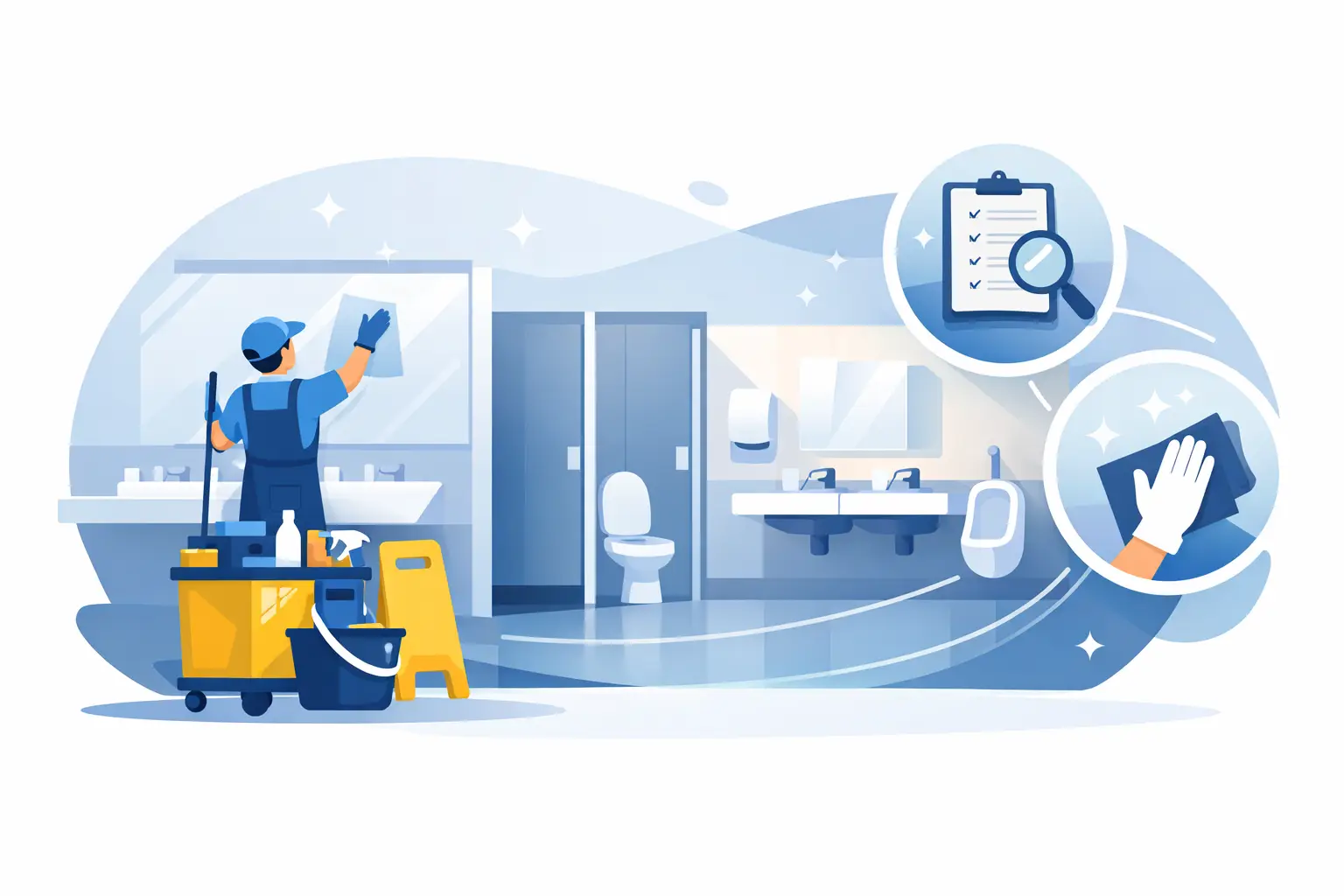
A washroom can shape a visitor’s opinion of your business before they have spoken to a member of staff. An empty soap dispenser, marked toilet seat or unpleasant odour suggests that essential details are being missed elsewhere too. Commercial washroom cleaning standards are therefore about far more than appearances. They protect health, support a positive workplace and give every person using the facility confidence that it is properly cared for.
For offices, retail premises, hospitality venues, schools, managed properties and public-facing workplaces, the right standard is one that is visible, consistent and suited to the number of people using the space. It should also be practical enough to maintain throughout the day, not just immediately after a scheduled clean.
What commercial washroom cleaning standards should cover
There is no single cleaning checklist that suits every commercial washroom. A small office with six employees has very different needs from a busy café, medical practice or shared workspace. However, employers and those responsible for premises must provide suitable sanitary facilities and keep them in a clean, orderly condition. Cleaning arrangements should help meet that obligation while managing the real risks within the building.
A professional standard begins with the obvious touchpoints: toilets, urinals, basins, taps, flush plates, door handles, locks, hand dryers and dispenser buttons. These areas need thorough, methodical cleaning and disinfection with products appropriate to the surface and the task. The aim is not to leave behind a strong chemical scent. It is to remove soil, reduce contamination and leave surfaces visibly clean without damage or residue.
The wider room deserves the same attention. Floors, skirting, sanitary bins, mirrors, partitions, tiled walls and high ledges all affect hygiene and presentation. Dust around vents, staining in grout or splashes at the base of a toilet can quickly undermine an otherwise tidy washroom.
Supplies are part of the standard too. Soap, toilet tissue, hand towels where provided, sanitary bin liners and hand sanitiser should be checked and replenished at every service. A spotless washroom is still not fit for purpose if users cannot wash and dry their hands properly.
Hygiene is about process, not perfume
A pleasant fragrance can improve a washroom experience, but it cannot replace effective cleaning. Fragrance should never be used to mask an unresolved issue such as poor ventilation, drainage problems, inadequate cleaning frequency or a leaking fitting.
The process used by the cleaning team matters just as much as the products selected. Colour-coded cloths and equipment help prevent cross-contamination between toilets, sinks and other areas of a building. Fresh, clean mop heads and correctly diluted solutions are essential. Equipment used in washrooms should be kept separate from equipment used in kitchens, desks or communal spaces.
Safe handling is equally important. Cleaning chemicals must be used in line with their instructions, stored securely and never mixed. Teams should understand contact times, which means allowing a disinfectant to remain on a surface for the recommended period before wiping or rinsing. Rushing this step can make a washroom look clean while reducing the hygiene benefit.
Eco-conscious cleaning also has a place in commercial washrooms, provided it does not compromise performance. Lower-impact products, controlled dispensing and reusable systems can reduce waste, but the product must still be suitable for the surface, soil level and hygiene requirement. The best choice depends on the environment rather than a one-size-fits-all label.
Set a cleaning frequency that reflects footfall
A daily clean may be enough for a low-traffic office washroom, particularly where staff work regular hours and facilities are not open to the public. In higher-use settings, one visit at the end of the day is rarely sufficient. Washrooms may need scheduled checks during opening hours, quick response cleaning after busy periods and deeper cleaning at planned intervals.
Footfall is the starting point, but it is not the only factor. Consider the number of toilets available, whether visitors use the facilities, the age and layout of the building, seasonal demand, events and the needs of staff or customers. A washroom near a reception area may require closer attention because it is a highly visible reflection of the premises.
A sensible schedule often includes routine cleaning, daytime checks and periodic deep cleaning. Routine cleaning covers the day-to-day reset of surfaces, floors and consumables. Checks identify issues such as empty dispensers, blocked toilets, spills or odours before they become complaints. Deep cleaning addresses scale, hidden grime, high-level dust, grout, fittings and areas that cannot be fully treated during a standard service.
It is worth reviewing the schedule after the first few weeks. If consumables run out before the next service, bins fill too quickly or complaints cluster at certain times, the frequency needs adjusting. Good standards are measured by results, not by how impressive a checklist looks on paper.
A practical washroom service checklist
A clear checklist gives managers and cleaning teams a shared definition of “clean”. It should normally cover:
- Cleaning and disinfecting toilets, urinals, basins and touchpoints
- Polishing mirrors and removing visible splash marks
- Emptying waste and sanitary bins in line with the agreed service arrangement
- Mopping floors and treating spills or staining safely
- Replenishing soap, paper products, toilet tissue and liners
- Checking for leaks, blockages, damaged fittings, odours and maintenance concerns
The checklist should leave room for site-specific requirements. For example, a customer washroom may need baby-changing units checked, while an office washroom may need attention to shower facilities or changing areas. Cleaning teams should report faults promptly, because no amount of cleaning can solve a failed extractor fan or persistent plumbing issue.
Presentation and accessibility matter
Commercial washroom cleaning standards should respect every user. Accessible toilets require particular care because they often include grab rails, emergency cords, wider turning areas and specialist sanitary fittings. These features must be cleaned without obstruction, and emergency pull cords should never be tied up or moved out of reach.
Presentation is also a practical form of care. Toilet roll holders should be filled neatly, dispensers should be clean on the outside, bins should not overflow and floors should be dry once the area is reopened. Wet-floor signage should be used whenever required, then removed promptly when the risk has passed. Leaving signs in place permanently can make people ignore them when they genuinely need to take care.
Small details influence the overall impression. A streak-free mirror, clean chrome fittings and fresh paper supplies make the room feel managed. In a client-facing workplace, that reassurance supports the same professional standard expected in your reception, meeting rooms and service areas.
How to monitor quality without adding hassle
A signed cleaning sheet can be useful, especially in busier or public-facing premises, but it should not be treated as proof of quality on its own. Managers benefit from occasional spot checks at different times of day. Look beneath the rim of fittings, around the base of toilets, behind doors, inside bins and at the level of supplies. These are the areas where rushed cleaning is most likely to show.
Feedback matters as well. Staff and visitors are often the first to notice a recurring issue, whether it is an odour in the afternoon or a dispenser that frequently jams. Make it easy for them to report problems, then use the information to improve the plan rather than simply reacting to one-off complaints.
Professional cleaning support brings consistency to this process. At Blueglade Cleaning, trained teams work to tailored specifications, helping businesses maintain spotless, hygienic washrooms without placing another daily task on an already busy team.
The right standard is the one your visitors never need to think about: a washroom that is clean, stocked, safe and ready whenever it is needed. When that becomes routine, your premises feel more welcoming, your people feel better looked after and your business presents the care it promises.
Leave a Reply