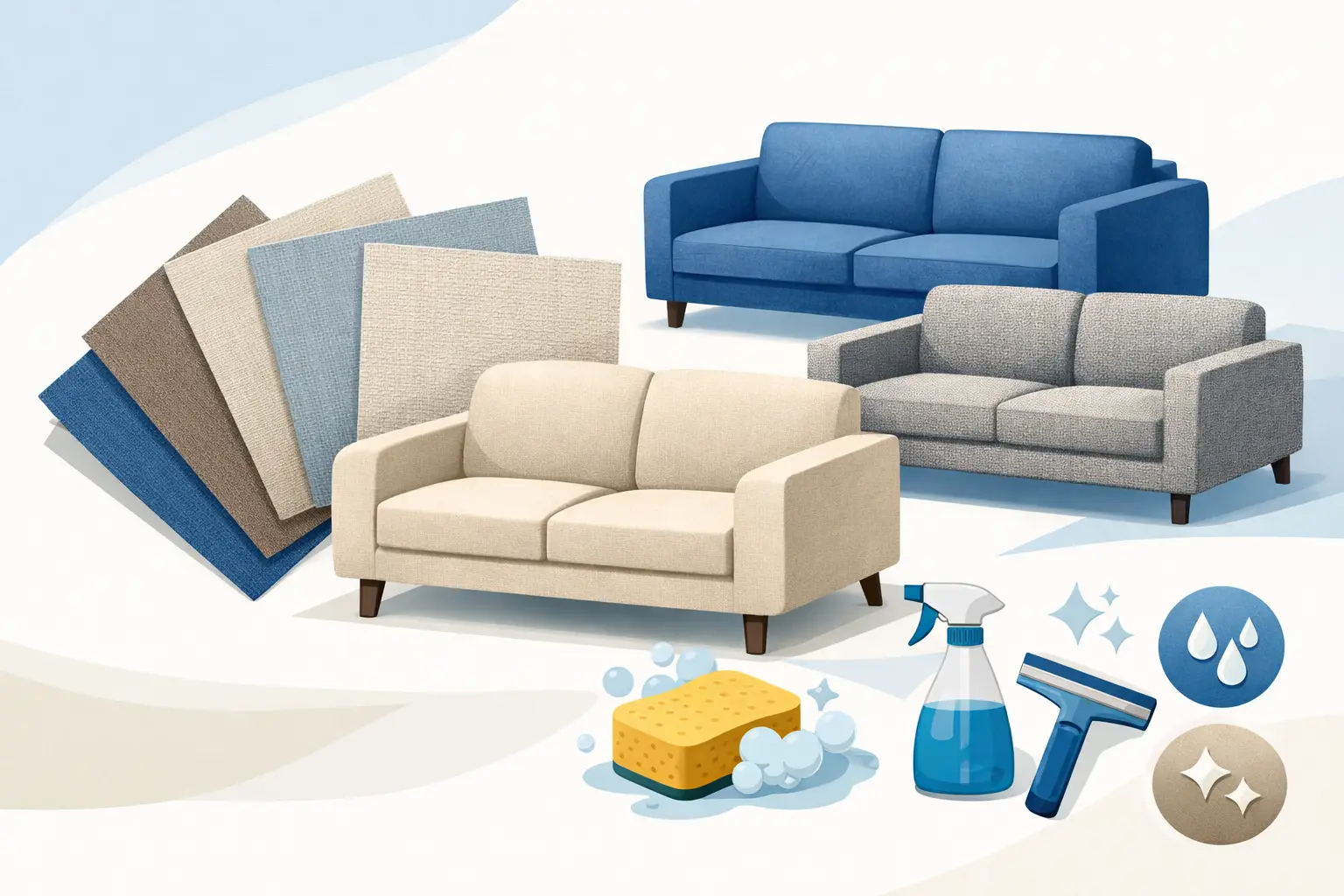
A sofa rarely gets a quiet life. It deals with tea, takeaway, pets, children, guests, and the general wear of daily living. That is why choosing the best sofa fabrics for easy cleaning matters far more than picking a colour you like in a showroom. The right fabric saves time, keeps your space looking smarter for longer, and makes spills feel manageable rather than disastrous.
For busy households, landlords preparing a property, or anyone furnishing a client-facing room, easy cleaning is not just about wiping away the odd mark. It is about how a fabric responds to repeated use, how much dust and hair it holds, whether stains sink in quickly, and how well it recovers after professional upholstery cleaning. Some fabrics look luxurious but demand constant care. Others are more forgiving and better suited to real life.
What makes a sofa fabric easy to clean?
Easy-clean performance usually comes down to four things. First, the surface texture matters. Tightly woven fabrics tend to trap less dirt than loose, textured weaves. Second, absorbency matters. If liquid sits on the surface for a moment rather than soaking in instantly, you have a far better chance of lifting it cleanly.
Third, durability matters just as much as stain resistance. A fabric that tolerates gentle cleaning, repeated vacuuming, and normal family life will stay presentable for longer. Finally, maintenance expectations matter. Some sofas are technically cleanable, but only with specialist products, delicate handling, or removable covers that shrink in the wash. That may not feel easy in practice.
7 best sofa fabrics for easy cleaning
1. Leather
Leather remains one of the best sofa fabrics for easy cleaning because most spills stay on the surface rather than sinking in. A quick wipe with a soft cloth often deals with everyday mess before it becomes a stain. Dust, crumbs, and pet hair also lift off easily, which makes leather especially practical in busy lounges and reception areas.
That said, leather has trade-offs. It can scratch, particularly in homes with pets, and it needs occasional conditioning to prevent drying or cracking. Pale leather can also show dye transfer from clothing. If your priority is fast daily upkeep, though, leather is hard to beat.
2. Faux leather
Faux leather offers a similar wipe-clean benefit at a lower price point. It suits homes, rental properties, and waiting areas where appearance and convenience both matter. For light use, it can be a very sensible option.
The difference appears over time. Lower-quality faux leather may peel or crack, especially in sunny rooms or heavily used family spaces. If you choose it, quality matters. A well-made faux leather sofa can be practical and smart-looking, but a cheap one may age poorly.
3. Microfibre
Microfibre is one of the most forgiving fabric choices for everyday homes. Its tightly packed fibres resist dust and often cope well with minor spills if attended to promptly. It is also soft, comfortable, and less cold to the touch than leather, which many households prefer.
Microfibre does have a tendency to show water marks if cleaned unevenly, so spot cleaning needs a careful hand. Still, for homes with children or frequent use, it often strikes the best balance between comfort, resilience, and manageable upkeep.
4. Synthetic velvet
Velvet may not sound like the obvious practical choice, but synthetic velvet can be surprisingly easy to maintain compared with natural versions. Because it has a short, dense pile, it often resists deeper dirt better than loose woven fabrics, and many marks can be blotted before they set.
The main issue is pressure marks and shading, which can make the fabric look uneven even when it is clean. It also benefits from regular brushing or vacuuming with the correct attachment. If you want a more elegant finish without constant worry, a good synthetic velvet is worth considering.
5. Performance fabric
Performance fabrics are designed with modern living in mind. These materials are often treated to resist stains, moisture, and wear, making them a strong option for family homes, furnished rentals, and high-traffic shared spaces. Many are engineered so liquids bead on the surface briefly, giving you a valuable window to act.
Not all performance fabrics are identical, so it is worth checking the care guidance before buying. Some are better with water-based spills, while others cope well with oil-based stains too. When chosen carefully, this category offers some of the most dependable long-term value.
6. Canvas and tightly woven cotton blends
A tightly woven cotton blend or canvas can work well if you prefer a more natural look without choosing a fabric that is overly delicate. These fabrics are generally durable, simple to vacuum, and less likely to snag than looser weaves.
Their weakness is absorbency. Unlike leather or some treated synthetics, they may soak up spills more quickly. This does not rule them out, but it means speed matters. Removable, washable covers can make this option far easier to live with, provided the care label allows regular laundering.
7. Olefin
Olefin, also called polypropylene, is often overlooked in domestic interiors, yet it performs very well when ease of cleaning is a priority. It resists moisture, stands up to wear, and handles many stains better than natural fibres. It is commonly used in practical settings for a reason.
Its appearance can be a little less refined than premium woven upholstery, depending on the sofa design. Even so, for households focused on durability, pets, or frequent use, olefin is a sensible and cost-effective contender.
Fabrics that look good but can be harder to maintain
Some materials require more caution. Linen is airy and elegant, but it creases easily and tends to absorb spills quickly. Wool blends can be durable, yet they may hold odours and need more careful stain treatment. Chenille feels comfortable and inviting, but its textured surface can trap dust, crumbs, and pet hair more readily than tighter fabrics.
Natural velvet can also be higher maintenance than synthetic alternatives, especially if pile distortion or water marking becomes an issue. None of these fabrics are poor choices. They simply suit households that are willing to accept a little more upkeep in exchange for a specific look or feel.
How to choose the best sofa fabric for your home
The best choice depends on who uses the sofa and how. In a formal sitting room that sees occasional use, you can afford to prioritise texture or style. In a family room, open-plan kitchen space, holiday let, or furnished rental, practicality deserves far more weight.
If you have pets, avoid open weaves that catch claws and collect hair. If you have young children, think less about whether a fabric can be cleaned eventually and more about whether you can act on a spill within seconds. If the sofa will sit in a bright room, also consider how the material handles sun exposure, because some finishes fade or weaken faster than others.
It is also wise to look beyond the upholstery itself. Cushion construction, removable covers, and the manufacturer’s cleaning guidance all affect how easy the sofa will be to maintain in real life.
Cleaning habits that keep any sofa looking better
Even the best sofa fabrics for easy cleaning need the right care. Regular vacuuming prevents dust and grit from settling into the fibres and dulling the finish. Rotating cushions helps wear develop more evenly, especially on the most-used seat.
When spills happen, blot rather than rub. Rubbing can push the stain deeper and damage the texture. Use only suitable cleaning products for the fabric type, and test anything new on a hidden area first. Over-wetting is a common mistake, particularly with woven fabrics, because it can leave rings or encourage odours if drying is slow.
Professional upholstery cleaning also has its place. A sofa may look generally fine but still hold embedded soil, allergens, and residue that routine cleaning cannot fully remove. Periodic deep cleaning helps preserve appearance, freshness, and hygiene, especially in busy homes or managed properties where presentation matters.
Which sofa fabric is best overall?
If you want the simplest answer, leather, microfibre, and quality performance fabric are usually the strongest all-round choices. Leather excels for quick wipe-downs. Microfibre is dependable, comfortable, and family-friendly. Performance fabric offers one of the best modern combinations of style and stain resistance.
The right decision, though, is not always the most obvious one. A pet owner may prefer microfibre over leather to avoid scratches. A landlord may favour faux leather for affordability and easy turnover cleaning. A design-conscious homeowner may choose synthetic velvet because it offers a more polished finish without becoming unmanageable.
A well-chosen sofa should make everyday life easier, not create another cleaning problem to solve. If you start with realistic expectations about spills, wear, and upkeep, you are far more likely to end up with a sofa that still looks fresh long after the showroom shine has faded.
Leave a Reply